
The Future of Immersive Experiences in Museums and Experience Centers
How institutions use augmented and virtual reality to create active learning environments for visitors.

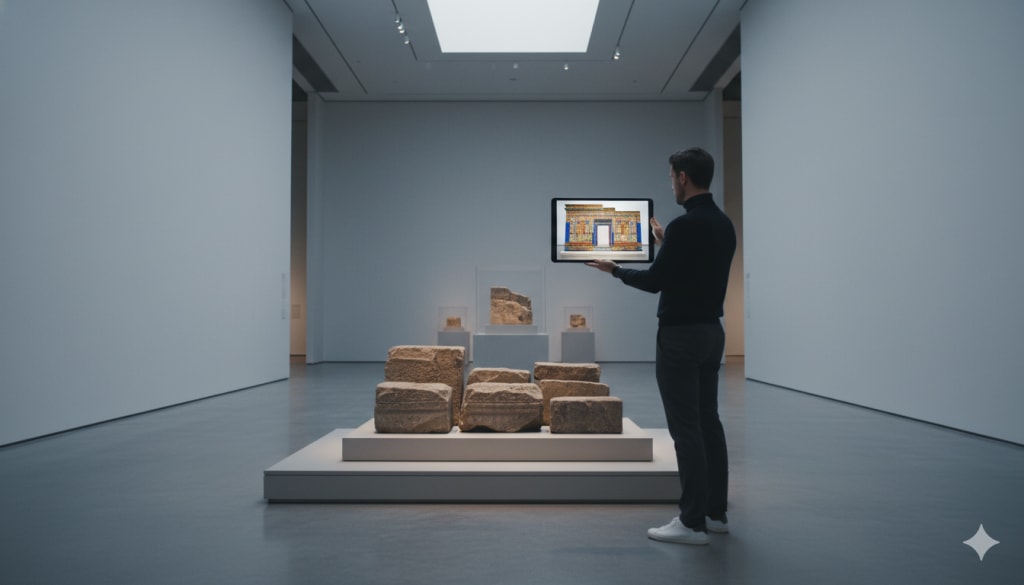
Museums and cultural institutions face a continuous challenge. They must attract visitors and educate them effectively. Historically, curators placed historical artifacts behind glass cases. They attached small, printed cards to the displays. Visitors walked through the rooms and read the text.
Today, modern institutions use immersive experiences to change this interaction. They replace static observation with active, digital participation.
The Limitation of Traditional Exhibits
Traditional exhibits rely heavily on reading comprehension. A visitor looks at a piece of ancient pottery and reads a paragraph about its origin. The visitor must use their imagination to visualize how people used the pottery thousands of years ago. This process requires high concentration. Children and tired visitors often lose focus quickly in these environments.
Institutions now integrate immersive technologies to solve this problem. They build systems that provide immediate visual context. Instead of asking a visitor to imagine a historical event, the technology shows them the event directly. This shift changes the museum from a quiet storage facility into an active learning center.
Augmented Reality in Practice
Augmented reality (AR) serves as a primary tool for modern exhibits. AR overlays digital images onto the physical world. Visitors use their own smartphones or tablets provided by the museum to access these features.
This AR/VR museum technology transforms static objects into dynamic demonstrations. Consider a visitor looking at a fossilized dinosaur skeleton. The visitor points a tablet camera at the bones. The software recognizes the skeleton structure. The screen then displays digital muscles, skin, and textures wrapping around the physical bones. The visitor watches the digital dinosaur move and breathe across the physical room.
This application of interactive experience technology delivers immediate understanding. The visitor comprehends the animal's scale, posture, and movement instantly. They learn the information without reading a single word.
Virtual Reality and Deep Immersion
Virtual reality (VR) offers a different approach. It completely replaces the physical environment with a digital one. Visitors wear specialized VR headsets to enter historical simulations or inaccessible locations.
A science center dedicated to space exploration uses VR to place visitors on the surface of Mars. The visitor turns their head and sees the Martian landscape in a complete 360-degree view. They hear simulated audio of a rover vehicle driving across the rocks. They interact with the environment by picking up digital soil samples using hand controllers.
These immersive digital experiences create strong, lasting memories. Human brains process these physical actions differently from how they process written text. The visitor remembers the experience of standing on Mars far better than they remember a written article about the planet.
Expanding into Corporate Experience Centers
This technology extends beyond historical and scientific museums. Global brands and manufacturers build dedicated experience centers to educate customers about their products. They use these same tools to demonstrate complex engineering.
An automotive company uses immersive solutions to show customers how an electric vehicle engine works. The customer wears AR glasses and looks at a physical car. The glasses strip away the car's exterior metal visually. The customer sees the battery layout and the flow of electricity through the internal cables. This visual demonstration explains complex mechanical engineering clearly to a non-technical person.
Accessibility and the Human Impact
The most significant benefit of immersive museum solutions is accessibility. The technology adapts the learning environment to the individual user.
Many people possess different learning styles. Visual learners struggle with text-heavy exhibits. Immersive technology provides the visual data they need to understand complex topics. Furthermore, the technology improves physical accessibility. A person with limited mobility cannot climb the steep stairs of an ancient ruin. A VR headset allows that person to explore the top of the ruin digitally while remaining in a wheelchair.
Additionally, AR applications easily translate text into multiple languages. A foreign visitor points their phone at an English placard, and the screen displays the text in their native language. Text-to-speech features read the information aloud for visually impaired visitors. The technology ensures every human receives equal access to the educational content.
Implementation and Technology Partners
Building these environments requires complex software engineering and hardware integration. Curators possess deep historical knowledge, but they rarely write computer code. Cultural institutions partner with specialized software companies to build these digital environments.
Companies like ViitorCloud are helping businesses solve this problem by developing custom immersive exhibition solutions. Their engineers connect historical databases to 3D rendering engines. They program the AR applications to recognize physical objects accurately. They ensure the hardware and software operate smoothly and safely for thousands of daily users.
Conclusion
According to the Smithsonian Institution's 3D Digitization Program, scanning and digitizing artifacts allows institutions to reach millions of people who will never physically visit the building. Combining digitized artifacts with immersive delivery methods represents the standard for future education.
Institutions must adapt to a society that expects interactive digital media. By adopting augmented and virtual reality, museums and experience centers capture human attention effectively. They explain complex concepts clearly. They remove physical and linguistic barriers. Ultimately, they ensure that history, science, and engineering remain accessible and engaging for future generations.
About the Creator
ViitorCloud Technologies
As a leading software development company, we’ve empowered 500+ startups, SMBs, and enterprises to transform their operations. Upgrade your business with our AI-First Software and Platforms that automate and scale, keeping you future-ready.
Keep reading
More stories from ViitorCloud Technologies and writers in 01 and other communities.
How AI-First Enterprise Builds Through System Integration
In 2026, many businesses will attempt to use artificial intelligence. They buy advanced AI software and install it. Frequently, the software fails to produce useful results. The AI provides incorrect answers or cannot complete basic tasks. This failure happens because the AI cannot access the company's internal data.
By ViitorCloud Technologiesa day ago in 01
The Best AI Cold Calling Software in 2026: How Conversational AI Is Transforming Sales Calls
Cold calling has always been one of the hardest parts of sales. Low answer rates, tired reps, and inconsistent messaging make it expensive to scale. But in 2026, AI for cold calling is changing the game entirely. With conversational AI, businesses can run outbound sales calls at scale, 24/7, without sacrificing quality or personalization.
By Madhuri Janviabout 6 hours ago in 01
From $5.9B to $19B: Why Data Is Powering the Rise of Payer Analytics in Healthcare
Healthcare systems worldwide generate enormous volumes of data every day—from insurance claims and billing records to patient demographics and treatment histories. As healthcare spending increases and reimbursement models shift toward value-based care, insurers and health plans must analyze this data effectively to remain sustainable. This is where payer analytics in healthcare is becoming a crucial technology foundation.
By Steve Waugh6 days ago in 01




Comments
There are no comments for this story
Be the first to respond and start the conversation.