
StartAmerica and Iran: A War of Power, Ideology, and Global Consequences
Military Confrontation or an Unwinnable Ideological Struggle?

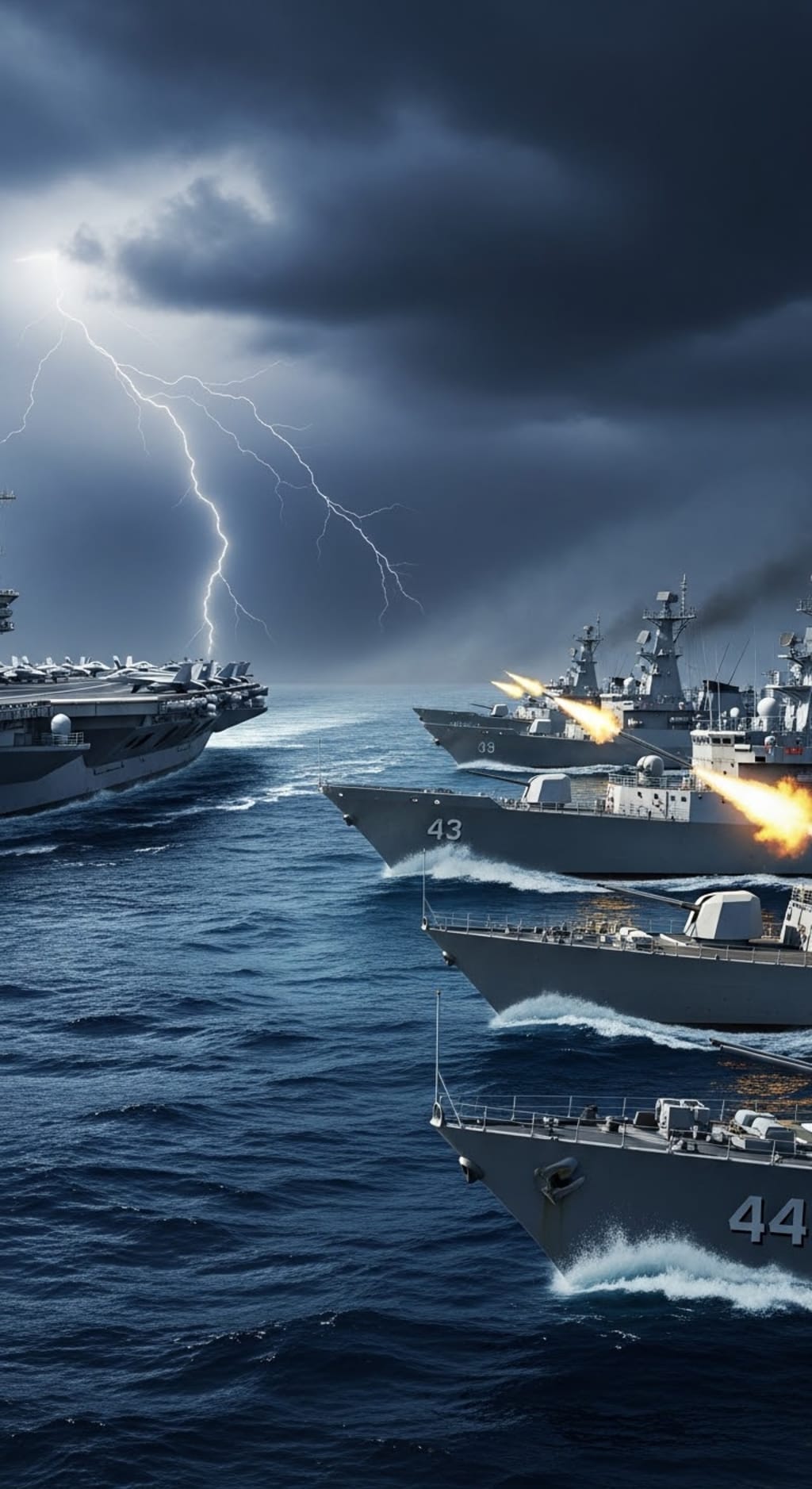
Tensions between the United States and Iran are not simply another chapter in Middle Eastern instability. They represent one of the most complex geopolitical rivalries of the modern era—rooted in ideology, regional influence, economic competition, and global power politics. Any potential large-scale confrontation between the United States and Iran would not be a conventional war limited to borders and battlefields. Instead, it would carry deep ideological, regional, and global consequences.
At the heart of the issue lies a fundamental question: Can a military superpower truly defeat an ideology through force?
Historical Roots of Distrust
The hostility between Washington and Tehran stretches back decades. The 1979 Islamic Revolution reshaped Iran’s political identity into an ideological Islamic republic openly resistant to Western dominance. Since then, relations have been marked by sanctions, proxy conflicts, nuclear negotiations, and moments of near direct confrontation.
For the United States, Iran represents a challenge to its influence in the Middle East. For Iran, American presence in the region symbolizes external interference and strategic containment. Over time, this rivalry has expanded beyond bilateral grievances into a broader contest for regional and ideological supremacy.
A War Against a State — or an Idea?
One of the most critical dimensions of this conflict is ideological. Governments can be overthrown, leaders can be removed, and military installations can be destroyed. But ideas are far more resilient.
Iran’s political system is not simply administrative; it is rooted in a revolutionary doctrine that blends religion and governance. If external pressure were to result in regime change, the underlying ideology would likely persist among supporters within society and across regional networks. History has repeatedly demonstrated that removing leadership does not necessarily eliminate belief systems. In many cases, it can even strengthen resistance narratives.
This transforms the potential conflict into something far more complicated than a traditional military campaign.
Proxy Networks and Regional Escalation
Iran’s influence extends beyond its borders through allied non-state actors across the Middle East. Groups such as Hezbollah in Lebanon and the Houthi movement in Yemen are often described as part of Iran’s broader regional strategy.
In the event of open conflict, these actors could widen the battlefield dramatically. Rather than a contained U.S.–Iran confrontation, the conflict could spread across multiple fronts—targeting maritime routes, military bases, and strategic infrastructure.
The Persian Gulf is one of the most critical arteries of global energy supply. Any disruption to shipping lanes or oil production would likely send shockwaves through global markets. Energy prices could spike, supply chains could destabilize, and economic uncertainty could deepen worldwide.
The Israel Factor
Another key variable is Israel. Israel views Iran’s regional activities and missile development as existential threats. If tensions escalate into direct conflict, Israeli involvement—whether direct or indirect—could significantly intensify the situation.
Such a development would likely trigger broader political reactions across the Muslim world. Public opinion in many countries could pressure governments into diplomatic or political responses, further complicating the regional balance.
America’s Global Commitments and the China Challenge
The strategic environment today is very different from that of previous decades. The United States is not only managing Middle Eastern tensions but is also engaged in long-term strategic competition with China.
A prolonged military engagement with Iran would require financial resources, military assets, and political focus. Extended conflict often drains national budgets, increases defense spending, and strains alliances. If such a confrontation became long and costly, it could indirectly benefit China by shifting the global balance of economic momentum and diplomatic influence.
In an era defined by economic competition and technological rivalry, even regional wars carry global strategic consequences.
NATO and Alliance Dynamics
The role of NATO also deserves attention. While NATO remains a powerful military alliance, member states have varying perspectives on Middle Eastern interventions. Unlike the Cold War era, consensus among Western allies is not always automatic.
If the United States were to escalate militarily against Iran, alliance unity might face internal debate. Some European nations may prioritize diplomacy and nuclear negotiations over direct confrontation. A divided alliance could limit the scale or effectiveness of collective action.
Lessons from Iraq, Afghanistan, and Libya
Modern history offers cautionary examples regarding regime change and military intervention.
In Iraq, the removal of Saddam Hussein led to years of instability, sectarian violence, and political fragmentation. The initial military victory did not immediately translate into long-term stability.
In Afghanistan, after two decades of war, the Taliban ultimately returned to power. The endurance of ideological movements proved stronger than anticipated.
Similarly, in Libya, the fall of Muammar Gaddafi created a power vacuum that evolved into prolonged internal conflict and fragmentation.
These cases highlight a recurring pattern: military intervention can remove governments, but rebuilding political order is far more complex. Without stable institutions and social consensus, power vacuums often invite chaos.
The Risk of Internal Fragmentation
Even if external pressure were to succeed in destabilizing Iran’s leadership structure, internal divisions could intensify. Political factions, security institutions, and ideological supporters might compete for control. Such fragmentation could result in prolonged unrest or even civil conflict.
Civil wars rarely remain confined within borders. Refugee flows, regional interference, economic collapse, and humanitarian crises often follow. For neighboring countries and global powers alike, instability in Iran would present unpredictable consequences.
Economic Consequences of Escalation
A direct U.S.–Iran war would not remain limited to military exchanges. Financial markets would react immediately. Oil prices could surge due to fears of supply disruption in the Gulf. Global inflationary pressures might increase. Emerging economies heavily dependent on imported energy could face severe strain.
For the United States, extended conflict would add to fiscal burdens. Defense expenditures would rise, and domestic political debates would intensify. For the global economy—already sensitive to geopolitical uncertainty—the shock could be substantial.
Conclusion: Victory on the Battlefield vs. Stability in Reality
The central dilemma remains clear: defeating a government is not the same as defeating an ideology. Military superiority can produce tactical victories, but sustainable peace requires political solutions, social reconciliation, and regional diplomacy.
The confrontation between the United States and Iran is therefore not simply a contest of missiles and military bases. It is a clash shaped by ideology, alliances, economic competition, and historical mistrust. Any escalation would carry ripple effects far beyond the Middle East—touching global markets, strategic balances, and international stability.
In the end, the true measure of success in modern conflicts is not who wins the first strike, but who can secure lasting peace afterward.
💬 Share Your Opinion
We want to hear from you! Share your thoughts, insights, or reactions in the comments section below. Your perspective matters. writing...
About the Creator
'Till Death We Do Art
There would be nothing divine in this world without art. Nature may surpass the divine to all intents and purposes, but like everything it absorbs and is absorbed by, it remains here, stuck on the surface of this world, ever-present, physically bound to the universe.
By Avocado Nunzella BSc (Psych) -- M.A.P 14 days ago in Art
David Bowie: Identity as Art and Philosophy
David Bowie didn’t just make music. He made selves. Each era of his career arrived with a new face, a new voice, a new story about who he was allowed to be. Ziggy Stardust fell from the stars to preach doomed glamour. The Thin White Duke stalked across the stage with ice-cold elegance. Then there were the quieter, searching versions—Bowie as wanderer, as witness, as man growing older without pretending to stay young. This wasn’t costume for costume’s sake. It was a living philosophy: identity is not discovered; it’s created.
By Fred Bradford7 days ago in Art
I wanted to title this something different, but worried that my chosen title might cause problems entering the United States in the future so this is the new title. It's the greatest title. No one has ever written a title better than this. (All titles unrelated to content).
Let me be honest. I am finding this difficult. Now, I like a challenge, a stretch, a bit of an obstacle course. “Write about the decline of the British Empire in the form of a narrative poem in which your protagonist is an artichoke” I read, and flex my fingers. “Write a haiku to evoke the sensation of sibilance using only the first half of the alphabet.” “Well”, I think to myself, “this should be fun.” But “write about a system that isn’t working”? A system that isn’t working? Now? In 2026? ONE system? My favourite system that isn’t working? The sexiest system that isn’t working? The one giving me the most angst day to day? The one giving me the most existential dread? I am, as I say, finding this difficult. I will own that I have contemplated writing a thousand words on why the steady “all on” setting on my fairy lights is the EIGHTH of seven options which must be sequentially activated to get there, because that is a system that some fool came up with and it definitely doesn’t work, and now who is paying the price, eh? But how can I write about my fairy lights when…. When…. When….
By Hannah Moore4 days ago in Humans




Comments
There are no comments for this story
Be the first to respond and start the conversation.