
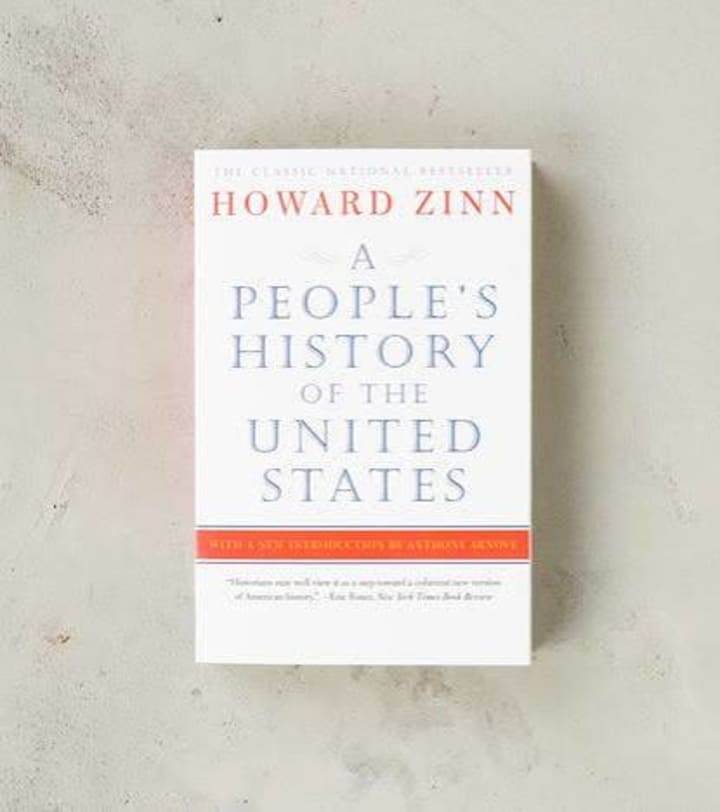
A People's History of the United States
"Voices of the Ordinary: America’s History Through the Eyes of Its People"


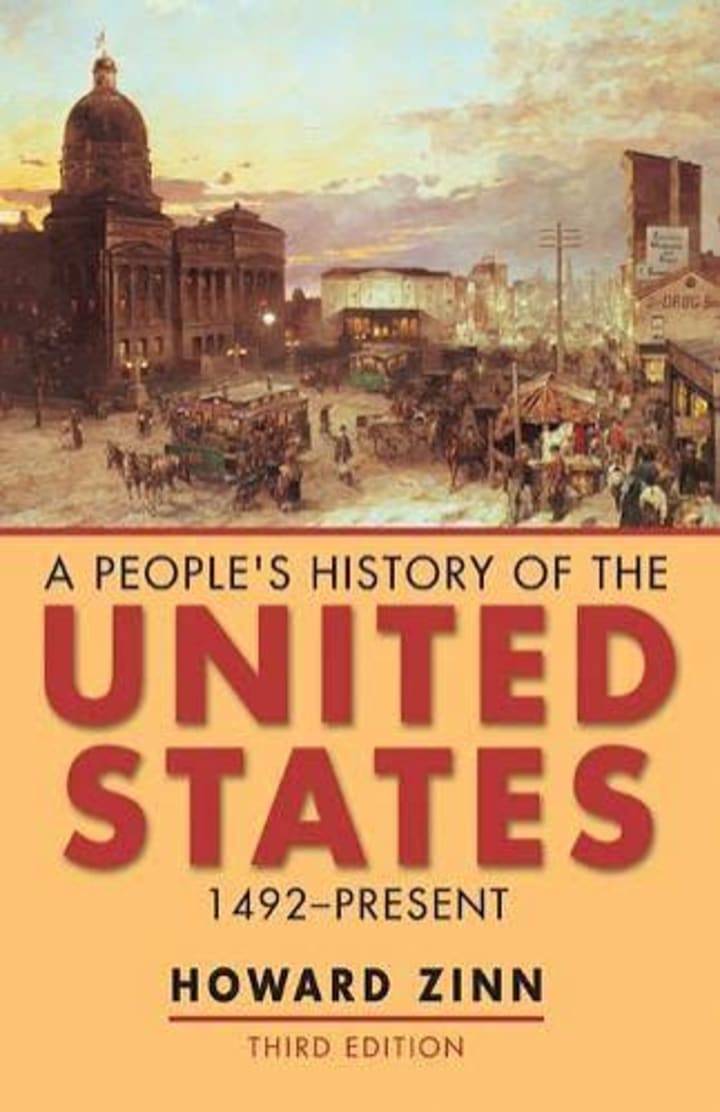
This book tells American history from the perspective of ordinary people rather than presidents, generals, and political leaders. It focuses on workers, enslaved people, women, Indigenous communities, and social movements. Zinn argues that real change in society has usually come from public resistance and grassroots struggle.
1. Colonization and Native Americans
The book begins with the arrival of Europeans and describes how Indigenous peoples faced violence, displacement, and loss of land. It challenges the traditional heroic narrative of early exploration.
2. Slavery and Racial Injustice
Zinn explains how slavery became central to America’s economy and highlights the cruelty faced by enslaved Africans. He also explores resistance movements and the long fight for civil rights.
3. Workers and Economic Inequality
During industrialization, wealth increased for a few while many workers faced harsh conditions. The book covers labor strikes, unions, and the struggle for fair wages and rights.
4. War and Power
Many wars, according to Zinn, served political or economic interests more than the needs of ordinary citizens. He encourages readers to question official justifications for war.
5. Social Movements and Change
Women’s rights movements, civil rights activism, and anti-war protests show how collective action can reshape society. The book emphasizes that progress often comes from people challenging authority.
Main Message
History is not only the story of powerful leaders — it is also the story of ordinary people fighting for justice, equality, and dignity.
Colonization and Indigenous Peoples
The book begins with the arrival of Christopher Columbus and other Europeans in the Americas. It describes how Indigenous populations suffered violence, displacement, and cultural destruction. Rather than celebrating exploration as a heroic achievement, the narrative highlights the human cost of colonization. Zinn argues that traditional history often ignores the voices and experiences of Native communities.
Slavery and the Foundations of Wealth
A major theme is the role of slavery in building the American economy. Enslaved Africans were forced to work under brutal conditions, producing enormous wealth for plantation owners and the broader economy. The book emphasizes that slavery was not just a regional issue but a national system tied to economic growth. It also documents resistance by enslaved people and the long struggle for abolition and civil rights.
Class Inequality and Labor Movements
As the United States industrialized, economic inequality grew. Factory workers faced dangerous conditions, long hours, and low wages, while industrial leaders accumulated vast fortunes. The book highlights labor strikes, union movements, and protests as key forces pushing for reform. According to Zinn, progress in workers’ rights did not come from generosity at the top but from organized pressure from below.
War and Government Power
Another important argument concerns war. The book questions whether many American wars truly served the interests of ordinary citizens. It suggests that political and economic motives often influenced decisions to go to war. Zinn encourages readers to examine official narratives critically and consider how war affects common people both at home and abroad.
Women’s Rights and Social Justice Movements
The narrative also explores movements for gender equality and social justice. Women fought for voting rights, fair treatment, and expanded opportunities. Civil rights activists challenged segregation and racial discrimination. These movements demonstrate a central theme of the book: meaningful social change usually comes from collective action rather than from leaders alone.
A Different Way to View History
One of the book’s most important contributions is its perspective. Instead of presenting history as a smooth story of national progress, it portrays the past as a series of conflicts between powerful institutions and ordinary people seeking justice. This approach encourages readers to question whose voices are included in historical narratives and whose voices are missing.
Core Message
The central idea is that democracy and equality are not automatic achievements; they are the result of continuous struggle. Social progress happens when people organize, protest, and demand change. By shifting attention from leaders to citizens, the book invites readers to see history as something shaped by human action, not just political decisions.
About the Creator
Sk
"I am a passionate writer, crafting books and articles on Vocal Media, exploring human experiences, stories, and creative reflections."
Book Review: Atmosphere by Taylor Jenkins Reid
I flipped the book over in my hands in the centre of the small airport book shop. Although I had heard promising reviews of Atmosphere by Taylor Jenkins Reid, I hesitated. The synopsis didn’t compel me - I wasn’t much of a space girly. In high school it made me cringe when my peers would talk about the stars.
By sleepy drafts27 days ago in BookClub
I Reread Rich Dad Poor Dad—And Discovered a Lifehack That Can Make You Financially Unstoppable
When I first read Rich Dad Poor Dad by Robert Kiyosaki, I was struck by its simple storytelling and contrasting advice from his two “dads”: his biological father, the “Poor Dad,” and his friend’s father, the “Rich Dad.” At first glance, it seems like a straightforward guide to money, but revisiting it as an adult revealed a deeper lifehack: a strategy for thinking differently about money, opportunities, and personal growth that can fundamentally change your financial trajectory.
By Lukáš Hrdlička4 days ago in BookClub




Comments
There are no comments for this story
Be the first to respond and start the conversation.