
Taliban Drone Attacks on Pakistan: Types of Kamikaze Drones, Technology, Range and Military Impact
Taliban Uses Drones Against Pakistan for the First Time Overview of the recent drone attack claims and the response from Pakistan’s military.

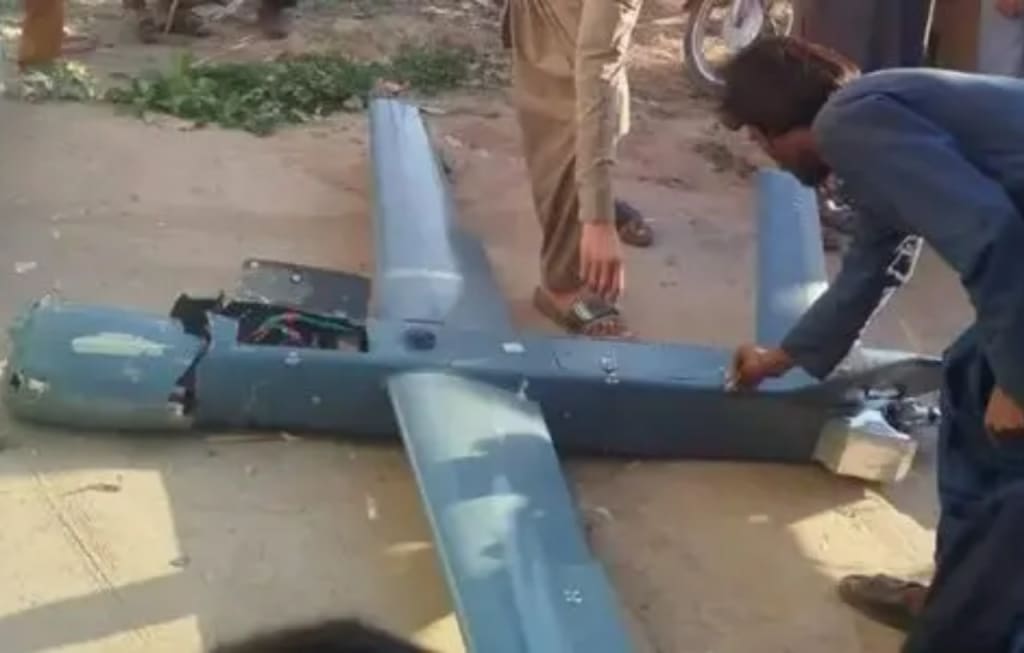
In recent days, Afghanistan’s Taliban interim government has reportedly used drones for the first time in attacks against Pakistan.
In a statement, the Taliban Ministry of Defense claimed that it carried out “multiple aerial strikes” using drones at several locations in three Pakistani cities. According to them, this step was taken in response to Pakistani airstrikes.
Since the Taliban government possesses little to no conventional air force capability, it resorted to explosive drones to conduct aerial attacks.
It is worth noting that according to Pakistani media reports, during a media briefing on February 27, DG ISPR Ahmed Sharif Chaudhry said that the Afghan Taliban regime had attempted to use some basic drones to conduct attacks in Sibi, Abbottabad, and Nowshera. However, he claimed that “our anti-drone systems thwarted this attempt.
On the same day, February 27, Federal Minister for Information Attaullah Tarar also claimed on X that the Taliban had attempted to launch small drones toward Abbottabad, Swabi, and Nowshera, but anti-drone systems shot down all of them. No casualties were reported.
Taliban drones reportedly targeted three locations, including the Artillery School in Nowshera and a primary school building in Swabi. However, security sources claimed that all these drones were destroyed.
The Taliban government reportedly used two types of drones against Pakistan: some suicide drones and several quadcopters (drones that fly using four rotors).
A military affairs expert suggested that it is possible the Taliban government does not have the capability to manufacture drone components itself, and it is likely that these parts were purchased from other countries and assembled in Afghanistan.
In recent years, unmanned aerial vehicles (UAVs) and suicide drones have been widely used in various conflicts, significantly changing the nature of conventional warfare.
These drones have played a prominent role in conflicts ranging from the ongoing Russia-Ukraine war to the clashes between Pakistan and India in May 2025.
One of the key characteristics of these drones is that they are equipped with explosive materials and detonate upon reaching their target, which is why they are called suicide drones.
These are also known as kamikaze drones and resemble small missiles in shape. They are capable of striking targets at low altitude.
The term “kamikaze” is a Japanese word used during World War II for Japanese pilots who deliberately crashed their explosive-laden aircraft into enemy ships and targets.
What drones did the Taliban government use?
In one confirmed attack, a Taliban drone targeted a location in the Swabi district of Khyber Pakhtunkhwa.
Footage of another confirmed drone strike was also analyzed. According to image analysis, the drones had a wingspan of about three meters and an overall length of roughly two meters.
Since these drones cannot carry large amounts of explosives, their destructive power is relatively limited. In one incident, when a drone fell near a wall in Swabi and exploded (or was shot down), the blast was not strong enough to cause significant damage to the wall.
However, even drones carrying small amounts of explosives can cause deadly injuries and fatalities if they land in areas where people are present.
An Afghan information technology expert said the drones used by the Taliban government could be deployed in two ways.
According to him, the first type can strike targets up to 20 kilometers away and is operated using a special remote control. These drones can carry about six to eight kilograms of explosives.
The second type operates using software, where the target’s location details are fed into the system beforehand.
The flight range of these drones depends on several factors, such as the weight of the explosives, the amount of fuel, and weather conditions. The drone itself weighs around 15 kilograms.
Ray Gardner, head of Ukraine’s Defense and Information Technology division, said that these drones can strike targets at distances between 150 and 400 kilometers, although this depends on the weight of the warhead.
Gardner said that some of the drones are not well-known models and appear to be locally produced.
Some of the drones used by the Taliban resemble the “Daily” drone, which was previously manufactured by a Turkish technology company called Tetra.
According to Gardner, the Taliban drones are fixed-wing types with a single-cylinder gasoline engine and a wooden propeller. Machines like these are commercially available for hobbyist aviation enthusiasts.
He also suggested that it is highly likely that the components for these machines were manufactured in another country.
Analysis of the remaining parts of the drones used in attacks on Pakistan suggests that the maximum market price of such drones is around $250 (about 15,000 Afghanis).
According to Gardner, the cost of producing kamikaze drones is generally around $700 (approximately 45,000 Afghanis).
An Afghan technology expert, speaking on condition of anonymity, said that the drones’ small size, low-altitude flight, and fiber-based structure make them difficult to detect by radar. One type of drone runs on fuel, while another operates on lithium batteries.
Images released by the Taliban Ministry of Defense also suggest that quadcopters were used in several alleged attacks.
Quadcopters are generally not designed for military use, but militant groups often modify them slightly and equip them with explosives for attacks. It is worth noting that the banned Tehrik-e-Taliban Pakistan (TTP) has also previously used quadcopters to target police checkpoints and stations in Khyber Pakhtunkhwa.
According to the technology expert, these drones are operated by remote control and have a flight range of up to 25 kilometers, which is why they are not used for long-distance targets.
Images released by the Taliban Ministry of Defense show that these drones were used to attack Pakistani security posts along the Durand Line.
About the Creator
Keep reading
More stories from Real content and writers in Chapters and other communities.



Comments
There are no comments for this story
Be the first to respond and start the conversation.