
Tehran is doing what it promised: What does Iran want to achieve with missile attacks on Middle Eastern countries?
Tehran expands retaliation after American and Israeli strikes, threatening regional stability and global oil markets.

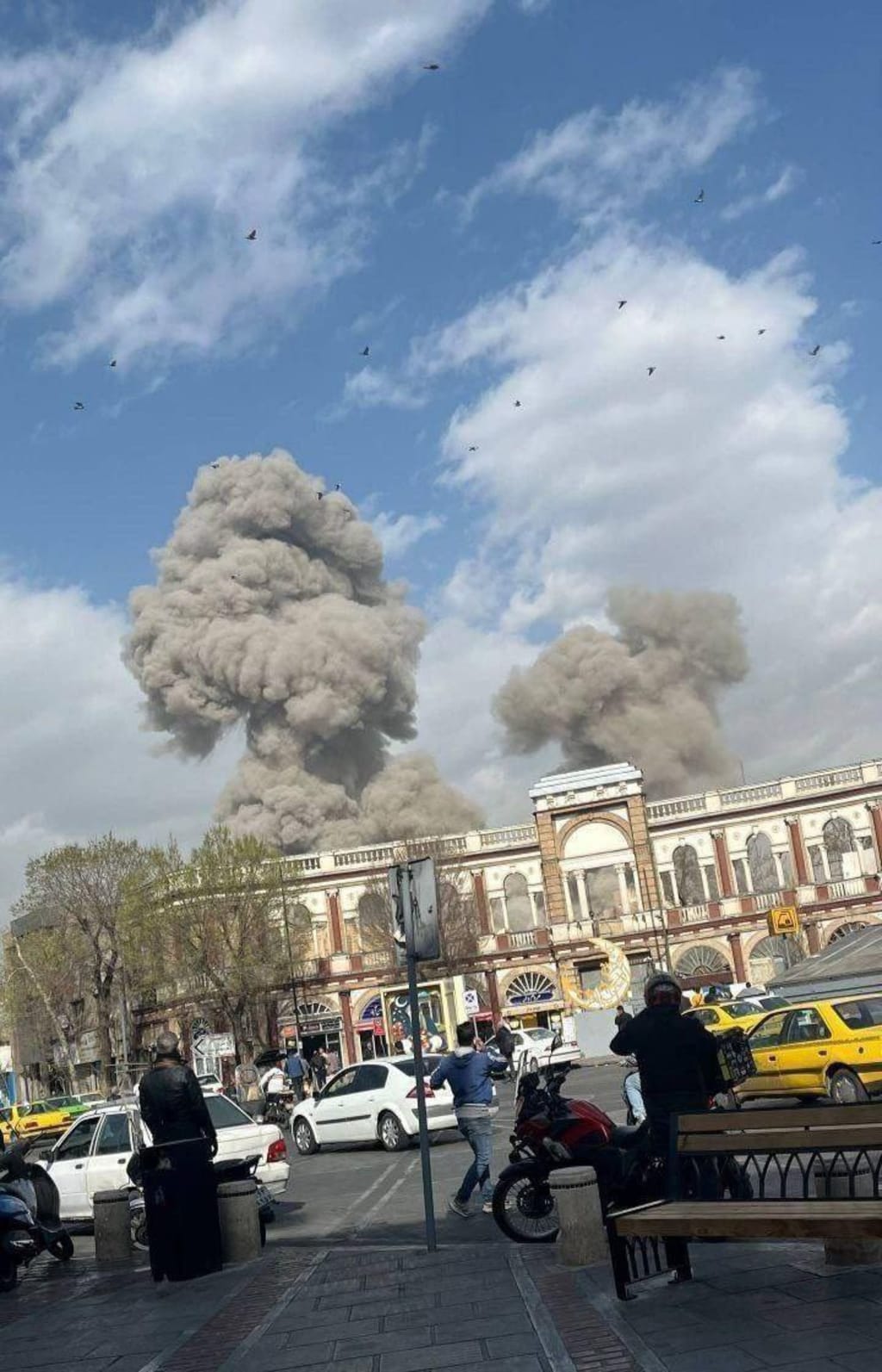
Iran’s Supreme Leader Ayatollah Ali Khamenei and several other Iranian officials had been warning for weeks before the American and Israeli attacks that in the event of any strike, not only Tehran but the entire region would be engulfed in a new war.
On the occasion of the 47th anniversary of the Islamic Revolution in Iran, Khamenei clearly stated, “If the United States starts a war this time, it will spread across the entire region.”
In response to Israeli and American attacks, Iran’s retaliation suggests that Tehran is putting those threats into action.
On Saturday, following U.S. and Israeli strikes on Iran, Tehran launched missile attacks on targets in Saudi Arabia, Kuwait, Bahrain, Qatar, and the United Arab Emirates.
The presence of U.S. military bases and American personnel in these countries is no secret. In August 2024, the U.S. Department of Defense stated that approximately 40,000 American troops are stationed in the Middle East.
Al Udeid Air Base in Qatar is used by the United States, while American personnel are also deployed at “Tower 22” in Jordan.
In addition to Qatar, U.S. forces are present in Bahrain, Kuwait, Saudi Arabia, the United Arab Emirates, Syria, Jordan, Egypt, Cyprus, and Iraq. The United States has multiple military bases in Kuwait and two in Saudi Arabia.
Several Gulf countries affected by Iranian missile strikes have condemned the attacks and said they reserve the right to respond.
In this context, the question arises: why is Iran targeting locations in Middle Eastern countries, and what impact will Tehran’s strategy have on the region?
Iran is doing exactly what it had promised
Omar Karim, a PhD researcher affiliated with the University of Birmingham, believes that for now, Middle Eastern countries will limit themselves to condemning the Iranian attacks.
He said, “If such attacks remain limited to American targets and do not cause significant damage to these Gulf countries’ own infrastructure—especially oil facilities—then regional states will mostly restrict themselves to rhetorical condemnation.”
Discussing Iran’s actions and their possible consequences, he added, “In the immediate term, we should expect a rise in oil prices, and we may also see some attacks in Iraq by Shiite armed groups against American and Israeli targets.”
For other analysts, Iran’s response is not surprising at all.
The U.S. think tank Stimson Center recently cited statements by Iranian officials, saying that “Iran is doing exactly what it had promised in the event of a possible American or Israeli attack.”
They say that missile strikes on targets in Gulf countries will certainly affect Iran’s relations with those states. However, according to them, Iran had already warned these countries that “if they failed to prevent the Trump administration from launching attacks, this is what would happen.”
Some analysts believe Iran aims to pressure Gulf countries through its attacks so they can persuade the Trump administration to end the war quickly.
Dr. Aziz Alghashian of the Arab Gulf States Institute said, “It is quite clear that Iran does not want to confine this conflict to Israel and the United States but intends to expand it across the entire region.”
He said Gulf Arab states were aware that they might face such a situation.
When asked about Iran’s strategy of targeting Gulf states, he said, “Iran wants the costs of this war to rise, so that Gulf countries will pressure Trump to stop it.
“Whether they succeed or not, no one knows, because what Iran has done cannot be defended, and that is why Arab countries have condemned it.”
According to Dr. Aziz, media reports indicate that Iranian attacks damaged residential buildings in the UAE and targeted an airport in Kuwait, which “shows that Iran is in a desperate situation and feels it has nothing left to lose.”
However, he believes Gulf countries will not retaliate but will instead focus on their own defense.
What could happen next?
U.S. President Trump said on Saturday, after the start of the attacks, that regime change in Iran is his objective and that the Iranian people should take to the streets to play their part in changing the government.
Commenting on the American objective, Barbara Slavin said, “Senior Iranian officials could be killed in U.S. attacks, even the Supreme Leader, but in response we may see another authoritarian government in Iran or prolonged chaos.
Meanwhile, Omar Karim of the University of Birmingham believes that in the short term, the United States and Israel may continue attacks to degrade Iran’s military and missile capabilities and will expect that Iran’s ability to retaliate will diminish.
“They will try to eliminate as many military and civilian officials as possible. It is also possible they will attempt to reignite an anti-government protest movement within Iran.”
“Given the tense conditions inside Iran, it seems that regime change could be among the possible outcomes.”
However, Dr. Aziz Alghashian, who closely follows Gulf politics, believes Middle Eastern countries are not only affected by the war but are also disappointed with the actions of the Trump administration.
He said that whatever the outcome of the conflict, he does not believe relations between Iran and Gulf countries will improve anytime soon.
He added, “That does not mean they will side with the United States and Israel. They are also disappointed with the Trump administration because they believe these attacks on Iran were unnecessary.”
He said that after the recent strikes, “negotiations and diplomacy have been undermined, the situation appears to have worsened, and the region is now igniting in the flames of a new war.”
About the Creator
Keep reading
More stories from Real content and writers in Chapters and other communities.
US and Israel’s War with Iran: Preemptive Strike or War of Choice? Global Risks, Regime Change, and Middle East Crisis
The decision by the United States and Israel to plunge into a new war with Iran has pushed the global landscape toward extremely dangerous and unpredictable consequences. Israel has attempted to justify its attack by describing it as a “preemptive action.”
By Real content2 days ago in Chapters
The Cave Part 6
If you have ever heard a tale about yourself that you cannot remember and doubtless think is made up, you will know how I felt when Tharkin related all that the eagle had seen of me before my memories were scattered. Of far distances and traveling companions that I did not recall, camping out under the stars and making our way to the mountains with deliberate purpose. The great bird had lost contact with my party once we entered the forests, and the seven other members were not seen again by him or his brethren since.
By Jamye Sharp15 days ago in Chapters
Is This War Turning Into World War III?
Is This War Turning Into World War III? The question many people around the world are quietly asking today is unsettling but unavoidable: Is the current war climate pushing humanity toward World War III? What once appeared to be localized conflicts in the Middle East are now entangled with global rivalries, advanced technologies, and fragile alliances. History shows that world wars rarely begin with a single dramatic declaration. Instead, they grow out of overlapping crises, miscalculations, and escalating power struggles—many of which are visible today.
By Wings of Time about 21 hours ago in Chapters
This Is What I Do When People Throw Rocks At Me
Rocks have been thrown at me for a greater part of my life. Some have been small and missed hitting me. When people don't get a reaction from me, they throw bigger rocks with a better aim. Many have been hurled at me with precision over the years. For a long time, I thought my only options were to dodge them or be crushed by them.
By Margaret Minnicks5 days ago in Confessions


Comments
There are no comments for this story
Be the first to respond and start the conversation.