
A Story of Wounds—and Witness
Faith, Power, and the Long Night of the Atlantic


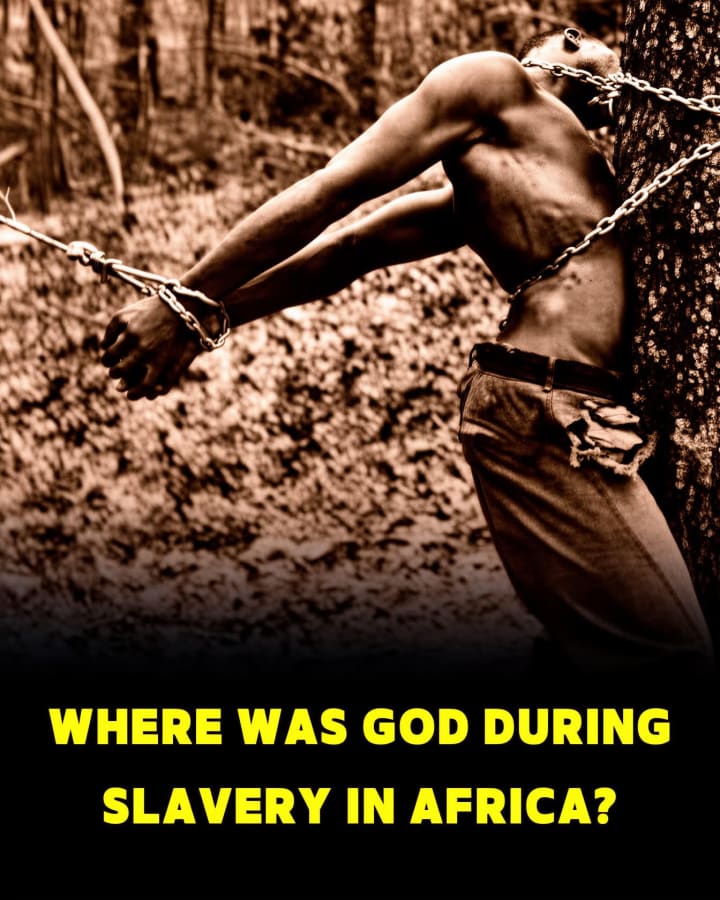
The question echoes down centuries: Where was God when millions were chained, shipped across oceans, and sold like cargo? It is a question born in the belly of ships, in the fields of cane and cotton, and in the quiet spaces where prayers were whispered so softly they would not be heard by the overseer. To face it honestly, we must hold two truths together: faith was twisted to sanctify oppression—and faith was reclaimed to resist it. Between those poles lies the human story of conscience, courage, and the struggle to live up to what we say we believe.
The Machinery of a World Built on Captivity
For more than four hundred years, the transatlantic slave trade uprooted over twelve million Africans from homelands stretching from Senegambia to the Bight of Benin and west-central Africa. The traffic was not a single event but a vast system: raiding and wars inland; forced marches to coastal forts; the Middle Passage across the Atlantic; and sale into labor regimes throughout the Americas. Sugar estates in the Caribbean, rice and indigo in the Lowcountry, tobacco and later cotton in the American South, silver mines and urban labor elsewhere—each depended on the coerced labor of people treated as property. The scale reshaped the world: European ports swelled, colonial economies boomed, and racial hierarchy hardened into law and custom.
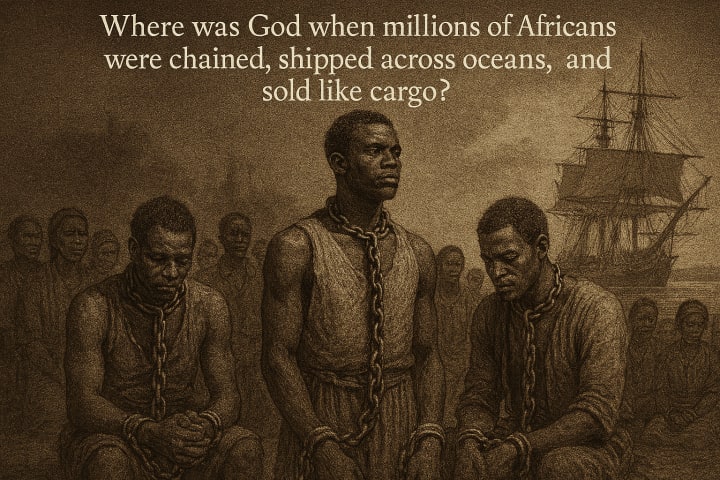
Into this machinery, religion sailed. Bibles lay in captains’ chests; chaplains blessed voyages; plantation sermons warned the enslaved to obey earthly masters. Selective readings of scripture—Noah’s curse twisted into a fable of racial destiny, Paul’s household codes stripped of context—were elevated to doctrine. Faith, in the hands of empire, became a tool of power.
How Scripture Was Bent—and What Broke
The theological moves were not subtle. Some argued slavery was a “civilizing” mission, that bondage would usher Africans toward salvation. Others declared the social order fixed by divine decree—masters at the top, enslaved people at the bottom—and demanded obedience as the highest religious virtue. Baptism often did not confer freedom; laws were crafted to ensure it would not. Missionary societies taught catechisms carefully edited to avoid the incendiary sparks of Exodus and Jubilee. The goal was spiritual quietude that would not disturb economic profit.

But distortions strain the text until it resists. The same Bible that was used as a whip also spoke in thunder against oppression. The Exodus story pulsed with subversive power: a God who hears the cry of the enslaved, confronts Pharaoh, and parts seas. The prophets railed against those who “sell the righteous for silver, and the needy for a pair of sandals.” The Gospels held up a Messiah who proclaimed release to the captives. Once these words reached ears trained by suffering to hear what power ignored, they could no longer be contained.
The Underground Church and the Sound of Freedom
In brush arbors and cabins, behind the noise of work songs, a second conversation unfolded. There, faith was remade from the bottom up. Spirituals did double duty: worship for the heart, code for the road. “Go Down Moses,” “Steal Away,” “Wade in the Water”—these were not mere hymns but maps, metaphors, and medicine. The enslaved read themselves into the text: Pharaoh was the master, the river was the border, Canaan was freedom. Prayer circles became planning circles; testimony became testimony and intelligence.

Leaders emerged whose courage fused conviction with action. Abolitionists framed their cause in moral terms, insisting that no legal code could sanctify a crime against the image of God. Frederick Douglass exposed the chasm between true Christianity and the “slaveholding religion.” Harriet Tubman spoke of visions and guidance that steadied her hand as she guided families north, a conductor who trusted both strategy and Spirit. Even where revolt failed, the will to resist—through work slowdowns, sabotage, escape, education, family preservation—was a sermon better than any preached from a plantation pulpit.
After Emancipation: Sanctuaries and Schools
When the war ended and the legal chains fell, new institutions rose from the ashes. Black churches became sanctuaries of community life: places to worship, learn, vote, organize mutual aid, and rehearse the dignity long denied. They seeded schools and colleges, trained teachers and ministers, and built networks of advocacy. In courtrooms and street marches a century later, the same sacred cadence carried the Civil Rights Movement. The pulpit spoke law; the choir sang policy; the sanctuary became a strategy room. Faith that had been conscripted to control became the grammar of freedom.

The Harder Question: Where Was Human Conscience?
Asking “Where was God?” may be necessary; asking “Where were people?” is unavoidable. The ships were built by human hands, the laws drafted by human pens, the bids shouted by human mouths. The centuries-long endurance of slavery was less a failure of heaven than a failure of earthly ethics: profit made the ear deaf, hierarchy made the heart hard, fear made the will compliant. Religion did not create that corruption; power recruited religion to excuse it. The scandal is not that scripture speaks of obedience; it is that those in charge demanded obedience only from the vulnerable and none from themselves.
Yet the record is not simply indictment. Every petition signed, every escape plotted, every school founded, every sermon that named injustice—these acts testify that conscience survived. The enslaved bore witness not only to suffering but to moral clarity. The testimony shames the tyrant and strengthens the future.

The Legacies We Carry
The trade’s legacies still shape the modern world: wealth accumulated in some ports and plantations; poverty entrenched in other communities; racial myths recycled in law, housing, healthcare, policing, and education. Cultural genius flourished in spite of oppression—music, language, cuisine, theology, art—each evidence of survival and creativity. Memory remains contested ground: statues, syllabi, archives, and holidays become sites of struggle over whose story is told and how.
There is also a legacy of faith renewed. Liberation theologies across continents—Black, womanist, Afro-Caribbean, Latin American—push communities to read sacred texts with the eyes of the oppressed and to measure devotion by the justice it delivers. The call is not to abandon faith but to purify its practice: to tether creeds to compassion, ritual to repair, prayer to policy, and worship to work.

So—Failure of Faith or Failure of Humanity?
It was both, and the distinction matters. Faith, abstract and untested, is easily captured by power. Humanity, unmoored from moral vision, drifts toward cruelty dressed in custom. But when faith is rooted in the sacred worth of every person—when it refuses to bless domination—and when humanity is disciplined by conscience, communities transform. The lesson of the Atlantic is not that belief is useless; it is that belief without justice is dangerous, and justice without hope is fragile.
The better question for us, then, is not only where God was, but where we are now. Do we allow convenience to outweigh conscience? Do we repeat the old habit of quoting just enough scripture, or philosophy, or economics to defend the status quo? Or do we inherit the courage of those who prayed and planned under moonlight, who held fast to a God of the oppressed, and who walked toward freedom when the path was anything but clear?
A Charge for Our Time
To honor the stolen lives is to refuse the theft of memory. Tell the whole story—in classrooms, sanctuaries, boardrooms, and family tables. Support the institutions that grew from resistance: schools, churches, cultural centers, community clinics. Read sacred texts with the oppressed at the center, not the margins. Demand policies that repair what was broken by design. And sing the old songs not as nostalgia but as instruction: the river still needs crossing; the road still needs guides.
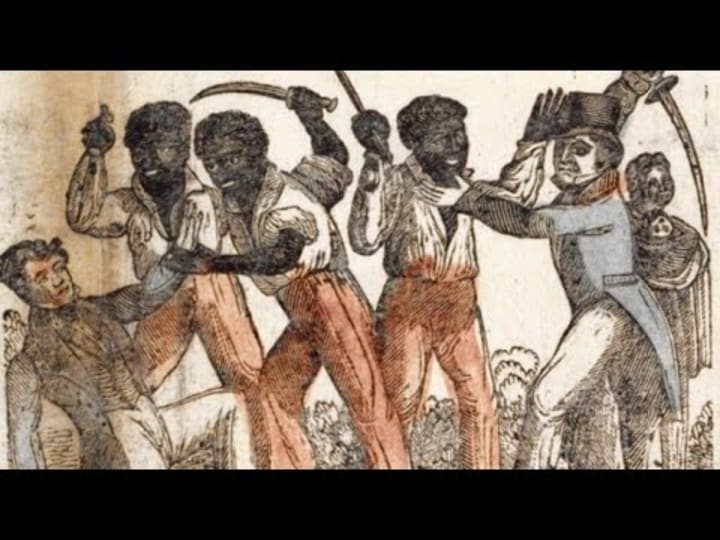
Where was God? In the cry, and in the courage. Where was humanity? Too often at the auction block—and sometimes, gloriously, on the road to freedom. The work before us is to ensure that our generation’s answer is not written in chains but in acts of justice, mercy, and steadfast love.
About the Creator
Organic Products
I was born and raised in Chicago but lived all over the Midwest. I am health, safety, and Environmental personnel at the shipyard. PLEASE SUBSCRIBE to my vocal and check out my store
Keep reading
More stories from Organic Products and writers in Criminal and other communities.
Sergeant Isaac Woodard Jr.
His sacrifice must never be forgotten. BY LEAVIE SCOTT The Story of Sergeant Isaac Woodard Jr. February 12, 1946 began like a day of promise. After years of service in the Pacific during World War II, Sergeant Isaac Woodard Jr. stepped off a military bus wearing the uniform he had earned through courage and discipline. He had served his country faithfully from 1942 to 1946, working as a longshoreman in dangerous combat zones, unloading ships under enemy fire, and carrying out the labor that made the Allied war effort possible. He had been awarded medals for good conduct and bravery. He had survived the hazards of war. He had survived a world where the enemy’s bullets and bombs were a daily threat. Now his service was complete, and he was headed home.
By Organic Products 16 days ago in Criminal
Twinkle, Babyheart, & Lubasa
I'm still under the impression from the documentary I watched yesterday and two particular episodes from it wouldn't leave my mind, so I'm just going to write this to purge and share this knowledge with anyone who cares to know. Fair warning: this is really heavy.
By Lana V Lynx2 days ago in Criminal
Frozen in the Andes: The Haunting Survival Story of Flight 571
On October 13, 1972, a small aircraft carrying a group of young rugby players, their friends, and family members took off from Montevideo, Uruguay, heading toward Santiago, Chile. The journey was meant to be a simple trip across the Andes Mountains for a friendly rugby match. Spirits were high inside the plane. Laughter, excitement, and youthful energy filled the cabin.
By imtiazalam3 days ago in Criminal
Sometimes It's Like That and That'sThe Way It Is
It was the late 1960s, and ten-year-old Gloria Coleman was standing with her grandmother on the side of the highway waiting for the bus. As the Greyhound pulled up, it seemed monstrous and intimidating. Grandma Elizabeth grabbed Gloria's hand, holding it tightly as they boarded.
By Cheryl E Preston2 days ago in Fiction



Comments (2)
Many sharp and accurate critiques here.
WOW