
The Enigmatic Death of Ellen Greenberg: A Case That Defies Explanation
On a snowy January afternoon in 2011, the life of 27-year-old Ellen Rae Greenberg came to a tragic and baffling end. Ellen, a vibrant first-grade teacher at Juniata Park Academy in Philadelphia, was discovered lifeless on the kitchen floor of her Manayunk apartment.
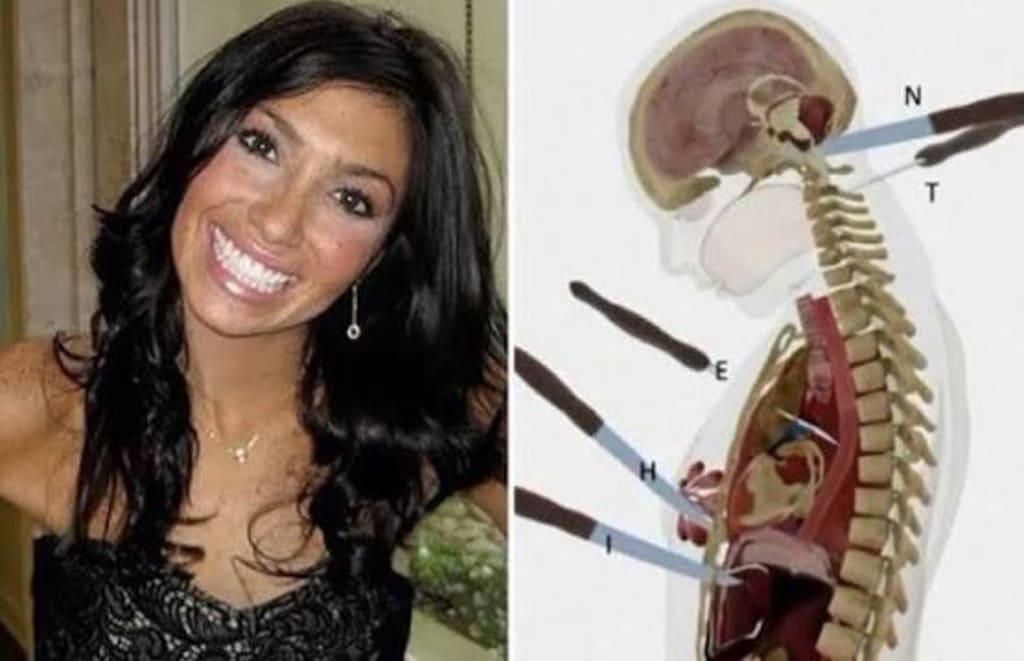
On a snowy January afternoon in 2011 the life of 27-year-old Ellen Rae Greenberg came to a tragic and baffling end. Ellen a vibrant first-grade teacher at Juniata Park Academy in Philadelphia was discovered lifeless on the kitchen floor of her Manayunk apartment. She had sustained an astonishing 20 stab wounds including deep penetrations to her chest neck abdomen, and even the back of her head. Some wounds were so severe they pierced her skull and damaged her brain and spinal cord. Her fiance Samuel Goldberg, found her after forcing his way into the locked apartment claiming he had stepped out briefly to the gym during a blizzard.Ellen was born on June 23, 1983, in New York City, but grew up in Harrisburg, Pennsylvania. Described by friends and family as outgoing, compassionate, and full of life, she had recently gotten engaged and was planning her wedding. She loved teaching young children, often sharing stories of her students' progress with her parents, Sandra and Joshua Greenberg. There were no overt signs of distress in her life, though reports later emerged that she had been experiencing anxiety and had sought psychiatric help shortly before her death. She was prescribed medication for anxiety, but nothing suggested she was suicidal.
The scene at the apartment was gruesome. Ellen was slumped against kitchen cabinets, a serrated knife still clutched in her hand, with fruit scattered around her—indicating she might have been preparing a salad. Blood was present but not in quantities suggesting a prolonged struggle, and the door was locked from the inside with a swing bar latch. No signs of forced entry were noted, and security footage showed no suspicious activity. Initially, the Philadelphia Medical Examiner's Office, led by pathologist Marlon Osbourne, ruled her death a homicide based on the sheer number and location of the wounds. Ten of the stabs were to her back and neck, areas difficult to reach in a self-inflicted manner.
However, just months later, in a stunning reversal, the ruling was changed to suicide. This shift came after consultations between the medical examiner's office and police investigators, who cited the locked door and lack of defensive wounds as evidence against foul play. The Greenbergs were devastated and outraged. "How could our daughter stab herself 20 times, including in the back of her head?" they questioned. They believed the change was influenced by undue pressure, possibly to close the case quickly.
Renowned forensic experts hired by the family, including Cyril Wecht and Henry Lee, vehemently disagreed with the suicide ruling. They argued that the wounds' nature—deep, multiple, and in incapacitating locations—made self-infliction implausible. A stab to the spinal cord would paralyze her, rendering further stabs impossible. Additionally, Ellen had 11 bruises in various stages of healing, suggesting possible prior abuse. Neuropathologist Lyndsey Emery found no evidence of hemorrhage in a key brain wound, implying it was inflicted postmortem, which contradicts suicide.
The Greenbergs embarked on a tireless quest for justice, filing multiple lawsuits against the city, the medical examiner, and others involved. They claimed the investigation was botched: the crime scene wasn't properly preserved, DNA testing was inadequate, and potential suspects, including the fiancé, weren't thoroughly vetted. Goldberg cooperated with police and passed a polygraph, but questions lingered about his timeline and a reported argument earlier that day.
In recent years, the case has gained renewed attention. A 2025 Hulu documentary series, "Death in Apartment 603: What Happened to Ellen Greenberg?", delved into the inconsistencies, featuring interviews with experts and the family. That same year, Dr. Osbourne, the original pathologist, reversed his stance, stating he now believes it was homicide, citing new evidence about the wounds. Despite this, the Philadelphia Medical Examiner's Office reaffirmed the suicide ruling in October 2025, sparking further controversy.
Adding to the momentum, in January 2026, sources revealed that the U.S. Attorney’s Office for the Eastern District of Pennsylvania requested documents on the case, indicating federal interest. This development offers hope to the Greenbergs, who have collected over 167,000 signatures on a petition demanding the ruling be changed back to homicide.
The Ellen Greenberg case exemplifies how official determinations can clash with forensic evidence and common sense. How could a young woman with everything to live for inflict such brutal injuries on herself? The locked door mystery, the untouched knife with her blood only, and the absence of a suicide note all fuel debates. Some speculate staging, while others point to possible corruption in the investigation.As the Greenbergs continue their fight, supported by podcasts like "Crime Junkie" and online communities on Reddit, the question remains: Was it suicide, or a cleverly disguised murder? Until definitive answers emerge, Ellen's story serves as a haunting reminder of the flaws in our justice system and the enduring pain of unresolved loss.
About the Creator
Keep reading
More stories from Kure Garba and writers in Criminal and other communities.
Father accused of killing daughter after dispute inside family home
In the early hours of Monday January 27 2025 a quiet residential area in Cincinnati was thrust into tragedy when a family dispute turned deadly leaving a young woman dead and a community searching for answers.According to authorities 64-year-old Franklin Thompson is accused of fatally shooting his daughter Heather Thompson during a heated argument inside their family home. Heather who was 24 years old, reportedly became involved in a confrontation with her father over a household rule prohibiting smoking indoors.
By Kure Garba3 days ago in Criminal
The Night the Streetlights Went Dark
M Mehran Ravenwood Avenue was the safest street in Millhaven. Tree-lined sidewalks, trimmed hedges, and porch lights that glowed like quiet promises of peace. Children biked until dusk. Neighbors shared coffee every Sunday. Doors stayed unlocked. Until the night the streetlights went dark. At exactly 11:58 PM, the entire block lost power. At 12:07 AM, someone screamed. By morning, one house stood open, silent, and empty — and the illusion of safety in Millhaven was gone forever. A Town Built on Trust Millhaven was the kind of town where crime existed only on television. Police officers spent more time directing parade traffic than responding to emergencies. Residents believed danger lived somewhere else — in distant cities and late-night news reports. That belief made them comfortable. Comfort made them careless. And someone had been watching. The House on Ravenwood Avenue The Whitaker family had lived at 214 Ravenwood for twelve years. Thomas Whitaker was a software engineer who worked remotely. His wife, Elaine, taught piano lessons from home. Their teenage son, Caleb, planned to attend college the following year. They were ordinary in every way — except one. They had money. Not flashy wealth. No luxury cars or lavish parties. Just quiet financial security built through careful investments and Thomas’s success in cybersecurity consulting. The kind of wealth no one notices. Unless they’re looking for it. The First Sign Something Was Wrong At 11:58 PM, the power cut across Ravenwood Avenue. Security systems shut down. Wi-Fi networks died. Streetlights blinked out, plunging the block into darkness. Residents assumed it was a routine outage. No one called the utility company. No one stepped outside. No one saw the figure moving between shadows. A Crime Executed with Precision Investigators later concluded the power outage wasn’t accidental. Someone had accessed the neighborhood’s electrical junction box — a locked unit requiring specialized tools. The outage affected only one block, leaving surrounding streets illuminated. It was deliberate. It was targeted. And it gave the intruder exactly eight minutes of darkness. Inside the Whitaker Home The intruder entered through the rear door — no forced entry. Later, police discovered a copied key had been used. Inside, the alarm panel was disabled in seconds. Whoever entered knew the system. Knew the layout. Knew exactly where to go. Thomas Whitaker’s home office was located on the first floor. Inside a concealed floor safe were encrypted hard drives and hardware wallets containing cryptocurrency worth over $3 million. Nothing else in the house was disturbed. Jewelry remained untouched. Electronics remained in place. Cash sat undisturbed in a kitchen drawer. This was not a burglary. It was a surgical extraction. The Scream at 12:07 AM Elaine Whitaker awoke to a sound downstairs. Footsteps. Soft. Intentional. She moved toward the staircase and saw a silhouette moving toward the back door. Then the figure turned. In the faint glow of emergency backup lighting, she saw a face covered in a matte-black mask — and eyes that showed no panic. Only focus. Elaine screamed. The intruder fled. But the damage was done. A Criminal Who Left No Trace Detective Aaron Reyes quickly realized this was no ordinary theft. No fingerprints. No footprints. No camera footage — all neighborhood cameras had lost power simultaneously. The junction box showed no signs of forced entry. It was as if the criminal understood infrastructure, surveillance systems, and digital security. Someone with technical expertise. Someone patient. Someone who had studied the neighborhood. The Digital Breadcrumb Weeks passed with no leads. Then cybersecurity analysts discovered a dormant wallet suddenly active on the blockchain. Small test transfers were executed before larger movements dispersed funds across multiple wallets. But criminals who rely on technology often leave microscopic traces. One transaction revealed a brief IP exposure routed through a café network 200 miles away. Surveillance footage showed a man sitting alone with a laptop. He wore a baseball cap and ordinary clothes. He looked forgettable. But investigators noticed something distinctive: a small burn scar on his left wrist. That detail changed everything. The Insider The suspect was identified as Eric Halvorsen — a former electrical subcontractor who had worked on Millhaven’s infrastructure upgrades three years earlier. He had helped install the very junction boxes that powered Ravenwood Avenue. He had access. He had knowledge. And after losing his job during corporate downsizing, he had accumulated massive debt. But debt alone doesn’t create a criminal mastermind. Resentment does. The Arrest Eric was arrested in a rented storage facility where investigators discovered electrical schematics, neighborhood layouts, copied house keys, and notes detailing security vulnerabilities across multiple communities. Ravenwood Avenue had been a test run. Authorities believe he planned similar crimes across affluent suburbs. When confronted, Eric confessed without hesitation. “They built systems that trust insiders,” he said. “I just proved how fragile that trust is.” The Psychological Edge of Crime Eric wasn’t driven by impulse. He was driven by control. He studied routines, infrastructure, and behavioral patterns. He exploited predictability — the comfortable rhythms of suburban life. Criminal psychology experts later described him as a “system predator” — someone who attacks not people, but the structures people rely on for safety. That’s what made him dangerous. The Aftermath The Whitakers recovered only a fraction of their stolen assets. Cryptocurrency laundering made full recovery impossible. But the deeper loss wasn’t financial. It was psychological. Neighbors installed new security systems. Motion lights replaced porch bulbs. Doors locked earlier. Conversations became cautious. Ravenwood Avenue was safe again. But it was never the same. When Safety Becomes an Illusion Crimes like the Ravenwood heist remind us that safety is often a perception, not a guarantee. The absence of crime can create complacency — and complacency creates opportunity. Modern criminals no longer rely on force. They rely on knowledge. Infrastructure. Data. Patterns. The most effective crimes today are not loud. They are silent, calculated, and precise. Why Stories Like This Grip Readers True crime narratives fascinate us because they reveal vulnerabilities in everyday life. They challenge our assumptions about safety and force us to confront an uncomfortable truth: Danger rarely announces itself. It studies. It waits. And when the streetlights go dark — even for eight minutes — everything can change.
By Muhammad Mehran6 days ago in Criminal
Anton Zelinskyi on OASK “Ghost-Court” Salaries, Judicial Corruption, and Wartime Reform in Ukraine
Anton Zelinskyi is a Ukrainian legal-reform advocate and Advocacy Manager at the DEJURE Foundation, working on judicial transparency, integrity vetting, and anti-corruption accountability. He is a member of the Public Integrity Council, which assesses judicial candidates and judges undergoing qualification review. In January 2026 he co-authored a Ukrainska Pravda investigation showing that, despite the 2022 liquidation of Kyiv’s District Administrative Court (OASK), the state spent about UAH 157 million over three years on judges’ remuneration while key cases stalled. He tracks how procedural sabotage, disciplinary bottlenecks, and Supreme Court rulings can revive discredited judges—especially during wartime—so reform can endure long-term.
By Scott Douglas Jacobsen3 days ago in Criminal
Flower Bloom 369
FLOWER Bloom 2/25/26 Wednesday By Mariann Carroll Karen had been with Tony for 7 years. Tony started acting strangely after her surgery. He would mow the lawn in the rain and be on his cellphone. He started pushing Karen away. Tony came clean about seeing someone. Karen moved out two months later. Karen moved in with a friend. She felt betrayed.
By Mariann Carroll5 days ago in Fiction


Comments
There are no comments for this story
Be the first to respond and start the conversation.