
Top 50 Worst Crimes That Shook Britain (Part 2)
Welcome to part 2 of the top 50 worst crimes that shocked the United Kingdom, check back daily for more episodes or watch the video below.

39 - The London Nail Bombings
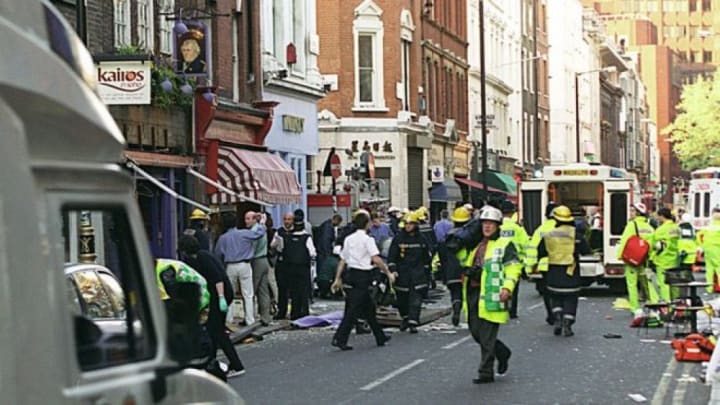
Over three successive weekends, homemade nail bombs were detonated by a lone perpetrator, David Copeland, targeting Black, Bangladeshi, and LGBTQ+ communities in April 1999.
Designed to sow division and fear within the city's diverse communities, the first attack occurred on April 17 in Brixton, a historically Black neighbourhood in South London.
A bomb exploded in Brixton Market, injuring 48 people, many seriously from the nails packed inside the device and then, on the following Saturday, on April 24, a second bomb was planted in Brick Lane, the heart of London's Bangladeshi community.
The final and most devastating attack took place on April 30 at the Admiral Duncan pub in Soho, a popular area for London's LGBTQ+ community. The pub was crowded on a Friday night, and the explosion killed three people, Andrea Dykes, Nik Moore, and John Light with another 79 injured.
The attacks created a citywide manhunt, which ended with the arrest of David Copeland, a neo-Nazi who had hoped to ignite a race war. He was later convicted of murder and given six life sentences.
38 - The Omagh Bombing
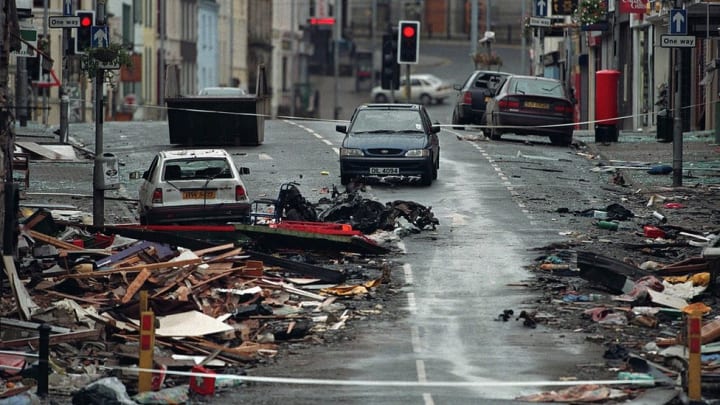
On August 15, 1998, a car bomb ripped through the bustling market town of Omagh, County Tyrone, in Northern Ireland. The explosion, carried out by the Real Irish Republican Army, a splinter group opposed to the Good Friday Agreement, was the single deadliest act of the Troubles.
A catastrophic failure in the warning provided by the terrorists meant that the bomb exploded in an area where people had been evacuated to, not away from. The blast claimed the lives of 29 people, including a woman pregnant with twins, and injured more than 200 others.
The victims were a diverse group, ranging from young children to elderly residents, and included people from both sides of the community, as well as Spanish tourists visiting the town. The indiscriminate slaughter transcended sectarian divides, uniting a shocked world in grief and outrage.
The Omagh bombing was intended to destabilize the fragile peace process, but it had the opposite effect. The scale of the tragedy galvanized support for peace across the island of Ireland and internationally.
However, the legacy of the bombing is also one of profound injustice. Despite multiple investigations and a civil case brought by the victims' families, no one has been successfully convicted in a criminal court for the murders and the long and painful search for justice continues to this day.
37 - The murder of Sally Anne Bowman
Found murdered on her driveway in Croydon, the life of 18-year-old aspiring model Sally Anne Bowman was tragically cut short on a September morning in 2005.
She had been stabbed, robbed, and raped. The brutality of the crime sent shockwaves through the community.
The initial investigation led police to question her ex-boyfriend, but he was cleared after DNA evidence did not match the killer's. For months, the case went unsolved, leaving the public in a state of fear and her family in anguish.
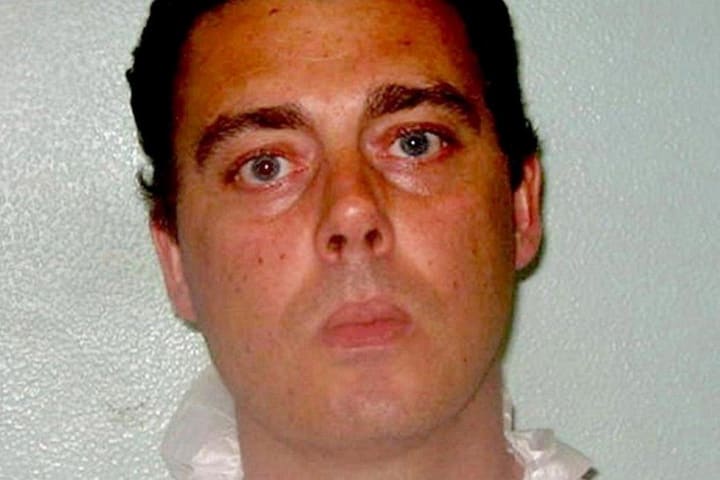
The breakthrough came nine months later. A local chef, Mark Dixie, was arrested for a pub brawl, and his DNA was taken as a standard procedure. The sample was matched to the DNA found on Sally Anne's body and the odds of the match were "one in a billion."
At his trial, Dixie, who had a history of violent offenses, claimed he found her body after she was already dead. The jury, however, unanimously found him guilty of murder. He was sentenced to life imprisonment with a minimum term of 34 years.
The case brought into sharp focus the debate over a national DNA database. While some argued it could have solved the crime much sooner, others raised concerns about civil liberties.
36 - The Garry Newlove Slaying
Garry Newlove, a 47-year-old sales manager, stepped out of his house in Warrington, Cheshire, to confront a group of teenagers who were vandalising his wife's car on a summer night in 2007.
He was viciously attacked, punched and kicked to the ground, passing away from a catastrophic brain injury two days later.
His murder, carried out by three teenagers, Adam Swellings, Stephen Sorton, and Jordan Cunliffe, ignited a firestorm of public outrage over youth anti-social behaviour and gang violence.
The brutality of the attack—witnesses reported that Newlove was "kicked like a football"—shocked the nation. The incident became a grim symbol of a perceived breakdown in community respect and order.
In the wake of the tragedy, Garry's widow, Helen Newlove, became a powerful advocate for victims of crime. She campaigned tirelessly for tougher laws and a greater focus on tackling youth crime.
Her activism, known as the Newlove Warrington campaign, led her to become a victims' commissioner for England and Wales. The legacy of Garry Newlove's murder is not just one of senseless violence, but also of a family's extraordinary resilience and a determined call for justice and change.
35 - The Murder of Rachel Nickell
Twenty Three year old Rachel Nickell was walking with her two-year-old son on Wimbledon Common in 1992. It was a beautiful summer morning before, at random, she was attacked and stabbed 49 times.
The crime left her son physically unharmed, however the subsequent police investigation became notorious for its flaws. With intense public and media pressure, police focused on Colin Stagg, a local man who fit a psychological profile of the killer.
Despite a lack of forensic evidence, a "honey trap" operation was launched, where an undercover female officer feigned a romantic interest in Stagg in an attempt to get him to confess.
The operation was a failure and was later condemned by a judge as "deceptive conduct of the grossest kind" when the case against Stagg collapsed. The murder remained unsolved for over a decade. In 2002, a cold case review team revisited the evidence using new DNA technology.
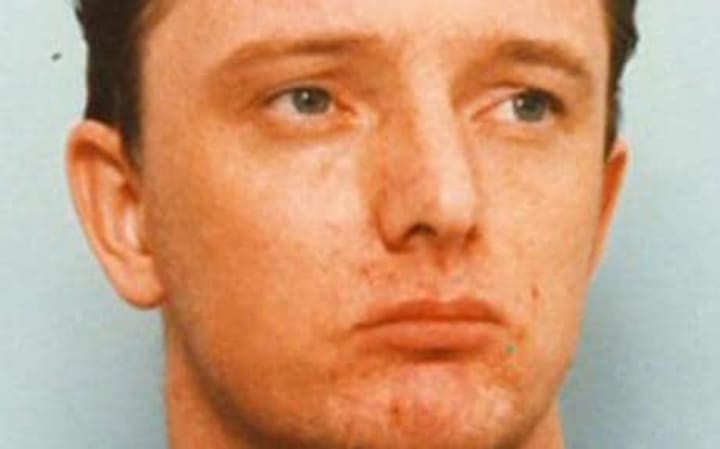
The re-examination of samples from Rachel Nickell's body finally provided a match to Robert Napper, a serial rapist who was already in a high-security hospital for the murder of another mother and daughter in 1993.
In 2008, Napper pleaded guilty to the manslaughter of Rachel Nickell on the grounds of diminished responsibility and was sentenced to indefinite detention.
34 - The "Crossbow Cannibal"
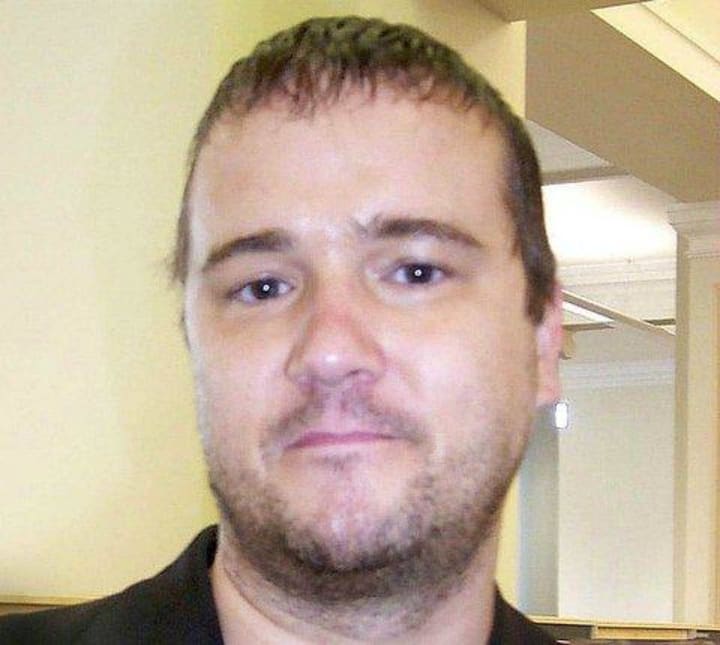
In May 2010, the city of Bradford was gripped by a grim and shocking case that revealed a new kind of horror. Stephen Griffiths, a former criminology student, was arrested and charged with the murders of three women: Susan Rushworth, Shelley Armitage, and Suzanne Blamires.
All three were sex workers who had disappeared from the city's red-light district. The case, which quickly earned him the moniker "the Crossbow Cannibal," was brought to light by an astonishing piece of evidence: CCTV footage from his own building.
The footage captured the final moments of Suzanne Blamires' life, showing Griffiths attacking her with a crossbow, dragging her body back into his flat, and then, with chilling audacity, saluting the camera.
When arrested, Griffiths chillingly identified himself as "the Crossbow Cannibal" and "the servant of God, the Devil, whatever you want to call it."
He later admitted to the murders, revealing that he had dismembered and, in some cases, cannibalized his victims. Parts of their remains were discovered in the nearby River Aire.
The trial was brief, as Griffiths pleaded guilty to all three murders. He was sentenced to a whole-life order, meaning he will never be released from prison.
33 - The Shropshire Slayings
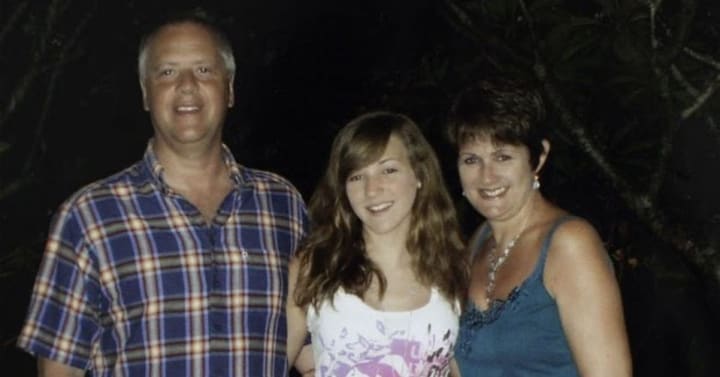
The murder of the Foster family in 2008 became one of the countries most prolific murder-suicides ever.
Christopher Foster, a millionaire, murdered his wife, Jill, and their daughter, Kirstie, at their sprawling rural mansion before setting the house on fire and taking his own life.
The horrific event, which also resulted in the death of their animals, was believed to be a result of Foster facing financial ruin.
The fire and subsequent police investigation captured national headlines, and the case served as a chilling reminder of the hidden turmoil that can exist behind a seemingly perfect facade.
32 - The "Gay Slayer" Murders
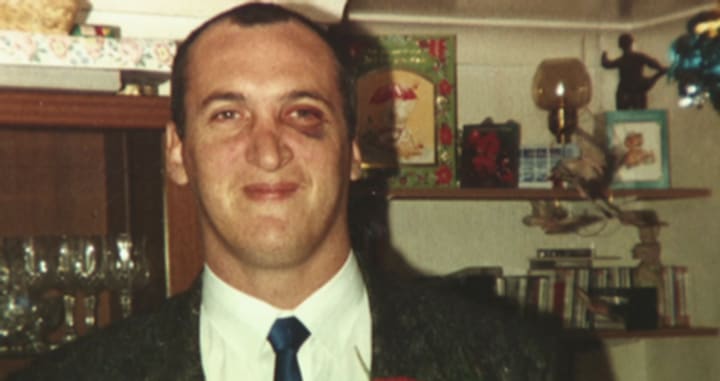
In the spring of 1993, a chilling series of murders terrified London's gay community. Colin Ireland, a heterosexual serial killer, posed as a gay man to lure five victims to their deaths over a three-month period.
Ireland's victims were Peter Walker, Christopher Dunn, Perry Bradley III, Andrew Collier, and Emanuel Spiteri. The murders were brutal, with victims bound and strangled.
Ireland, an avid reader of true crime, meticulously planned his attacks, often cleaning the scenes and stealing his victims' valuables. The case gained significant media attention, and Ireland himself, in a chilling act of self-promotion, contacted the press to boast about his crimes, taunting the police.
The breakthrough came when a CCTV image linked him to his final victim, Emanuel Spiteri. A fingerprint from a previous victim's flat sealed his fate.
Upon his arrest, Ireland confessed to the murders, stating that he had no hatred for gay men but had specifically targeted them as a "New Year's resolution" to become a serial killer, believing they would be "easy targets."
He was sentenced to a whole-life tariff, a sentence he served until his death in prison in 2012.
31 - The Cumbria Shootings
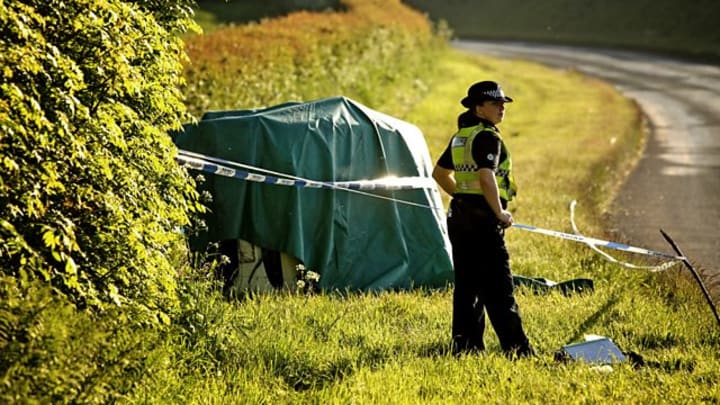
The serene landscape of West Cumbria was transformed into a scene of unimaginable terror, when, on June 2nd, 2010, a lone gunman, Derrick Bird, a 52-year-old taxi driver, shot and killed 12 people and injured 11 others before taking his own life.
The pre-meditated rampage began in the early morning when Bird shot his twin brother, David, at his home in Lamplugh. He then drove to the village of Frizington and killed the family solicitor, Kevin Commons.
From there, the attacks became random, with Bird driving through several towns and villages, including Whitehaven, Egremont, and Seascale, firing indiscriminately at people on the streets, in their cars, and in fields.
The horrific event paralyzed the county as police launched a major manhunt for Bird. Local residents were urged to stay indoors as armed officers, supported by a helicopter, scoured the rural area.
The spree finally ended when Bird's body was found in a remote wooded area near the village of Boot. Two firearms, a shotgun and a .22 rifle, both of which he was licensed to own, were recovered at the scene.
The Cumbria shootings were one of the deadliest mass killings in modern British history and sparked a nationwide debate about gun control laws.
30 - The Harrods Bombings
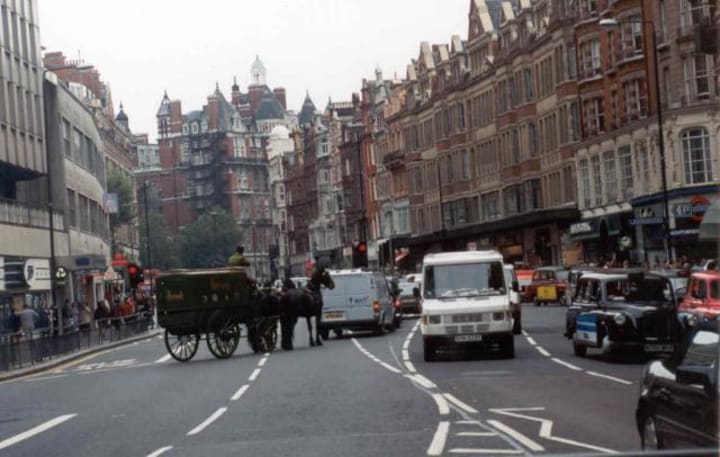
On a busy pre-Christmas Saturday, December 17th, 1983, a car bomb exploded outside the iconic Harrods department store in London. The attack, carried out by the Provisional Irish Republican Army, was intended to cause economic disruption and sow fear in the capital.
The blast killed six people, three police officers and three civilians, while injuring 90 others, many severely. The IRA had provided a warning, but due to a series of miscommunications and the large crowds of shoppers, the area was not fully evacuated.
Tragically, the bomb detonated as a police car and officers on foot were approaching the vehicle to investigate. The police car absorbed a significant portion of the blast, a fact that likely saved many more lives.
The attack was widely condemned, including by the IRA's own Army Council, which stated the bombing was "not authorised."
The incident highlighted the brutal and indiscriminate nature of the conflict in Northern Ireland, bringing the violence directly to the streets of London and affecting ordinary civilians and police officers.
About the Creator
Vidello Productions
My name is William Jackson, a YouTube content creator and crypto enthusiast with over 161,000 subscribers and I make videos that are focused on the billionaire lifestyle and crime.
Content consists of top list videos.
Keep reading
More stories from Vidello Productions and writers in Criminal and other communities.
Ten Days of Marriage, A Lifetime Lost: A Wake-Up Call Against Greed, Dowry, and Domestic Violence
Ten Days of Marriage, A Lifetime Lost: A Wake-Up Call Against Greed, Dowry, and Domestic Violence a relationship that only lasted ten days. A young woman who had visions of the future as she entered her new residence. After that, a shocking end: her husband killed her with a broken piece of glass following an argument about money, property, and a car.
By Farida Kabirabout 20 hours ago in Criminal
The Night the Streetlights Went Dark
M Mehran Ravenwood Avenue was the safest street in Millhaven. Tree-lined sidewalks, trimmed hedges, and porch lights that glowed like quiet promises of peace. Children biked until dusk. Neighbors shared coffee every Sunday. Doors stayed unlocked. Until the night the streetlights went dark. At exactly 11:58 PM, the entire block lost power. At 12:07 AM, someone screamed. By morning, one house stood open, silent, and empty — and the illusion of safety in Millhaven was gone forever. A Town Built on Trust Millhaven was the kind of town where crime existed only on television. Police officers spent more time directing parade traffic than responding to emergencies. Residents believed danger lived somewhere else — in distant cities and late-night news reports. That belief made them comfortable. Comfort made them careless. And someone had been watching. The House on Ravenwood Avenue The Whitaker family had lived at 214 Ravenwood for twelve years. Thomas Whitaker was a software engineer who worked remotely. His wife, Elaine, taught piano lessons from home. Their teenage son, Caleb, planned to attend college the following year. They were ordinary in every way — except one. They had money. Not flashy wealth. No luxury cars or lavish parties. Just quiet financial security built through careful investments and Thomas’s success in cybersecurity consulting. The kind of wealth no one notices. Unless they’re looking for it. The First Sign Something Was Wrong At 11:58 PM, the power cut across Ravenwood Avenue. Security systems shut down. Wi-Fi networks died. Streetlights blinked out, plunging the block into darkness. Residents assumed it was a routine outage. No one called the utility company. No one stepped outside. No one saw the figure moving between shadows. A Crime Executed with Precision Investigators later concluded the power outage wasn’t accidental. Someone had accessed the neighborhood’s electrical junction box — a locked unit requiring specialized tools. The outage affected only one block, leaving surrounding streets illuminated. It was deliberate. It was targeted. And it gave the intruder exactly eight minutes of darkness. Inside the Whitaker Home The intruder entered through the rear door — no forced entry. Later, police discovered a copied key had been used. Inside, the alarm panel was disabled in seconds. Whoever entered knew the system. Knew the layout. Knew exactly where to go. Thomas Whitaker’s home office was located on the first floor. Inside a concealed floor safe were encrypted hard drives and hardware wallets containing cryptocurrency worth over $3 million. Nothing else in the house was disturbed. Jewelry remained untouched. Electronics remained in place. Cash sat undisturbed in a kitchen drawer. This was not a burglary. It was a surgical extraction. The Scream at 12:07 AM Elaine Whitaker awoke to a sound downstairs. Footsteps. Soft. Intentional. She moved toward the staircase and saw a silhouette moving toward the back door. Then the figure turned. In the faint glow of emergency backup lighting, she saw a face covered in a matte-black mask — and eyes that showed no panic. Only focus. Elaine screamed. The intruder fled. But the damage was done. A Criminal Who Left No Trace Detective Aaron Reyes quickly realized this was no ordinary theft. No fingerprints. No footprints. No camera footage — all neighborhood cameras had lost power simultaneously. The junction box showed no signs of forced entry. It was as if the criminal understood infrastructure, surveillance systems, and digital security. Someone with technical expertise. Someone patient. Someone who had studied the neighborhood. The Digital Breadcrumb Weeks passed with no leads. Then cybersecurity analysts discovered a dormant wallet suddenly active on the blockchain. Small test transfers were executed before larger movements dispersed funds across multiple wallets. But criminals who rely on technology often leave microscopic traces. One transaction revealed a brief IP exposure routed through a café network 200 miles away. Surveillance footage showed a man sitting alone with a laptop. He wore a baseball cap and ordinary clothes. He looked forgettable. But investigators noticed something distinctive: a small burn scar on his left wrist. That detail changed everything. The Insider The suspect was identified as Eric Halvorsen — a former electrical subcontractor who had worked on Millhaven’s infrastructure upgrades three years earlier. He had helped install the very junction boxes that powered Ravenwood Avenue. He had access. He had knowledge. And after losing his job during corporate downsizing, he had accumulated massive debt. But debt alone doesn’t create a criminal mastermind. Resentment does. The Arrest Eric was arrested in a rented storage facility where investigators discovered electrical schematics, neighborhood layouts, copied house keys, and notes detailing security vulnerabilities across multiple communities. Ravenwood Avenue had been a test run. Authorities believe he planned similar crimes across affluent suburbs. When confronted, Eric confessed without hesitation. “They built systems that trust insiders,” he said. “I just proved how fragile that trust is.” The Psychological Edge of Crime Eric wasn’t driven by impulse. He was driven by control. He studied routines, infrastructure, and behavioral patterns. He exploited predictability — the comfortable rhythms of suburban life. Criminal psychology experts later described him as a “system predator” — someone who attacks not people, but the structures people rely on for safety. That’s what made him dangerous. The Aftermath The Whitakers recovered only a fraction of their stolen assets. Cryptocurrency laundering made full recovery impossible. But the deeper loss wasn’t financial. It was psychological. Neighbors installed new security systems. Motion lights replaced porch bulbs. Doors locked earlier. Conversations became cautious. Ravenwood Avenue was safe again. But it was never the same. When Safety Becomes an Illusion Crimes like the Ravenwood heist remind us that safety is often a perception, not a guarantee. The absence of crime can create complacency — and complacency creates opportunity. Modern criminals no longer rely on force. They rely on knowledge. Infrastructure. Data. Patterns. The most effective crimes today are not loud. They are silent, calculated, and precise. Why Stories Like This Grip Readers True crime narratives fascinate us because they reveal vulnerabilities in everyday life. They challenge our assumptions about safety and force us to confront an uncomfortable truth: Danger rarely announces itself. It studies. It waits. And when the streetlights go dark — even for eight minutes — everything can change.
By Muhammad Mehran6 days ago in Criminal



Comments
There are no comments for this story
Be the first to respond and start the conversation.