
Harmful Effects of the Environment
How Environmental Damage Affects Life on Earth

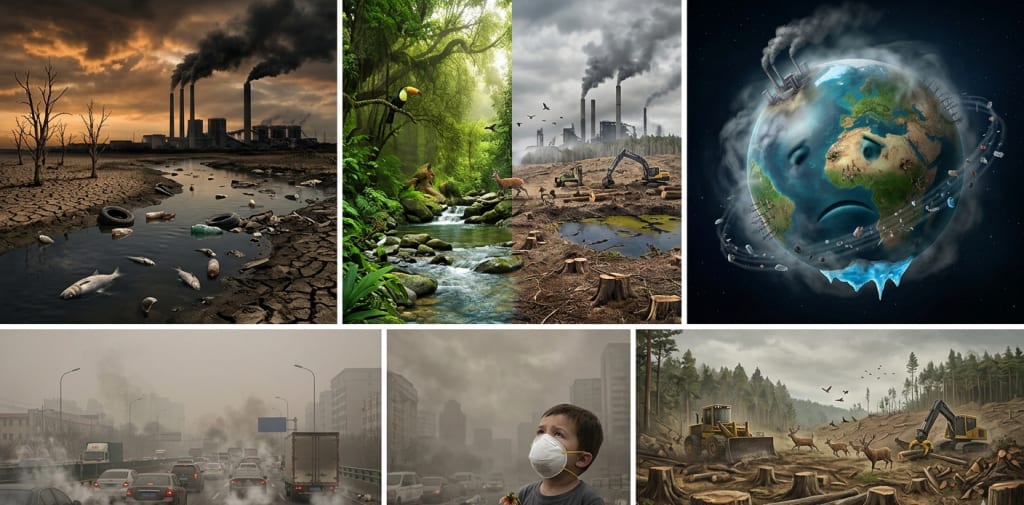
The environment is the natural world around us. It includes air, water, land, plants, animals, and all living and non-living things that support life on Earth. A healthy environment is very important for the survival and well-being of humans, animals, and plants. However, in recent years, the environment has been facing serious harm due to human activities. Pollution, deforestation, and climate change are some of the major environmental problems that are affecting the world today. These harmful effects are not only damaging nature but also creating serious challenges for human life.
One of the most common environmental problems is pollution. Pollution occurs when harmful substances are released into the air, water, or land. Air pollution is caused mainly by smoke from factories, cars, buses, and other vehicles. When people burn fuels such as coal and oil, harmful gases are released into the air. These gases make the air dirty and unsafe to breathe. Many people living in large cities suffer from breathing problems, asthma, and other health issues because of polluted air.
Water pollution is another serious environmental problem. Rivers, lakes, and oceans are often polluted by waste from factories, sewage, and plastic garbage. When these harmful substances enter the water, they make it unsafe for drinking and for animals that live in water. Polluted water can cause diseases such as cholera and typhoid in humans. In addition, many fish and other aquatic animals die because they cannot survive in contaminated water. This affects not only nature but also people who depend on fishing for their livelihood.
Deforestation is also a major cause of environmental damage. Forests are very important because they provide oxygen, shelter for animals, and help maintain the balance of nature. Trees absorb carbon dioxide and release oxygen, which helps keep the air clean. However, many forests are being cut down to build houses, roads, and industries. When trees are removed in large numbers, animals lose their natural homes, and many species become endangered. Deforestation also increases the amount of carbon dioxide in the atmosphere, which contributes to global warming. Another harmful environmental issue is climate change. Climate change refers to long-term changes in the Earth's temperature and weather patterns. Due to the increase of greenhouse gases in the atmosphere, the Earth is becoming warmer. This warming leads to many environmental problems such as melting glaciers, rising sea levels, and more frequent natural disasters. Floods, droughts, hurricanes, and heat waves are becoming more common in many parts of the world. These extreme weather events can destroy homes, damage crops, and threaten human lives.
Environmental damage also affects agriculture and food production. Farmers depend on clean water, fertile soil, and stable weather conditions to grow crops. When the environment is harmed, soil can become less fertile, water supplies may decrease, and weather patterns may become unpredictable. As a result, farmers may struggle to produce enough food. This can lead to food shortages and higher prices, affecting many people around the world.
Human health is also closely connected to the environment. When the environment becomes polluted, people are more likely to suffer from illnesses. Air pollution can cause lung diseases and heart problems, while polluted water can spread infections and other diseases. In addition, exposure to toxic chemicals and waste can have long-term health effects on both adults and children. Wildlife is also suffering because of environmental damage. Many animals depend on forests, rivers, and oceans for their survival. When these natural habitats are destroyed or polluted, animals lose their homes and food sources. Some species are pushed to the brink of extinction, meaning they may disappear forever. The loss of wildlife also disturbs the natural balance of ecosystems. Despite these harmful effects, there are many ways people can help protect the environment. Planting trees, reducing waste, recycling materials, and using clean energy sources are important steps toward protecting nature. Governments and organizations can also create laws and programs to reduce pollution and conserve natural resources.
Education and awareness are also important in protecting the environment. When people understand the importance of nature and the dangers of environmental damage, they are more likely to take responsible actions. Even small efforts, such as saving water, reducing plastic use, and keeping surroundings clean, can make a big difference when practiced by many people.
In conclusion, the harmful effects of environmental damage are becoming a serious global concern. Pollution, deforestation, and climate change are threatening the health of our planet and all living things. If people continue to ignore these problems, the future of the Earth may be at risk. However, by working together and making responsible choices, we can protect the environment and ensure a safe and healthy world for future generation
About the Creator
aadam khan
I am publishing different stories
Keep reading
More stories from aadam khan and writers in Earth and other communities.
Life Underwater
The Earth is often called the “blue planet” because most of its surface is covered by water. Beneath these waters lies an entire world that many people never see with their own eyes. Life underwater is a mystery, a wonder, and a source of survival for both sea creatures and humans. The ocean is not just a huge body of water—it is a home, a protector, and a provider. Exploring this hidden world helps us understand how important it is to care for our planet.
By aadam khan6 months ago in Earth


Comments
There are no comments for this story
Be the first to respond and start the conversation.