
Winter May Be Over, But Snow and Ice Are Not Done Yet
Seasonal shifts do not always mean warmer days as late-season storms bring renewed travel risks

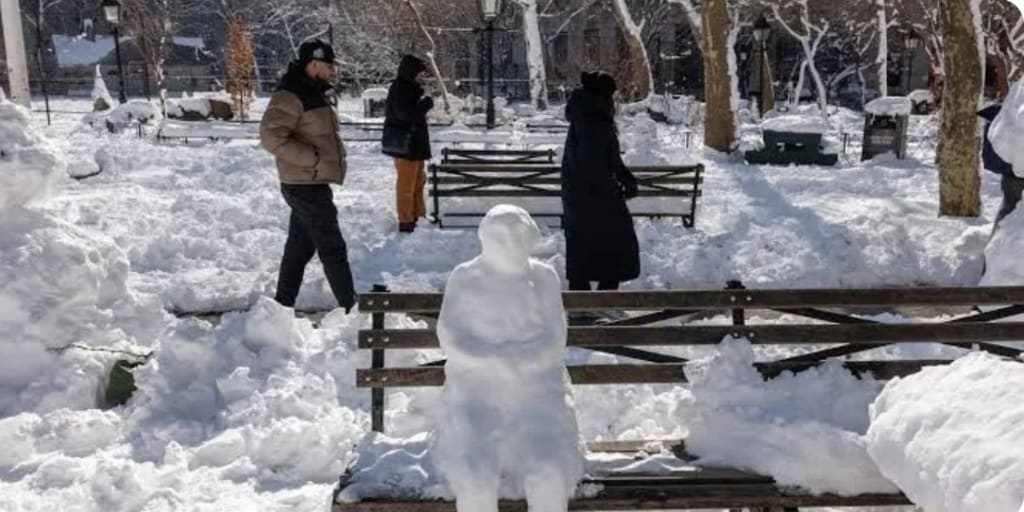
A Calendar Shift, Not a Weather Switch
Meteorological winter has technically ended, but the change on the calendar does not mean cold weather is finished. Across parts of the United States, forecasts continue to show the potential for snow, freezing rain, and icy conditions in the days ahead.
Seasonal transitions often bring unstable weather patterns. While average temperatures begin to rise in early March, cold air masses can still move southward. When they collide with moist air, the result can be snowstorms or ice events that disrupt travel and daily life.
The end of winter on paper does not eliminate the atmospheric conditions that produce snow and ice.
Why Late-Season Snow Happens
Late-season snow is common in many regions. Cold air can remain entrenched in northern states even as southern areas warm up. Jet stream shifts play a major role in this process. When the jet stream dips south, it allows Arctic air to spill into areas that may have recently experienced milder temperatures.
At the same time, early spring systems often carry more moisture. This combination can lead to heavy, wet snow. Unlike lighter midwinter snow, late-season snow tends to be dense and can weigh down trees and power lines.
Ice storms are also a risk during seasonal transitions. A shallow layer of cold air near the surface, combined with warmer air above, can create freezing rain. This type of precipitation freezes on contact and forms a layer of ice on roads, sidewalks, and infrastructure.
Regional Forecast Concerns
Recent forecasts suggest that parts of the Northeast, Midwest, and interior West could see renewed snowfall. In some cases, accumulations may be modest. In others, heavier bands could develop depending on storm tracks.
Urban areas are not immune. Cities that experienced a relatively mild winter may still face disruptions if a strong system develops. Even a few inches of snow can affect commuting patterns, especially if it falls during peak travel hours.
In higher elevations, snowfall totals can be greater. Mountain regions often continue to see snow well into spring. Ski resorts may welcome additional snowfall, but transportation through mountain passes can become hazardous.
The forecast outlook in the widget above provides updated information on temperature and precipitation trends over the next several days.
Travel and Safety Impacts
Late-season snow and ice often catch people off guard. As daylight hours increase and temperatures fluctuate, drivers may not expect slick roads. This can lead to higher accident rates during early spring storms.
Air travel may also be affected. Snow removal operations at airports take time, and ice accumulation on aircraft requires careful de-icing procedures. Even small delays can ripple across flight networks.
Local governments typically scale back winter operations as the season progresses. Snowplows and salt supplies may still be available, but staffing levels can differ compared to peak winter months.
Pedestrian safety is another concern. Refreezing overnight temperatures can create black ice on sidewalks and parking lots. These thin layers are difficult to see and increase the risk of falls.
Infrastructure Strain from Ice
Ice storms can place significant stress on infrastructure. Power outages are a common result when ice accumulates on tree branches and power lines. Heavy ice buildup increases the likelihood of falling limbs and line breaks.
Utility companies often prepare for late-season events, but repair times can vary depending on storm severity and accessibility. In rural areas, restoration efforts may take longer due to distance and terrain.
Water systems can also be affected. Rapid temperature swings may contribute to pipe stress, especially in older systems. While widespread freezing is less common late in the season, localized issues can still occur.
Agriculture and Early Growth Risks
Early spring warmth can prompt budding in trees and the emergence of early crops. A return of freezing temperatures may damage tender growth. Farmers and orchard operators closely monitor forecasts during this period.
Frost and freeze warnings are common in transitional months. Even if snowfall is limited, a hard freeze can harm plants that have already begun to develop.
This variability underscores how seasonal change is gradual rather than abrupt. Agriculture planning often accounts for the possibility of late cold snaps.
Climate Context and Variability
Climate patterns influence how winter transitions unfold. In some years, strong temperature contrasts persist longer than average. Large-scale climate drivers such as El Niño or La Niña can also shape precipitation patterns and storm tracks.
While long-term climate trends show overall warming, that does not eliminate short-term cold events. Individual storms remain influenced by day-to-day atmospheric conditions.
Meteorologists caution against assuming that an early warm stretch signals the permanent end of winter weather. Historical data show that measurable snow has occurred in April in many northern cities.
Understanding this variability helps communities prepare more effectively.
How Communities Can Prepare
Preparation for late-season snow and ice is similar to midwinter readiness. Residents should monitor forecasts closely, especially when temperature swings are predicted.
Basic safety steps include checking vehicle tires, maintaining emergency kits, and ensuring that heating systems remain functional. Even if daytime temperatures rise above freezing, nighttime lows may still drop significantly.
Homeowners should clear gutters and drains to allow melting snow to flow away from foundations. Ice dams can form when melting snow refreezes along roof edges.
Local officials often advise caution during transitional weather because conditions can change quickly.
Economic Considerations
Snow and ice events have economic effects beyond transportation. Retail patterns shift when storms approach, as consumers stock up on essentials. Schools and businesses may close temporarily.
Construction projects can face delays if ground conditions become unstable. Outdoor work becomes more challenging when surfaces are wet or icy.
On the other hand, additional snowfall can benefit water supplies in regions that depend on snowpack for spring runoff. Mountain snowpack acts as a natural reservoir, releasing water gradually as temperatures rise.
The balance between disruption and benefit varies by region and industry.
Looking Ahead to Spring
As March progresses, average temperatures will continue to trend upward. However, short-lived cold waves remain possible. The transition to consistent spring weather often occurs gradually over several weeks.
Forecasters emphasize watching not just temperature forecasts but also precipitation type. A slight shift in storm track can mean the difference between rain and snow.
For residents eager for warmer days, patience may be necessary. Seasonal shifts rarely follow a straight line.
---
A Reminder About Seasonal Expectations
The official end of winter does not flip a switch in the atmosphere. Instead, it marks a statistical boundary used for record-keeping. Nature operates on its own timeline.
Late snow and ice are part of that process. While they may be inconvenient, they are not unusual in many parts of the country.
Staying informed through reliable forecasts and preparing for sudden changes can reduce the impact of these events. As communities move toward spring, awareness remains key.
Winter may be technically over, but for some regions, snow and ice still have a role to play before steady warmth takes hold.
About the Creator
Saad
I’m Saad. I’m a passionate writer who loves exploring trending news topics, sharing insights, and keeping readers updated on what’s happening around the world.
The Technical Rise of Naphtha Recovery from Plastic Waste
For decades, the global narrative surrounding plastic has been defined by a linear economy: produce, use, and dispose. While mechanical recycling has served as the primary method for managing plastic waste, its limitations are well documented. Degradation of polymer chains, contamination from food waste, and the complex composition of multilayer packaging mean that a significant portion of collected plastics—often cited as high as 70%—is relegated to landfills or incineration.
By Bestonpyrolysis6 days ago in Earth
I wanted to title this something different, but worried that my chosen title might cause problems entering the United States in the future so this is the new title. It's the greatest title. No one has ever written a title better than this. (All titles unrelated to content).
Let me be honest. I am finding this difficult. Now, I like a challenge, a stretch, a bit of an obstacle course. “Write about the decline of the British Empire in the form of a narrative poem in which your protagonist is an artichoke” I read, and flex my fingers. “Write a haiku to evoke the sensation of sibilance using only the first half of the alphabet.” “Well”, I think to myself, “this should be fun.” But “write about a system that isn’t working”? A system that isn’t working? Now? In 2026? ONE system? My favourite system that isn’t working? The sexiest system that isn’t working? The one giving me the most angst day to day? The one giving me the most existential dread? I am, as I say, finding this difficult. I will own that I have contemplated writing a thousand words on why the steady “all on” setting on my fairy lights is the EIGHTH of seven options which must be sequentially activated to get there, because that is a system that some fool came up with and it definitely doesn’t work, and now who is paying the price, eh? But how can I write about my fairy lights when…. When…. When….
By Hannah Moore4 days ago in Humans




Comments
There are no comments for this story
Be the first to respond and start the conversation.