
How False Claims About Bill Gates and COVID-19 Spread Online
Understanding why conspiracy theories took hold during the pandemic — and what that tells us about misinformation in the digital age

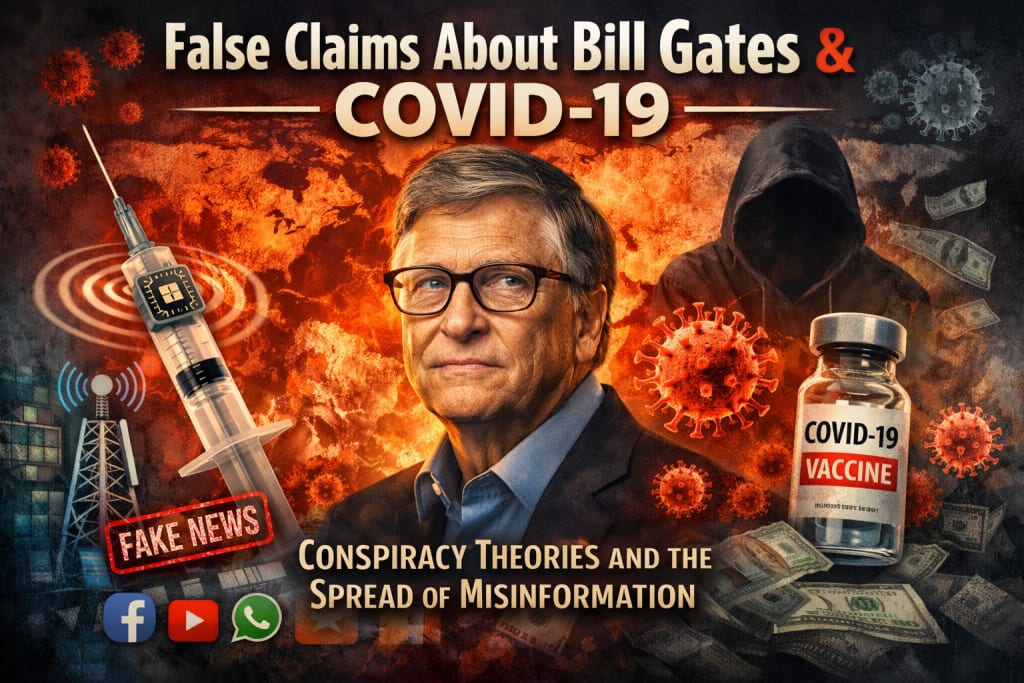
The COVID-19 pandemic was one of the most disruptive global events in recent memory. With fear, uncertainty, and rapidly changing science driving public discourse, misinformation spread almost as quickly as the virus itself. Among the many unfounded claims that circulated, one of the most persistent involved Microsoft co-founder Bill Gates — wrongly accused of using the pandemic for personal gain, control, or even population manipulation. But why did such false narratives take hold, and how did Bill Gates become a focal point of COVID-related conspiracy theories?
The Perfect Storm: Fear Meets Information Chaos
Pandemics by nature breed anxiety. In early 2020, the novel coronavirus appeared suddenly, with governments scrambling to respond and scientists racing to understand it. For many people, the uncertainty surrounding the virus created a psychological vacuum that conspiracy theories quickly filled.
Add to this mix the modern information environment — one where social media platforms amplify every idea, credible or not — and misinformation found fertile ground. When people are scared and seeking answers, they may turn to sources that provide simple explanations for complex problems. Conspiracy theories often fit this pattern: they attribute vast global events to the actions of a few powerful figures, making the world feel more controllable — even if the claims are completely false.
Bill Gates: From Tech Mogul to Conspiracy Target
Bill Gates is no stranger to public scrutiny. As one of the world’s most recognizable philanthropists, he has spent decades investing in global health through the Bill & Melinda Gates Foundation. Long before COVID-19, Gates was a leading voice in advocating for pandemic preparedness, funding vaccine research and infrastructure in developing nations.
Unfortunately, this very expertise made him an easy target for conspiracy theorists. Many false narratives drew on snippets of real facts — like Gates’ work on vaccines — and twisted them into dramatic claims: that he wanted to implant microchips via COVID-19 vaccines, that he sought to reduce the global population, or that he engineered the virus for profit.
None of these claims are supported by credible evidence. However, conspiracy theorists often rely on emotional appeal and selective interpretation rather than facts — and that’s where the danger lies.i
How Falsehoods Spread
There are several reasons why claims about Bill Gates and COVID-19 gained traction:
1. Social Media Amplification
Platforms like Facebook, Twitter, YouTube, and WhatsApp enable information — and misinformation — to travel quickly. Automated algorithms often prioritize engagement over accuracy, meaning dramatic or sensational content gets seen more than careful reporting.
2. Echo Chambers and Confirmation Bias
Online communities can form around shared beliefs. When people are repeatedly exposed to false claims that align with their worldviews, they begin to see these claims as more credible. This psychological effect, known as confirmation bias, reinforces misconceptions and makes them harder to correct.
3. Mistrust of Authorities
Many conspiracy theories thrive in environments where trust in institutions is low. If people already distrust governments, pharmaceutical companies, or mainstream media, they are more likely to accept alternative explanations, even without evidence.
4. Misinterpretation of Intentions
Bill Gates’ philanthropic funding for vaccine development was meant to strengthen global health systems. Yet to some, investment in health initiatives was reframed as a sinister plan for control. Good intentions became distorted into malevolent motives.
Real-World Consequences
These conspiracy theories weren’t just harmless chatter online. They had tangible consequences:
• Vaccine Hesitancy: False claims about microchips or hidden motives discouraged some people from getting vaccinated, hindering public health efforts to achieve widespread immunity.
• Harassment and Threats: Bill Gates and others mentioned in conspiracy posts received threats, illustrating how misinformation can escalate to real hostility.
• Distrust in Experts: Widespread belief in misinformation undermined trust in scientists, health officials, and journalists, complicating efforts to communicate accurate pandemic guidance.
Fighting Misinformation
Combating false narratives requires collective action:
• Media Literacy: Individuals can learn to critically evaluate sources, check credentials, and verify information before sharing.
• Platform Responsibility: Social media companies have taken steps to flag or remove harmful false content, though many argue more needs to be done.
• Transparent Communication: Clear and consistent messaging from health experts and authorities can build trust and reduce the appeal of unfounded claims.
Conclusion
Bill Gates became a central figure in COVID-19 conspiracy theories not because of any evidence of wrongdoing, but because of the way the modern information landscape interacts with human psychology. In times of crisis, people hunger for explanation and certainty — and misinformation can fill that void when trustworthy information is absent or misunderstood.
Understanding how and why these conspiracy theories spread is not just about defending one individual against false claims. It’s about recognizing the importance of reliable information, building critical thinking skills, and strengthening public trust in science — so that the world is better prepared for the next challenge that comes its way.
About the Creator
Irshad Abbasi
Ali ibn Abi Talib (RA) said 📚
“Knowledge is better than wealth, because knowledge protects you, while you have to protect wealth.
Keep reading
More stories from Irshad Abbasi and writers in Education and other communities.
The First UK Baby Born from a Deceased Donor’s Uterus
In a historic medical breakthrough, a baby boy named Hugo was born in the United Kingdom just days before Christmas 2025, weighing 7 pounds and making global headlines. His birth was not only a moment of joy for his family but also a landmark achievement in modern medicine. Hugo is the first baby in the UK to be born using a uterus transplanted from a deceased donor, marking a new era in reproductive science and offering hope to millions of women around the world.
By Irshad Abbasi 5 days ago in Education
Vanishing Colors: The Fight to Protect Endangered Butterflies and Moths
Across fields and forests, butterflies and moths once moved in vibrant waves of color. Today, however, many of these species struggle to survive. Scientists continue to document population declines in multiple regions. As natural habitats shrink, these insects lose the resources they need to complete their life cycles. Consequently, ecosystems grow quieter and less diverse.
By Akito Kawahara7 days ago in Education
Cassie and Johnny
I’m the kind of dame you notice. I’m no femme fatale, but you can’t ignore me, at least not until I warn you about what’s coming, then everybody ignores me. Hell, they usually blame me afterwards and give Johnny all the credit for saving the day, but my Johnny couldn’t save a seat at the movies without my help. Sure, he’s brawny, but brainy? Not so much. Like that time I asked him to spot me five bucks, and he said he didn’t see it anywhere on me, and believe you me, he looked but good.
By Harper Lewis4 days ago in Critique



Comments
There are no comments for this story
Be the first to respond and start the conversation.