
Why the Sun Will Never Go Supernova: The Science Explained
The Sun is the life-giving center of our solar system, providing warmth, light, and energy to Earth. Because supernova explosions are among the most powerful and dramatic events in the universe, many people wonder: Could the Sun ever explode as a supernova? The simple answer is no. The Sun will never go supernova. But understanding why requires exploring stellar mass, nuclear fusion, stellar evolution, and the physics that determine how stars live and die.

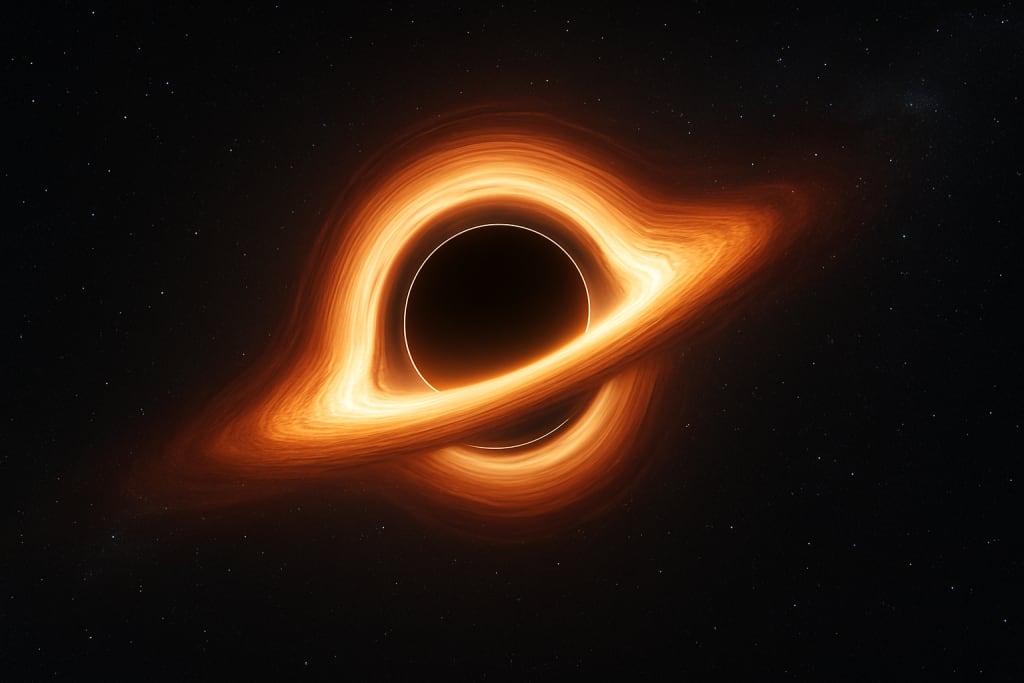
What Is a Supernova?
A supernova is a massive stellar explosion that occurs at the end of a star’s life cycle. During a supernova, a star can briefly outshine an entire galaxy and release more energy than our Sun will produce in its entire lifetime.
There are two main types of supernovae:
1. Core-collapse supernova – Occurs when a massive star runs out of fuel and its core collapses under gravity.
2. Type Ia supernova – Occurs when a white dwarf star in a binary system gains too much mass and explodes.
Both types require conditions that the Sun simply does not meet.
________________________________________
The Most Important Factor: Stellar Mass
The key reason the Sun will never go supernova is its mass.
Stars must be at least eight times more massive than the Sun to undergo a core-collapse supernova. These massive stars burn their fuel extremely quickly and end their lives in catastrophic explosions.
The Sun is classified as a medium-sized star. It does not have enough mass to:
• Generate the extreme core pressures required for heavy element fusion.
• Collapse into a neutron star or black hole.
• Trigger the runaway reactions that cause supernova explosions.
Because it lacks sufficient mass, the Sun’s fate is entirely different.
________________________________________
How Massive Stars Become Supernovae
To understand why the Sun won’t explode, let’s briefly examine how massive stars do.
In very large stars:
1. Hydrogen fuses into helium.
2. Helium fuses into carbon.
3. Carbon fuses into heavier elements.
4. The process continues until iron forms in the core.
Iron cannot produce energy through fusion. Once an iron core forms, fusion stops. Without outward pressure from fusion, gravity wins.
The core collapses within seconds, causing a powerful shockwave that blasts the outer layers into space — a supernova explosion.
The Sun will never reach the stage where it fuses elements beyond helium in large quantities.
________________________________________
The Sun’s Nuclear Fusion Process
The Sun generates energy through hydrogen fusion using the proton-proton chain reaction. This process converts hydrogen into helium at a steady, controlled rate.
Because the Sun’s core temperature is about 15 million degrees Celsius, it can fuse hydrogen efficiently — but not heavy elements like carbon or iron in large amounts.
Massive stars have much hotter cores, allowing them to fuse heavier elements. The Sun does not have the internal pressure or temperature required for this advanced fusion process.
________________________________________
Why the Sun Cannot Form an Iron Core
An iron core is the trigger for core-collapse supernovae.
For iron to form:
• Core temperatures must exceed hundreds of millions of degrees.
• The star must have immense gravitational pressure.
• The star must be extremely massive.
The Sun will never achieve these conditions. Its mass simply does not allow it to compress its core to such extremes.
Instead of forming iron, the Sun will stop fusion long before reaching that stage.
________________________________________
The Sun’s Real Future: Becoming a Red Giant
Although the Sun will not explode, it will change dramatically.
In about 5 billion years:
1. The Sun will exhaust hydrogen in its core.
2. The core will contract under gravity.
3. The outer layers will expand.
4. The Sun will become a red giant.
During this phase, it will grow large enough to engulf Mercury and possibly Venus.
However, this expansion will be gradual — not explosive.
________________________________________
The Final Stage: White Dwarf
After the red giant phase:
• The Sun will shed its outer layers.
• These layers will form a glowing shell of gas called a planetary nebula.
• The remaining core will become a white dwarf.
A white dwarf is a small, dense stellar remnant about the size of Earth but with half the Sun’s mass.
It will slowly cool and fade over billions of years.
No explosion. No supernova.
________________________________________
Why the Sun Cannot Become a Type Ia Supernova
The second type of supernova, Type Ia, occurs when a white dwarf gains mass from a companion star in a binary system.
However, the Sun:
• Is not part of a close binary star system.
• Has no companion star to transfer mass.
• Will evolve alone.
Without a companion star feeding it extra material, the Sun’s future white dwarf will remain stable.
________________________________________
Comparing the Sun to Massive Supernova Candidates
Stars such as Betelgeuse (a massive red supergiant) are candidates for future supernova explosions. These stars are:
• Dozens of times more massive than the Sun.
• Much hotter internally.
• Burning fuel at a rapid rate.
The Sun, by contrast, burns fuel slowly and steadily. It is designed — by physics — for a long, quiet life.
________________________________________
Hydrostatic Equilibrium and Stability
The Sun remains stable due to hydrostatic equilibrium — the balance between:
• Gravity pulling inward.
• Fusion pressure pushing outward.
Massive stars eventually lose this balance dramatically, triggering collapse.
In the Sun’s case, the transition from main sequence to red giant will occur smoothly without catastrophic collapse.
________________________________________
Could the Sun Explode Unexpectedly?
There is no known physical mechanism that would cause the Sun to suddenly explode.
The laws of stellar evolution are well understood. Observations of billions of stars across the galaxy confirm predictable life cycles based on mass.
The Sun follows the path of medium-mass stars, not massive supernova-producing stars.
________________________________________
What Would Happen If the Sun Did Go Supernova?
If the Sun were massive enough to go supernova (which it is not), Earth would be instantly destroyed.
The explosion would release:
• Intense gamma radiation.
• Powerful shockwaves.
• Massive amounts of debris.
Fortunately, this scenario is scientifically impossible given the Sun’s mass.
________________________________________
Evidence from Other Stars
Astronomers have observed countless stars similar in mass to the Sun. None of them end their lives as supernovae.
Instead, they follow the same path:
Main sequence → Red giant → Planetary nebula → White dwarf
This consistent pattern confirms the Sun’s predicted fate.
Organizations like NASA and other astronomical institutions continue to study stellar evolution, and all evidence supports the conclusion that the Sun will never go supernova.
________________________________________
Key Reasons the Sun Will Never Go Supernova
Here is a clear summary:
• The Sun does not have enough mass.
• It cannot form an iron core.
• It cannot undergo core-collapse.
• It is not part of a binary system for Type Ia explosion.
• It will evolve into a white dwarf instead.
Each of these factors independently prevents a supernova event.
________________________________________
Why This Is Good News for Earth
The fact that the Sun will not explode provides long-term stability for the solar system.
Although Earth will eventually become uninhabitable due to the Sun’s gradual brightening, this will happen billions of years from now — not suddenly.
The absence of supernova risk ensures that our star remains a predictable and steady energy source.
________________________________________
Frequently Asked Questions
Can the Sun suddenly explode?
No. Its mass is far too small.
Will the Sun ever collapse into a black hole?
No. Only stars many times more massive can become black holes.
How long before the Sun dies?
About 5 billion more years before it leaves the main sequence.
________________________________________
Conclusion
The Sun will never go supernova because it does not have enough mass to trigger the processes required for such an explosion. Supernovae occur only in massive stars or specific binary systems — conditions the Sun does not meet.
Instead, the Sun will follow a calm and predictable path: expanding into a red giant, shedding its outer layers, and eventually becoming a white dwarf.
This steady evolutionary process has allowed life to flourish on Earth and will continue to provide stability for billions of years to come.
Rather than fearing a sudden explosion, we can appreciate the Sun for what it truly is — a stable, middle-aged star quietly powering our solar system through the balanced physics of nuclear fusion.
About the Creator
Keep reading
More stories from shahkar jalal and writers in Education and other communities.
Exploring FSC 5999: Miscellaneous Electrical and Electronic Components in Aerospace and Avionics
When I first started studying aircraft systems, I realized that aviation engineering is as much about the parts you don’t see as the ones you do. Beyond major systems like engines and flight controls, there exists a broad yet vital collection of miscellaneous electrical and electronic components — categorized under FSC 5999 — that quietly support mission-critical functions throughout an aircraft.
By Beckett Dowhanabout 9 hours ago in Education
I was in a Toxic Relationship, with my Workplace
“You got that?” My ex yelled. His hands were balled into fists at his side. At six foot three, he towered over me. A normal person would have been afraid, but I looked up a video of George Lopez repeatedly saying, “I got this,” and showed it to him. I had grown used to this treatment, so much so that I didn’t blink when he ripped the phone from my hand and threw it across the room.
By Jade M.6 days ago in Confessions



Comments
There are no comments for this story
Be the first to respond and start the conversation.