
WHEN SILENCE SPEAKS.
RECOGNIZING WHEN SOMETHING IS WRONG WITH A CHILD WHO DOESN'T SAY IT AND WHAT TO DO

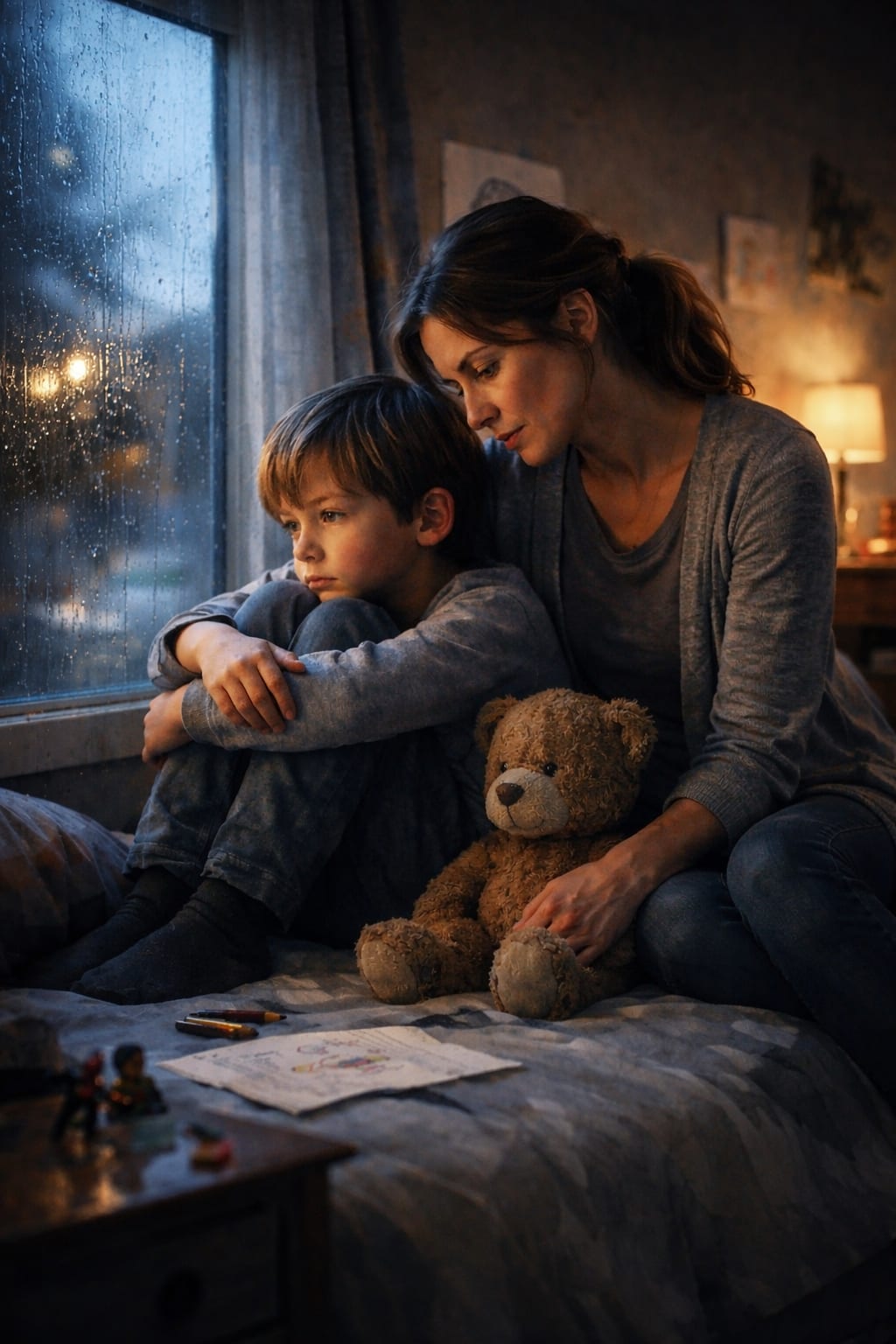
There is a kind of silence in children that does not feel peaceful. It feels heavy, almost charged, as if something unspoken is filling the space between their small bodies and the world around them. As adults, we are trained to listen for words, to expect explanations, to believe that if something is wrong, it will be said aloud. But children do not always work that way. Many of them do not have the vocabulary for what they are feeling, and some of them, especially when something truly painful has happened, do not feel safe enough to try.
I have come to understand that when a child does not express distress verbally, it does not mean the distress is absent. It often means it has moved inward. It shows up in quieter, more subtle ways. It shifts their posture, their energy, the way they look at you when they think you are not paying attention. It changes the rhythm of their presence.
One of the first signs that something may be wrong is a change in behavior that cannot easily be explained. A child who used to laugh freely may begin to withdraw into themselves. A child who was once calm might suddenly react with irritability over the smallest frustrations. Sometimes the shift is not dramatic; it is gradual, like watching a color fade from something you once knew vividly. They might stop sharing details about their day, or they may answer questions with unusual brevity, as if speaking feels like a risk. When a child becomes “different” without a clear reason, that difference deserves to be noticed, not dismissed as a phase.
Sleep often becomes a silent messenger of emotional turmoil. Nightmares may begin, or a child who once slept peacefully might resist going to bed, insisting on lights being left on or doors remaining open. They may wake frequently, appear tired during the day, or suddenly fear being alone at night. These changes are rarely random. The mind continues processing what it cannot resolve while awake, and children do not always have the tools to soothe themselves through it.
The body, too, can carry what the heart cannot articulate. Repeated headaches, stomachaches without medical explanation, sudden fatigue, or even nausea can be manifestations of anxiety or fear. It is not that the pain is imagined; it is that the source is emotional rather than physical. Children often lack the language to say, “I feel unsafe,” but they can say, “My stomach hurts.” Listening to that translation requires patience and discernment.
Regression can also signal that something feels overwhelming. A child who had grown independent may begin clinging again, asking for more reassurance, reverting to behaviors they had long outgrown. They might speak in a more childish tone, seek comfort objects, or show heightened separation anxiety. It is tempting to see regression as immaturity, but more often it is an attempt to return to a time that felt secure. It is a quiet request for safety.
The eyes, in particular, can reveal what words conceal. There are moments when you look at a child and sense that they are somewhere else, as though part of them has retreated inward. Sometimes their gaze becomes watchful, scanning the room, hyperaware of sounds and movements. Other times it carries a sadness that feels too deep for their age. These are not dramatic cinematic signs; they are subtle shifts in expression, in the way connection feels slightly altered.
Emotional changes also deserve careful attention. A sudden fear of specific places or people should never be brushed aside lightly. If a child who once felt comfortable going somewhere now resists intensely, cries, or becomes visibly tense at the mention of it, that reaction is meaningful. Excessive fear, new anxieties, or unexpected outbursts of anger may not be defiance but signals of internal overwhelm. Anger, in particular, can be easier to express than vulnerability. A child who lashes out might be trying to protect themselves from feelings that feel unbearable.
When confronted with these changes, the instinct to demand answers can be strong. We want to fix what is wrong, to identify the cause and eliminate it immediately. Yet pressing a child with direct or accusatory questions can close the very door we are trying to open. Safety must come before disclosure. Instead of asking bluntly what happened, it can be more effective to gently reflect what you have noticed. Saying that you have observed they seem a little different lately, and that you are there whenever they want to talk, creates space rather than pressure. It signals attentiveness without forcing a confession.
Tone matters as much as words.
Children are acutely sensitive to emotional undercurrents. If they sense panic, anger, or urgency in you, they may shut down further, fearing that their truth will cause chaos. Remaining calm does not mean minimizing what you suspect; it means becoming the steady ground they need. Your regulation becomes their refuge.
Creating an environment where emotions are openly acknowledged every day can also make an enormous difference. When adults speak honestly about their own feelings in age-appropriate ways, children learn that emotions are not shameful or dangerous. They begin to understand that feeling sad, afraid, or confused does not make them weak. It makes them human. In such an environment, silence becomes less necessary because vulnerability is not punished.
Sometimes children reveal their inner world indirectly through play, art, or storytelling. Observing without interrogating can provide valuable insight. A drawing filled with dark colors, a story that repeatedly centers on a character who is trapped or frightened, or play scenarios involving secrecy and fear may reflect internal experiences. The key is not to overinterpret every symbol but to notice patterns and remain gently curious.
There are moments when intuition speaks before evidence appears. A persistent sense that something is wrong, even if you cannot articulate why, should not be ignored. Intuition is often built from subtle observations accumulating beneath conscious awareness. If concern lingers, seeking professional guidance is not an overreaction; it is a responsible act of care. Pediatricians and child psychologists can help explore possibilities and provide safe spaces for children to open up.
In the most difficult scenarios, when there is suspicion of abuse or serious harm, courage is required. Discomfort must not override protection. Ensuring the child’s immediate safety, documenting concerning behaviors, and consulting professionals are crucial steps. Above all, children must hear repeatedly that they are not in trouble and that they will be believed. Shame and fear are powerful silencers; reassurance is their antidote.
It is important to remember that not every quiet child is hiding something terrible. Some children are naturally introspective, processing life internally. The goal is not to search for tragedy where none exists but to remain attentive to meaningful change. Patterns, consistency, and context matter more than isolated incidents.
Ultimately, recognizing when something is wrong with a child who does not say it requires presence more than perfection. It requires slowing down enough to notice shifts in mood, behavior, and energy. It requires resisting the urge to dismiss discomfort simply because it is inconvenient. Most of all, it requires creating a relational space so steady and compassionate that, when the child is ready, words will feel safer than silence.
Silence in children is not always emptiness. Sometimes it is a signal flare sent quietly into the sky. When we learn to see it, to respond with patience rather than panic, we become the kind of adults who transform that silence from a shield into a bridge. And in that transformation, a child may finally feel less alone with whatever they have been carrying in the dark.
About the Creator
Keep reading
More stories from Yolanda Cristobal and writers in Families and other communities.
HER EVERY SIN
He didn’t even realize, as he tucked that wave behind her ear, that he was heaven-sent. Everything she had ever asked for was staring back at her in human form. He was every birthday wish, made of pink candles, feeling the hope in her breath as it brushed past their lips. He was a random thought she’d had on a Sunday, half asleep, wondering if she’d have to make coffee when he finally arrived, not just tea. He was the empty space on the right side of the bed, the side closest to the door. He carried that quiet, fatherly kind of protection, with a hand raised only ever as an offering to help her watch her step. He was built from all the love she had ever given to the wrong places. It flowed through him, pumped through his veins, generously poured out so she would never again feel as though she wasn’t enough. He was quietly kind and never wanted to stand in her spotlight. Every tear that had fallen from her face was sewn into his skin. He knew her heart, her hurt, her every sin. Made in the image of an angel, he must have been. He didn’t even realize it: he was everything she had ever yearned for, and more.
By Yolanda Cristobal 5 days ago in Poets
Why Is Playa Delfines One of Cancun’s Most Iconic Public Beaches
From the moment I first laid eyes on Playa Delfines, I was captivated by its wide stretches of white sand and the vibrant turquoise waters that seemed to go on forever. There’s a reason this beach is considered one of Cancun’s most iconic public spots, and it’s not just because of the scenery. Playa Delfines offers an experience that blends natural beauty, accessibility, and unforgettable moments for visitors of all ages.
By Amanda Glen5 days ago in Families
Trickle Them Down, But Not Out
The thing about smart people is that they should know better, but alas, intelligence is not the same as wisdom. Not only do the mistakes of experts too short on vision—when they are not corrected—have the potential to do great and far-reaching damage, but they also undermine public confidence in the very notion of expertise. This is particularly so when expertise is wielded in defence of the rich and powerful as a cudgel against those laid low. As an academic, this lack of faith in “so-called experts” is painful to see as it plays out in the spread of dis-/misinformation, conspiracy theories, and anti-intellectualism writ large. But it is also an understandable impulse given the catastrophic failure of an economic ideology pushed by certain economic experts. Supply-side economics has shaped a broken system for the last half-century and has arguably done more to undermine the fabric of the American Dream than any policy framework of the past century.
By Cory Wright-Maley7 days ago in Humans




Comments
There are no comments for this story
Be the first to respond and start the conversation.