
A Knight of the Seven Kingdoms Review – Small Stakes, Strong Impact
A heartfelt and grounded return to Westeros that trades dragons for dignity, focusing on honor, friendship, and the quiet strength of underdogs.

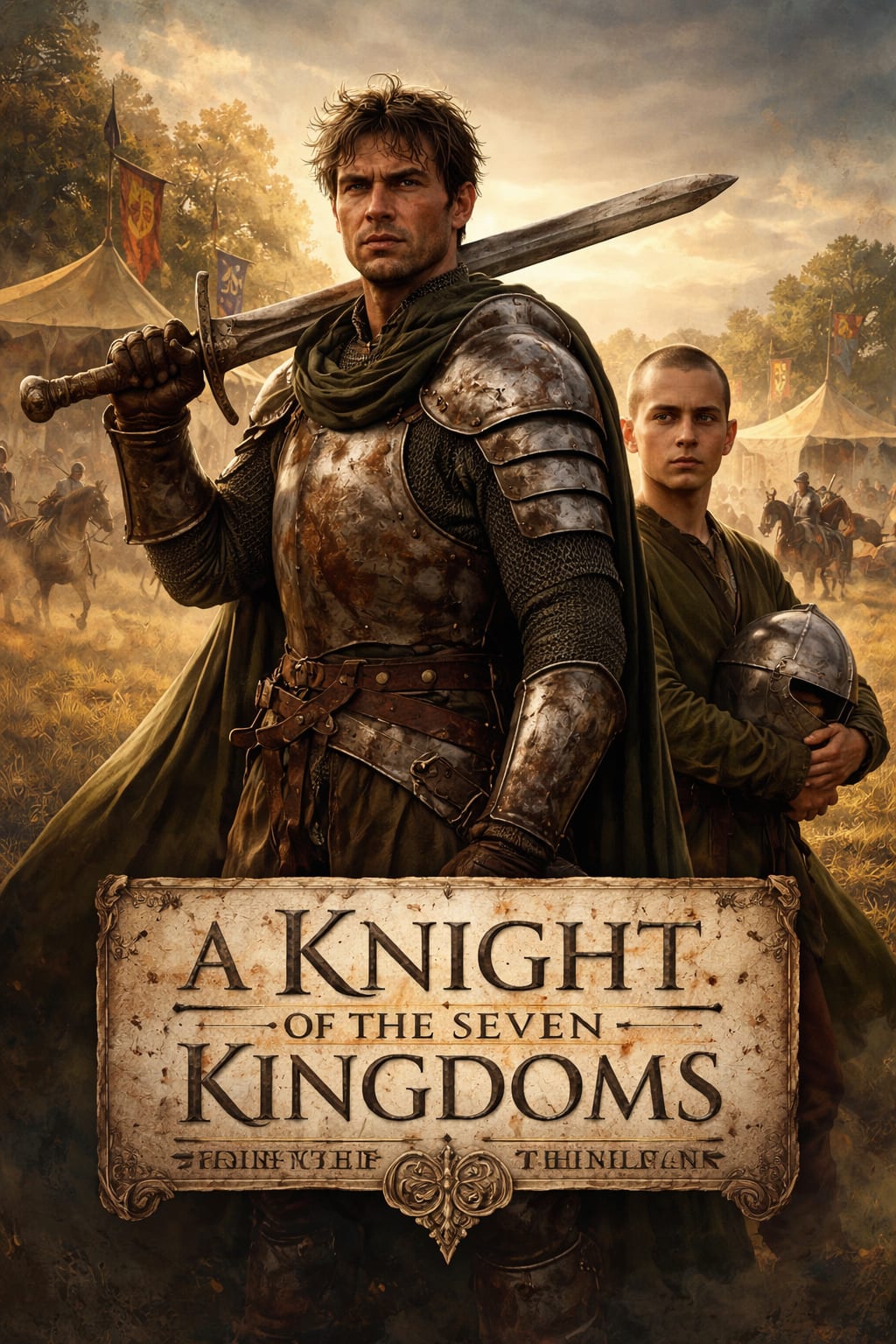
As one of the most celebrated fantasy universes ever created, A Song of Ice and Fire continues to command a loyal global audience. After diving deep into Targaryen history with House of the Dragon, the franchise now pivots to something more intimate. A Knight of the Seven Kingdoms trades dragons and dynastic wars for a grounded, character-driven journey—and the result is surprisingly refreshing.
Adapted from the “Tales of Dunk and Egg” novellas by George R. R. Martin, the series takes place in the calm between storms—chronologically positioned after House of the Dragon yet long before the chaos of Game of Thrones. Instead of exploring royal courts or burning cities, it follows a wandering hedge knight and his unlikely squire across the dusty roads of Westeros.
A Ground-Level Tale in a Grand Universe
The story centers on Ser Duncan the Tall, known simply as Dunk, played with heartfelt sincerity by Peter Claffey. A towering yet humble figure, Dunk dreams of proving himself in a world that often dismisses men of low birth. His entry into a regional tournament becomes both an opportunity and a trial.
By his side is Egg (Dexter Sol Ansell), a sharp-witted boy seeking experience as a squire. Though initially appearing ordinary, Egg’s background carries greater weight, adding quiet tension beneath the surface of their travels.
What sets this series apart is its deliberate modesty. Unlike its predecessors, it doesn’t aim for sprawling political chess games. Instead, it focuses on personal honor, social disparity, and quiet rebellion against arrogance.
Lean Structure, Focused Storytelling
With six episodes running roughly 30 to 40 minutes each, the season wastes no time. There are no sprawling subplots or excessive detours. The narrative remains tightly centered on Dunk and Egg’s journey and the escalating tournament conflict.
This compact format works in the show’s favor. Every scene feels purposeful. There is little narrative fat, and the pacing remains steady without becoming rushed. The focus never strays far from the emotional stakes at the core.
In contrast to the layered conspiracies of earlier installments, this series thrives on simplicity. And that simplicity becomes its greatest strength.
Character First, Spectacle Second
Where other entries in the franchise emphasize power struggles, A Knight of the Seven Kingdoms prioritizes humanity.
Dunk’s defining trait isn’t skill—it’s compassion. Raised in poverty and hardened by survival, he carries a strong moral compass. His awkward manner and occasional missteps make him relatable rather than heroic in a traditional sense. He represents the rare underdog worth cheering for in a universe often dominated by cynicism.
Egg provides an ideal counterbalance. Intelligent and determined, he refuses to be defined by expectation. His quiet defiance of inherited privilege reinforces one of the show’s strongest themes: true nobility is earned, not inherited.
The chemistry between the two leads anchors the series. Their banter, disagreements, and shared growth feel natural and earned.
Themes of Class and Justice
A recurring thread throughout the season is the divide between the powerful and the powerless. Knights and nobles speak of honor, yet often act with cruelty. Meanwhile, those with little status demonstrate the most integrity.
When supporting characters rally behind Dunk, it signals something rare for Westeros—a glimmer of hope. The show subtly critiques entitlement while celebrating solidarity.
This thematic direction gives the story a lighter emotional tone overall, though darker undertones remain. Moments of injustice and humiliation remind viewers that this is still the same harsh world—just viewed from a different angle.
Visual Identity and Medieval Realism
Stripping away magical spectacle, the show leans fully into its medieval aesthetic. The tournament grounds feel authentic and textured, from polished armor to muddy battlegrounds.
Cinematography keeps audiences close to the characters rather than soaring above them. We’re not watching from the perspective of kings—we’re standing in the mud beside hedge knights.
The climactic duel stands out as a highlight. Mixing mounted combat with brutal hand-to-hand exchanges, the sequence emphasizes weight and exhaustion. Each clash of steel feels tangible. The choreography avoids glamour, opting instead for grit and realism.
Musically, the tone shifts from sweeping orchestration to lighter, almost playful melodies. Whistled motifs and rustic tunes reinforce the grounded, hopeful atmosphere.
Minor Shortcomings
The reduced episode count does limit the depth of certain secondary characters. While many leave strong impressions through sharp dialogue and personality, some arcs feel abbreviated.
Additionally, viewers expecting intense political intrigue or supernatural elements may find the scale understated. This is not a story about world-altering events—it’s about personal integrity.
Yet these perceived weaknesses are part of the show’s identity. It never pretends to be something grander than it is.
Final Verdict
A Knight of the Seven Kingdoms proves that epic storytelling doesn’t always require epic scale. By narrowing its focus, it discovers emotional clarity and narrative strength.
It’s a tale of loyalty, quiet bravery, and the courage to stand up in a world that rarely rewards goodness. In many ways, it captures the heart of Westeros more effectively than its louder predecessors.
Small in scope but rich in spirit, this spin-off earns its place among the franchise’s strongest adaptations.
Rating: 8.5/10
About the Creator
Fawad Ahmad
Storyteller from the United States sharing tales that inspire, entertain, and make you think. Follow for weekly stories and creative adventures!" ✍️🌟
Keep reading
More stories from Fawad Ahmad and writers in Fiction and other communities.
Lightning Never Strikes Twice
The distant rumble, the sudden deluge, the crescendo of sound, the flash of light, the explosive energy — it never gets old. I became an amateur storm chaser about two years ago. My wife, Cindy suggested it. Sort of. She said, "Alex, you know this cancer is killing me. I've come to terms with that, but you're smothering me. Go join a band, write a book, or become a storm chaser, for all I care. I love you, but you need a hobby."
By Julie Lacksonen3 days ago in Fiction



Comments (1)
♥️♥️