
The Last Lightkeeper of Lake Kivu
In the quiet hills of western Rwanda, one man’s nightly ritual keeps an old lighthouse glowing—and a forgotten promise alive.

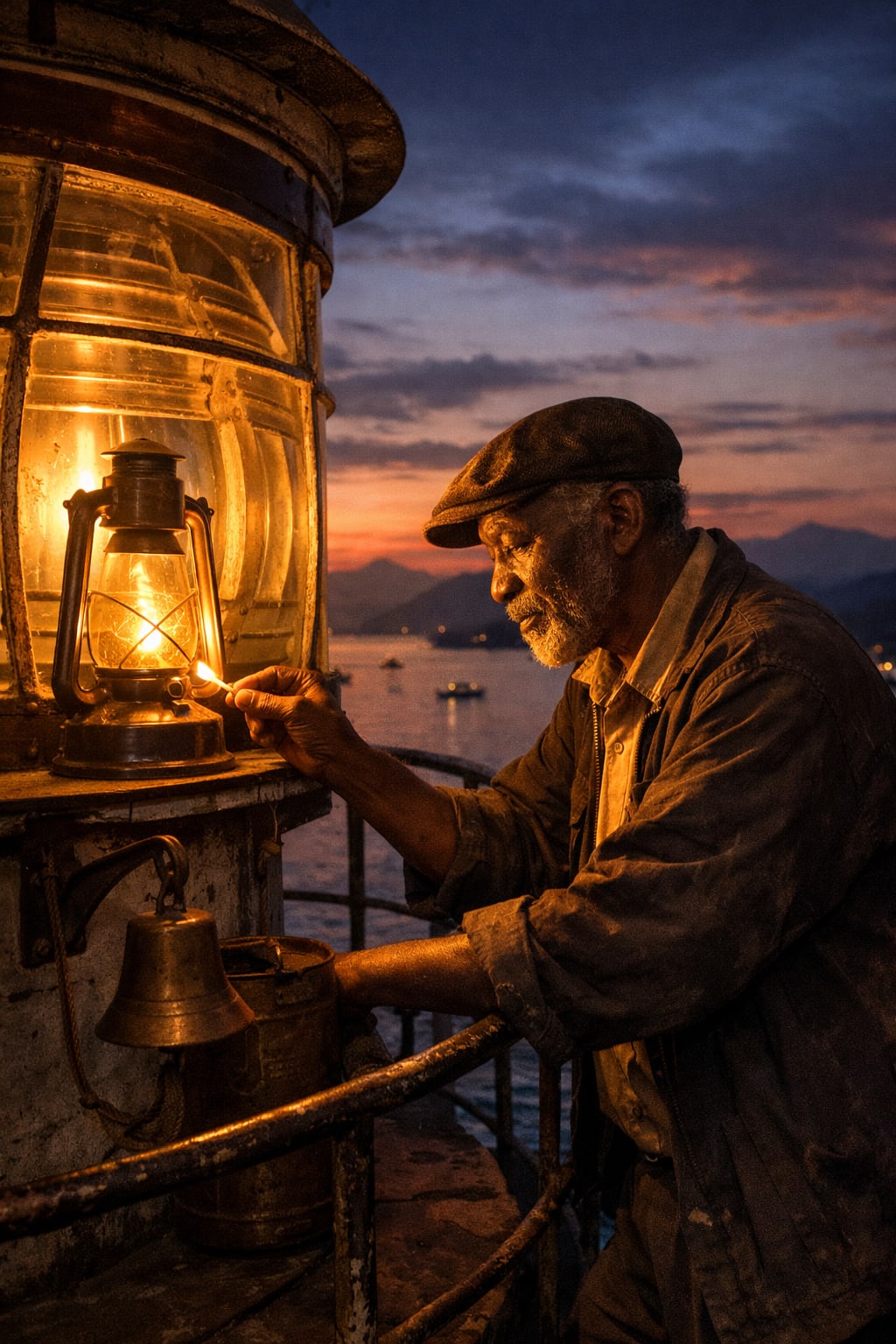
On the northern edge of , where the water turns molten gold at sunset and the fishing boats drift like shadows across the horizon, stands a lighthouse that most maps have forgotten. It is small, built of aging stone, and leans ever so slightly toward the wind. And inside it lives Emmanuel Nkuranga, the last lightkeeper.
The people of know him simply as “Mzee wa Taa”—the old man of the light. Every evening, just before dusk spills into darkness, Emmanuel climbs the narrow spiral staircase with a kerosene can in one hand and a soft cotton cloth in the other. He polishes the thick glass lens until it shines, checks the wick with careful fingers, and waits for the exact moment when the first star appears over the lake. Only then does he strike the match.
The lighthouse was built decades ago when trade boats traveled more frequently between Rwanda and the Democratic Republic of Congo. In those days, Lake Kivu was busier, and the light served as a guiding star for fishermen navigating sudden storms and thick night fog. But modern GPS systems and brighter electric beacons along the larger ports have rendered Emmanuel’s tower almost ceremonial.
Because for the fishermen who still trust the rhythm of the water more than satellites, the glow from the old lighthouse means something deeper than navigation. It is tradition. It is reassurance. It is home.
Emmanuel did not always intend to be a lightkeeper. As a young man, he had dreams of becoming a schoolteacher. He loved books and once spent long afternoons reading borrowed novels under a jacaranda tree near the shore. But when his father, the former lightkeeper, fell ill, Emmanuel returned from Kigali to help. What was meant to be temporary became permanent. His father passed away one rainy season, and Emmanuel inherited not only the tower’s keys but also its quiet responsibility.
“There must always be a light,” his father had whispered during his final days. “Not just for boats—but for people.”
For years, Emmanuel wondered what that meant.
The answer came one stormy night fifteen years ago.
A sudden squall had swept across Lake Kivu, catching several small fishing boats by surprise. The wind roared through the hills, and the sky tore open with lightning. Emmanuel had already lit the lamp when he noticed one boat drifting too close to the rocky outcrop near the shore. Through the sheets of rain, he saw the frantic waving of arms.
Without hesitation, he ran down the staircase and grabbed the old hand bell his father used to ring in emergencies. Standing outside in the storm, he rang it again and again, the sound cutting through the wind like a sharp cry. At the same time, he adjusted the shutters around the lamp to intensify its beam toward the struggling boat.
The fishermen later said it was the combination of the bell and the brighter light that helped them orient themselves and steer away from the rocks. They reached shore soaked and shaken—but alive.
Word spread quickly through Gisenyi. From that day on, the lighthouse was no longer seen as outdated. It was seen as necessary.
Years passed, and the world changed around Emmanuel. New hotels rose along the lakeshore. Tourists came to photograph sunsets and post them online. The old lighthouse, once ignored, became a curious landmark for travelers seeking “authentic experiences.” Some evenings, children gather near its base to watch the ritual of lighting the lamp. Emmanuel never charges a fee. Instead, he tells them stories—about storms, about courage, about his father.
He speaks softly, but his words carry weight.
“Technology is good,” he tells them, “but responsibility is better. Machines can guide you. But only people can care.”
Recently, officials from Kigali visited with a proposal: to convert the lighthouse into a small museum and replace the kerosene lamp with a solar-powered automated beacon. It would be efficient, environmentally friendly, and cost-effective. Emmanuel listened politely. He even agreed that progress was important.
“But will it still need someone to climb the stairs?” he asked.
They hesitated.
That evening, after the officials left, Emmanuel climbed the staircase more slowly than usual. His knees ached, and the kerosene can felt heavier than before. From the top balcony, he looked out across Lake Kivu. The water shimmered under a sky streaked with orange and violet. Fishing boats were already returning, their silhouettes cutting across the fading light.
He struck the match.
As the flame flickered to life and the lens began to glow, Emmanuel felt the familiar calm settle over him. Whether the lighthouse would become a museum or remain a working tower, he did not know. But he understood now what his father meant.
The light was not merely about ships and storms.
It was about showing up every day, even when the world moves on. It was about standing in one place long enough to matter.
Far out on Lake Kivu, a fisherman glanced toward the shore and saw the steady glow. He adjusted his course slightly and smiled.
The light was still there.
About the Creator
Keep reading
More stories from writers in Fiction and other communities.
TUS NUA - ch 53
TUS NUA – ch 53 New Beginnings – Mia and Midnight (*)(*)(*) Finola knew Ali’s brother-in-law needed to put his mind at rest. She fed her arm through his and led him outside. “We’ll sit here. If you like, I can put a block around us so our conversation will be private.”
By Margaret Brennanabout 21 hours ago in Fiction
Silken Chains
Silhouettes of the female form were given flesh and bone. Silken skin glistened under the spotlight. Dry ice rose around our Icons as they danced atop their podiums in the Square. Heralded for their beauty, their movements were slight, powerful, and sensual.
By Paul Stewart3 days ago in Fiction




Comments
There are no comments for this story
Be the first to respond and start the conversation.