
Chance AI vs Google Lens: Understanding Art Instead of Just Identifying It
Chance AI vs Google Lens

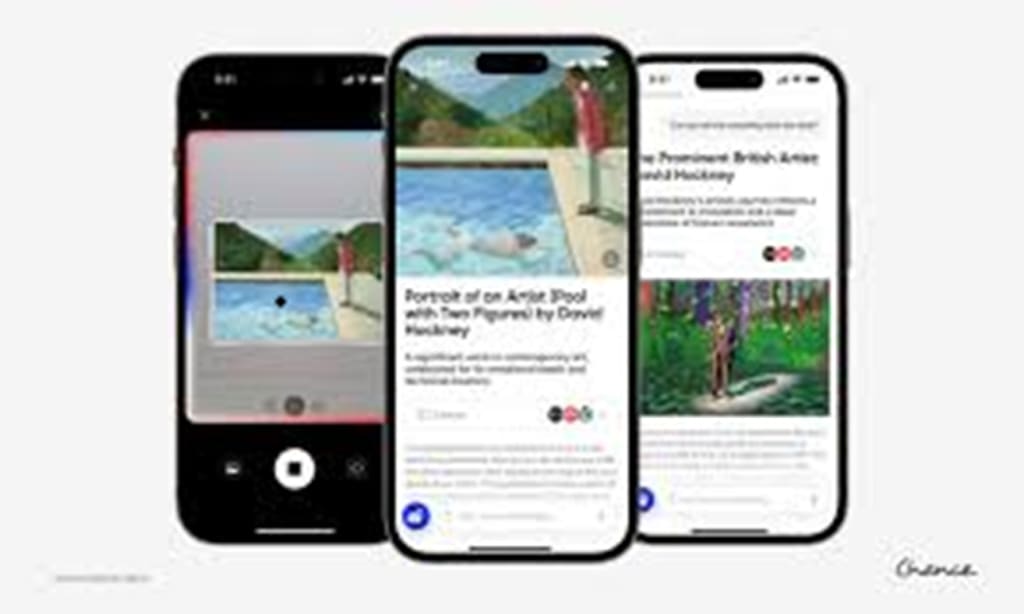
Artificial intelligence has made it easier than ever to learn about the world around us through images. With just a quick photo, modern tools can identify objects, places, plants, products, and even famous artworks. Two tools often discussed in this space are Google Lens and Chance AI.
While both tools use AI to interpret images, they are designed with slightly different goals in mind. Google Lens focuses primarily on identifying objects and providing quick information, while Chance AI aims to explore the deeper meaning behind what you see especially in areas like art, architecture, and design.
Understanding this difference can help users choose the right tool depending on what they want to learn from an image.
The Strength of Quick Identification
Google Lens has become one of the most widely used visual search tools today. By pointing your camera at an object, you can quickly learn what it is. For example, if you take a photo of a painting, Lens may identify the artwork, show similar images, and provide links to articles or places where the image appears online
This quick identification feature is extremely useful in everyday situations. People often use Google Lens to:
Identify plants or animals
Translate text from images
Recognize landmarks
Find products online
When it comes to art, Google Lens can help users discover the name of a painting, the artist, and links to additional resources. For someone who simply wants to know “What is this artwork?” It does the job very well.
However, art is often about more than just identification.
Looking Beyond the Label
Art carries layers of meaning, history, technique, cultural influence, and artistic intention. Knowing the name of a painting is helpful, but many people also want to understand why the artwork was created and what makes it significant.
This is where tools like Chance AI are designed to take a different approach..
Instead of focusing mainly on identifying an image, Chance AI attempts to interpret it. When analyzing artwork, it may discuss elements such as:
Artistic style
Historical context
Visual composition
Cultural influence
Possible symbolism
For example, if someone photographs a painting influenced by Impressionism, the tool may explain how the brushstrokes, lighting, and color choices reflect the movement’s focus on capturing fleeting moments of light and atmosphere.
This type of explanation helps users develop a deeper appreciation of art rather than simply recognizing it.
Context vs Identification
A helpful way to understand the difference between the two tools is to think of it as identification versus context.
Google Lens excels at recognition. It quickly tells you what something is and where else it appears online. This makes it ideal for everyday searches and general curiosity.
Chance AI, on the other hand, is designed to provide additional context. Instead of stopping at the name of the artwork, it explores the story behind it.
For example, if you scan a famous sculpture like David, a recognition-based tool might identify it as a masterpiece created by Michelangelo in the early 1500s.
A context-focused tool may go further and explain:
Why the sculpture was created during the Renaissance
How its proportions reflect Renaissance ideals of human beauty
What the statue symbolized for the city of Florence
Both approaches are useful; they simply serve different purposes.
A Helpful Tool for Students and Creatives
For students studying art history, architecture, or design, contextual analysis can be especially valuable. Instead of searching multiple sources after identifying an artwork, they can explore its background and significance in a more integrated way.
Chance AI can also be useful for creatives such as designers, illustrators, and photographers who want inspiration from different artistic styles.
For instance, when analyzing a painting like The Starry Night by Vincent van Gogh, the discussion may highlight:
The swirling motion of the sky
The emotional intensity of the colors
The painting’s role in the development of Post‑Impressionism
This type of insight helps people understand not just what the artwork is, but why it matters.
Different Tools for Different Curiosity
Rather than seeing these tools as competitors, it may be more helpful to think of them as complementary.
Google Lens remains one of the most practical visual search tools for everyday tasks. Its ability to identify objects, translate text, and find products makes it extremely versatile.
Chance AI, meanwhile, focuses more on interpretation and storytelling especially in visually rich fields like art, architecture, and cultural design.
If you want to quickly identify something you see, Google Lens is often the fastest option.
If you want to explore the meaning, style, and context behind an image, Chance AI may provide a more detailed perspective.
The Future of Visual Understanding
Artificial intelligence is gradually moving from simple recognition toward deeper understanding. Early tools focused on identifying objects in images. Newer approaches are beginning to analyze style, context, and cultural significance.
As these technologies continue to evolve, the way people interact with images may change as well. Instead of just asking “What is this?” users may increasingly ask questions like:
Why was this created?
What style does it represent?
What does it symbolize?
Tools like Google Lens and Chance AI show how AI can support both types of curiosity, quick discovery and deeper exploration.
In the end, the goal isn’t just to identify what we see, but to understand it.
About the Creator
Madison Zhao
Madison Zhao is a dynamic entrepreneur from Macao, China, with a strong focus on innovation and business growth. Her entrepreneurial journey is fueled by a commitment to sustainability and community engagement.
Keep reading
More stories from Madison Zhao and writers in Futurism and other communities.
Madison Zhao Finds Peace and Luxury in Switzerland
In a world where fame often comes with chaos, Madison Zhao has discovered something far more valuable peace. Her recent retreat to Switzerland offered her not only luxury but the rare calm that comes from stepping away from the spotlight and reconnecting with herself. Set against the picturesque backdrop of the Swiss Alps, Madison’s holiday was a quiet celebration of nature, reflection, and refined comfort.
By Madison Zhao8 months ago in Futurism
Healthy Snacks Industry Outlook: Plant-Based Snacks & Market Expansion
According to IMARC Group's latest research publication, global healthy snacks market size reached USD 95.8 Billion in 2025. Looking forward, IMARC Group expects the market to reach USD 148.4 Billion by 2034, exhibiting a growth rate (CAGR) of 4.98% during 2026-2034.
By sujeet. imarcgroup5 days ago in Futurism
Adhesion Promoter Market Trends: Sustainable Coatings, High-Performance Materials & Industry Forecast to 2034
Optimizing bond strength and surface durability is becoming a central focus for industrial manufacturers as they transition toward advanced composites and high-performance coatings. According to IMARC Group’s latest data, the global adhesion promoter market size was valued at USD 4.44 Billion in 2025. Looking forward, IMARC Group estimates the market to reach USD 6.34 Billion by 2034, exhibiting a CAGR of 4.03% from 2026-2034. Asia Pacific currently dominates the market, holding a significant market share of over 45.3% in 2025.
By Andrew Sullivan4 days ago in Futurism
Writing To Succeed
If you want to find something that will help readers find your writing, possibly expand your audience, and maybe even get you noticed for other things, then you’re not alone. But how can you get it done in a world full of want-to-be writers? Look less at what you’re writing now, and more at what other writers have used to boost their views and reads.
By Jason Ray Morton 7 days ago in Writers



Comments
There are no comments for this story
Be the first to respond and start the conversation.