
I Let AI Run My Life for 7 Days — What Happened Shocked Me
For one week, I stopped making most of my daily decisions and let artificial intelligence plan my routine. I expected efficiency. What I discovered was something much more surprising.

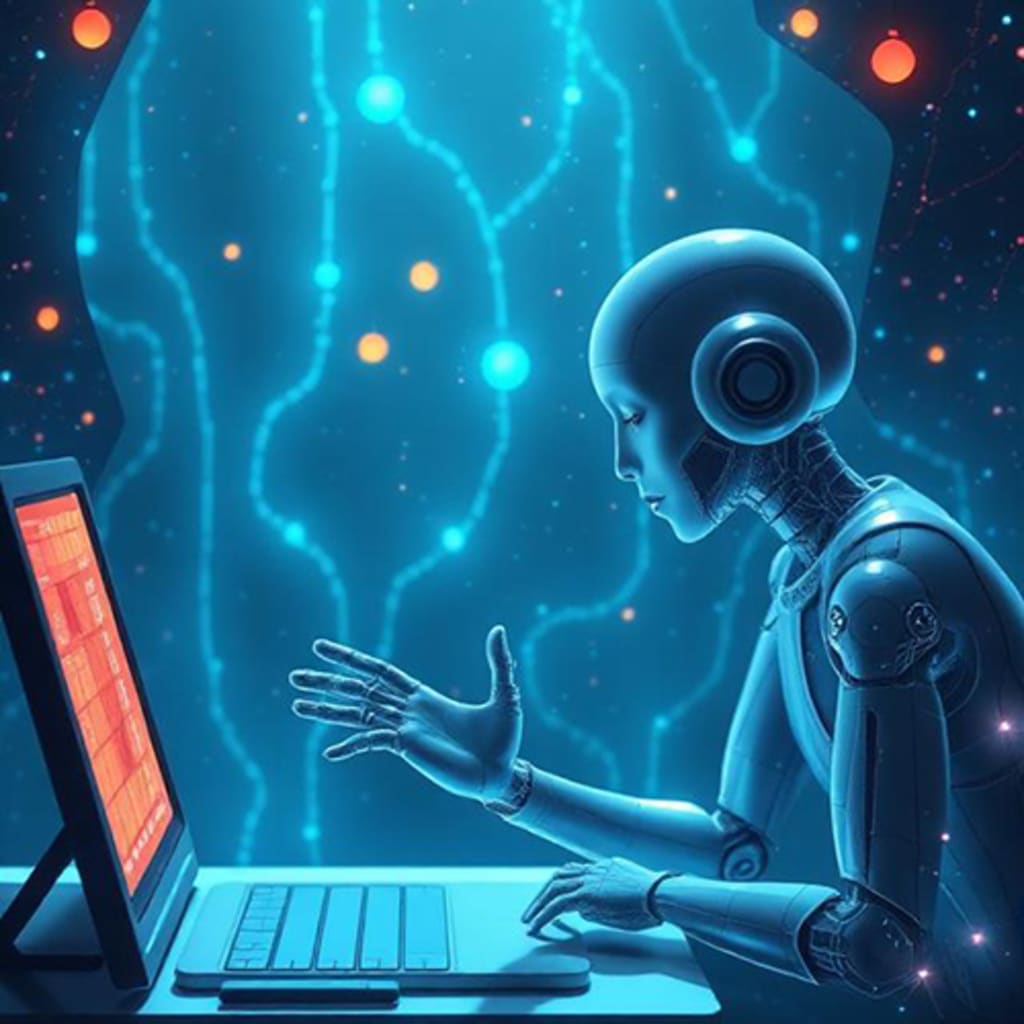
Artificial intelligence has quietly become part of everyday life. It recommends what we watch. It suggests what we buy. It helps us write emails, plan trips, and organize our schedules. But one question kept lingering in my mind: What would happen if I stopped making my own daily decisions and let AI do it instead? Not just small things like choosing a playlist or writing a message. I mean bigger choices — how I structured my day, what I ate, when I worked, when I relaxed, and even how I spent my free time.
At first, the idea sounded a little ridiculous. Life isn’t supposed to be controlled by an algorithm. But curiosity won. So I created a simple experiment: For seven days, I would allow AI to guide most of my daily decisions. By the end of that week, I expected to learn something about technology. What I actually learned was something about how humans live their lives without thinking about it.
The Rules of the Experiment
Before starting, I needed a few clear rules. Every morning, I would ask AI to generate a schedule for the day. That schedule could include:
Wake-up time
Meals
Work sessions
Breaks
Exercise
Free-time activities
When to stop using my phone or computer
The goal wasn’t to become a robot following instructions. But I wanted the experiment to be honest, so I promised to follow the schedule as closely as possible. There were only two exceptions:
I wouldn’t do anything dangerous or illegal. If something was completely impossible to follow, I could slightly adjust it. Other than that, the AI was in charge. When the first day began, I had no idea how strange the week would become.
Day 1: A Surprisingly Productive Start
The first instruction arrived the night before. Wake up at 6:30 AM. Drink water immediately. Avoid checking your phone for the first hour. That already felt unusual. Like many people, my normal morning routine involves grabbing my phone almost immediately. Emails, notifications, social media — it’s an automatic habit. But this time I followed the instructions. Instead of scrolling, I went for a short walk outside. The morning felt slower. Quieter. Almost peaceful.
When I returned, the AI’s schedule continued: Simple breakfast, 90 minutes of focused work, 10-minute break, another focused work session. It wasn’t revolutionary advice, but something interesting happened. By noon, I had already finished several tasks I normally procrastinate on. And I hadn’t checked social media once.
Day 2: Structure I Didn’t Know I Needed
The second day followed a similar pattern, but with one noticeable difference. The AI insisted on scheduled breaks. Normally, when I work, I either push myself too hard or become distracted and lose focus. But the schedule forced a balance. Work for a specific period. Take a break. Return with full attention. By the end of the day, I noticed something strange: I felt less mentally exhausted, even though I had completed more work than usual. It was a small but powerful realization. Sometimes productivity isn’t about working harder — it’s about working with structure.
Day 3: The Strangest Suggestion So Far
On the third day, the experiment took a weird turn. Among the scheduled tasks was one instruction that made absolutely no sense to me: “Spend 30 minutes doing nothing.” No phone. No music. No laptop. No book. Just sit quietly. At first, I thought the instruction was pointless. But since the whole experiment depended on following AI’s guidance, I tried it. The first ten minutes were uncomfortable. My brain kept searching for distractions. But slowly, something unexpected happened. My thoughts started becoming clearer. Ideas about projects, writing topics, and personal goals began forming naturally. By the time the 30 minutes ended, I had written down several ideas that probably never would have appeared during a normal busy day. It turns out doing nothing sometimes helps you think more clearly.
Day 4: The Social Media Shock
Day four delivered the instruction I feared the most. The AI suggested limiting social media use to 15 minutes for the entire day. That sounded unrealistic. Most people open social media dozens of times without realizing it. But I set a timer and followed the rule. When the 15 minutes ended, I closed the apps. And something surprising happened. Nothing. The world didn’t collapse. I didn’t miss anything important. No emergencies appeared. Instead, I suddenly had hours of extra time. Time that usually disappears into endless scrolling. That extra time was spent reading, writing, and taking a longer evening walk. And for the first time in a long time, I ended the day feeling calm instead of mentally overloaded.
Day 5: The Most Human Advice
By the fifth day, I expected more productivity tricks. Instead, the AI gave a piece of advice that felt strangely human. The schedule included a simple task: “Reach out to someone you haven’t spoken to in a while.” No explanation. Just that. So I sent a message to a friend I hadn’t talked to in months. What started as a quick check-in turned into a long conversation later that evening. We talked about work, life changes, and random memories from years ago. It was easily one of the best moments of the week. And it made me realize something important. In our busy routines, we often forget to maintain connections that matter.
Day 6: The Moment Everything Clicked
By the sixth day, I began noticing a deeper pattern. AI wasn’t really controlling my life. Instead, it was helping me notice habits I normally ignore. Think about how most people live their days. We wake up late. We check notifications immediately. We rush through work while constantly checking messages. We scroll through social media for hours without noticing the time. Many of these choices aren’t deliberate. They happen automatically. What the AI did was remove those automatic decisions and replace them with intentional ones. And that simple shift made a big difference.
Day 7: The Final Reflection
On the last day of the experiment, the AI gave one final instruction: “Reflect on what you learned this week.” So I wrote down everything that had changed. After seven days, the results were surprisingly clear. I was sleeping better. My screen time had dropped dramatically. I finished more tasks without feeling overwhelmed. But the most important change wasn’t productivity. It was awareness. I became more conscious of how I was spending my time. And once you notice that, it becomes hard to go back to mindless habits.
What This Experiment Taught Me About AI
Before starting this experiment, I assumed letting AI guide my life would feel uncomfortable or unnatural. Instead, the experience showed something unexpected. AI didn’t magically improve my life. What it did was introduce structure and reflection. Many of its suggestions were things humans already know are helpful: getting enough sleep, taking breaks, spending time offline, staying connected with friends. But the difference is that AI forced me to actually follow those suggestions. And that made all the difference.
Would I Let AI Run My Life Again?
Probably not completely. Life is too unpredictable and personal to hand over every decision to an algorithm. But this experiment changed how I view AI. Instead of seeing it as something that replaces human thinking, I now see it as something that supports better decisions. Used correctly, AI can help us step outside our routines and rethink how we use our time. And sometimes that’s exactly what people need.
The Bigger Question About Our Future
Experiments like this are becoming more common. People already use AI to: organize their schedules, plan meals, manage finances, generate creative ideas, track personal goals. As technology continues evolving, AI assistants will likely become even more involved in everyday life. The real question isn’t whether AI will influence our lives. It already does. The real question is how much control we’re willing to give it. After one week of letting AI guide my routine, I learned something simple but powerful. Artificial intelligence didn’t change my life overnight. But it helped me notice something many of us forget. How we spend our time is often more important than what we accomplish. And sometimes, all it takes is a different perspective — even one generated by a machine — to remind us of that.
About the Creator
Stephanie Edwards
Creative writer passionate about storytelling and exploring the strange corners of the digital world. I write thought-provoking stories, mysteries, and real-life experiments that challenge the way we see everyday life.
Keep reading
More stories from Stephanie Edwards and writers in Futurism and other communities.
A Signal From Earth
The signal arrived at 02:17 ship time. At first, I assumed it was interference. Out here, space was never silent. It hummed with radiation storms, dying satellites, fragments of old civilizations drifting endlessly through vacuum. The receiver panels aboard the exploration vessel Aurora picked up thousands of meaningless transmissions every day—ghost echoes bouncing through the dark.
By Stephanie Edwardsa day ago in Futurism
Dental Services Market: Tele-Dentistry Adoption, Remote Consultations & Growth Outlook
According to IMARC Group's latest research publication, the global dental services market size reached USD 472.2 Billion in 2024. Looking forward, IMARC Group expects the market to reach USD 689.9 Billion by 2033, exhibiting a growth rate of 4.3% during 2025-2033.
By sujeet. imarcgroup6 days ago in Futurism
Australia Agrochemical Market: Crop Protection Demand, Precision Farming & Sustainable Inputs
According to IMARC Group, the Australia agrochemical market reached a value of USD 6,150.5 Million in 2025 and is projected to reach USD 8,120.2 Million by 2034, growing at a compound annual growth rate (CAGR) of 3.14% during 2026–2034. The market is expanding as farmers increasingly adopt advanced crop protection solutions to improve agricultural productivity and protect yields from pests, weeds and plant diseases. Rising global demand for food, combined with Australia’s strong agricultural export sector, is encouraging the use of fertilizers, herbicides, fungicides and insecticides across major farming regions. At the same time, innovations in agrochemical formulations and precision agriculture technologies are enabling farmers to apply crop inputs more efficiently. As sustainability and productivity become central priorities for modern agriculture, Australia’s agrochemical sector continues evolving through technology-driven farming practices and environmentally responsible solutions.
By Shrestha Roy7 days ago in Futurism




Comments
There are no comments for this story
Be the first to respond and start the conversation.