
More than 110 people killed in Iran’s Kurdistan: Official
Heavy strikes in western Iran’s Kurdish region leave hundreds wounded as the wider US-Israel–Iran conflict intensifies

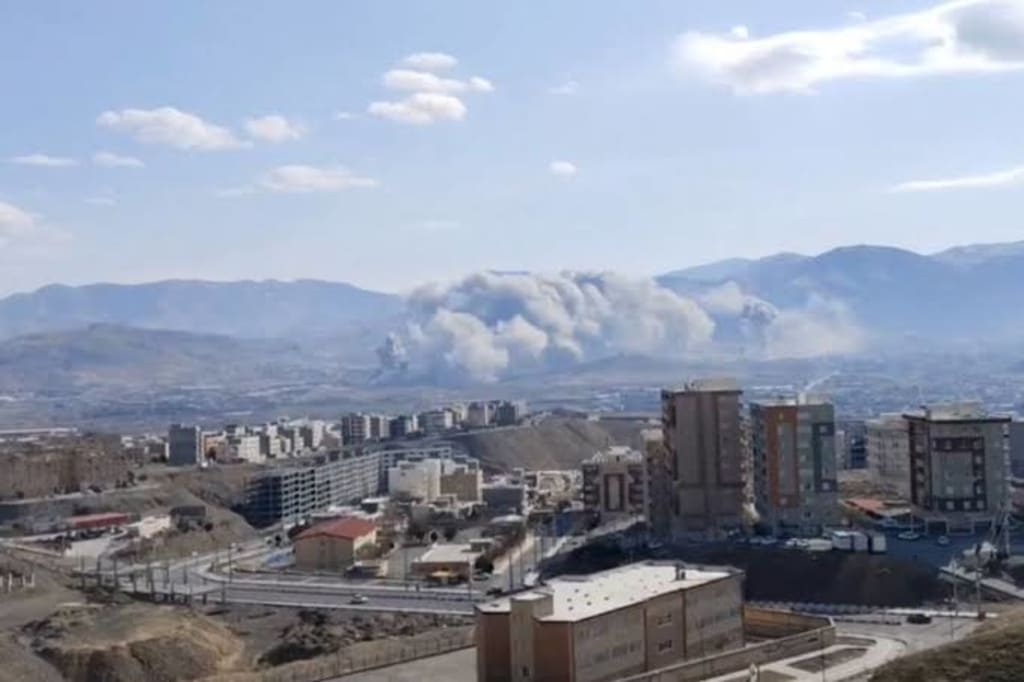
More than 110 people have been killed in Iran’s western Kurdish region after a series of powerful air strikes hit several locations in the province, according to local officials. The deadly attacks are among the most severe incidents reported in the region since the escalation of hostilities between the United States, Israel, and Iran earlier this year.
Authorities in Kurdistan Province said at least 112 people were killed and nearly 1,000 others injured when multiple strikes targeted facilities and infrastructure across the province. Emergency crews were still searching through damaged buildings as hospitals struggled to cope with the influx of wounded residents.
Local officials reported that several of the strikes hit areas near the provincial capital Sanandaj, where large plumes of smoke were seen rising above residential districts and government buildings. Videos circulating on social media appeared to show damaged structures, shattered streets, and rescue teams attempting to reach people trapped under rubble.
The attacks occurred as the broader war involving United States, Israel, and Iran continues to expand across the Middle East. The conflict began with coordinated strikes on Iranian military and strategic sites earlier in the year and has since spread into multiple regions, including the Persian Gulf and parts of Iraq and Syria.
Officials in Iran said many of those killed were civilians, though security forces were also believed to be among the casualties. Several military installations and logistical facilities in Kurdish-majority provinces have reportedly been targeted during the campaign. The mountainous region has strategic importance due to its proximity to the Iraqi border and its role in hosting various military and intelligence facilities.
Emergency services described chaotic scenes in several towns across the province. Ambulances transported victims to hospitals in Sanandaj and neighboring cities, while local authorities urged residents to donate blood and assist relief operations. Medical officials said the number of injured—reported at more than 900—could rise as additional casualties are brought in from remote areas.
Analysts say the Kurdish provinces of western Iran have become an important battleground during the ongoing conflict. According to monitoring groups, numerous military bases and security installations in Kurdish-majority areas have been targeted in recent weeks as part of the escalating air campaign.
The latest attacks are part of a broader military confrontation that has already caused significant casualties across Iran. Reports indicate that thousands of people have been killed or injured nationwide since the beginning of the strikes earlier in the year.
The conflict has also triggered retaliatory actions by Iranian forces. Tehran has launched missile and drone attacks against regional targets, including military installations linked to US forces and strategic facilities in several Gulf states. These exchanges have heightened fears that the conflict could spiral into a wider regional war.
International organizations and humanitarian groups have expressed concern over the rising civilian toll. Several governments have called for restraint and renewed diplomatic efforts to prevent further escalation. However, fighting has continued across multiple fronts, including air strikes, missile launches, and naval confrontations in the Gulf.
Residents in Iran’s Kurdish region say the attacks have created a climate of fear and uncertainty. Many families have fled their homes in affected districts, while others remain trapped due to damaged roads and limited transportation.
For many observers, the strikes highlight the widening geographical scope of the conflict. What began as targeted military operations has now spread to civilian-populated areas and strategic infrastructure across the country.
As rescue operations continue in Kurdistan province, authorities warn that the death toll may rise further in the coming days. The tragedy underscores the human cost of the escalating confrontation and the growing danger that the conflict could engulf even larger parts of the region.
About the Creator
Fiaz Ahmed
I am Fiaz Ahmed. I am a passionate writer. I love covering trending topics and breaking news. With a sharp eye for what’s happening around the world, and crafts timely and engaging stories that keep readers informed and updated.
Keep reading
More stories from Fiaz Ahmed and writers in Futurism and other communities.
Snow Makes Summit Finish in Paris‑Nice ‘Unfeasible’
Nice, France — Organizers of the 2026 Paris–Nice have been forced to abandon the originally scheduled summit finish on Stage 7 due to severe snow and cold conditions in the high Alps, prompting major changes to one of the race’s most important mountain stages. The stage was poised to be a key day in the eight‑day “Race to the Sun,” with riders expected to battle it out on a high mountain finish at the Auron ski station. However, persistent snowfall and freezing conditions prompted discussions between teams, officials, and local authorities, ultimately leading to the decision that riding to the summit would be dangerous and “unfeasible.” Organizers initially altered the route in the early morning hours, cutting the summit finish to preserve safety margins for the peloton. But conditions deteriorated further, with snow continuing to fall in the region and temperatures hovering around freezing—making traction on steep alpine roads treacherous for high‑speed racing. “We’ve had to change the finish because conditions up high are outright unsafe,” one race official said, emphasizing that rider safety is paramount. While the stage itself will still take place, the finish has been relocated to Isola, a lower‑lying location in the valley with gentler climbing and reduced risk from ice and snow. What’s Changed Under the revised plan, the stage will cover only a portion of the originally intended route, with a shortened competitive section of just 47 kilometers. Riders will now contest this shorter segment up to Isola rather than battling through full alpine ascents. The modified profile greatly reduces the climbing challenge, transforming what was to be a defining queen stage of the race into what may resemble a flatter, transitional day. This has altered the strategic landscape for general classification contenders, sprinters, and breakaway specialists alike. Riders React Current race leader Jonas Vingegaard, who has been wearing the leader’s jersey in Nice, acknowledged the unusual conditions while stressing that safety must come first. He noted that the peloton and team representatives worked closely with organizers as weather forecasts worsened, and he supports the decision to alter the stage. “Of course we want to race hard and attack on climbs,” Vingegaard said, “but if the summit is covered in snow and ice, it’s not safe. We all agreed it was best to change the finish.” Other riders were seen wearing cold‑weather gear and preparing for challenging wet conditions at lower elevations, underscoring how quickly spring racing can be disrupted by alpine weather even at this time of year. Weather a Growing Concern This is not the first time snow has interfered with Paris–Nice, a race nicknamed for its traditional progression from chilly northern France to sunnier Mediterranean environs. Historical data shows that snow and cold weather have led to stage cancellations, neutralizations, and course changes in previous editions of the race, especially on high mountain stages in March. The Alpes‑Maritimes region, where the summit finish was planned, routinely sees unpredictable conditions in early spring. With forecasts indicating more unsettled weather, this year’s edition could become another example of how climate and mountains collide in professional cycling. Implications for the Race The revised finish at Isola removes a key opportunity for climbers to gain time on rivals. Instead, the shortened finish could benefit versatile riders or punchier climbers who thrive on shorter, less technical ascents. Teams will likely reassess their tactics for both the remaining mountain stages and the concluding flatter legs of the race. Fans watching on television or at roadside are reminded that stage times and profiles can change at short notice, particularly when weather becomes a factor. Organizers continue to monitor conditions closely and are prepared with contingency plans should further adjustments be necessary Despite the disappointment of losing a dramatic summit finish, race officials and competitors alike have emphasized that safety must outweigh spectacle. In environments where temperatures dip below zero and snow blankets the racecourse, the risks to riders, support staff and fans simply become too great to ignore. As the Paris‑Nice caravan moves forward, attention now shifts to the final stages of the event and how the modified queen stage will influence the overall standings—a dramatic twist in a race known as much for testing resilience as for celebrating sunshine.
By Fiaz Ahmed about 23 hours ago in Futurism
Air Defense Systems Market Outlook: Advanced Military Protection and Strategic Defense Growth Opportunities
According to IMARC Group's latest research publication, The global air defense systems market size reached USD 51.4 Billion in 2025. Looking forward, IMARC Group expects the market to reach USD 73.7 Billion by 2034, exhibiting a growth rate (CAGR) of 4.08% during 2026-2034.
By James Whitman3 days ago in Futurism
Kids Digital Advertising Market to hit USD 25.9 Billion By 2033
The Global Kids Digital Advertising Market is projected to reach approximately USD 25.9 Billion by 2033, rising from USD 3.4 Billion in 2023, and is expected to expand at a CAGR of 22.5% during the forecast period from 2024 to 2033. This growth is driven by the increasing digital consumption among children, the growing influence of social media, and the rising importance of targeted, interactive advertising methods. With the increasing use of smartphones, tablets, and other digital devices among kids, advertisers are increasingly focusing on creating engaging, child-friendly content that can capture the attention of younger audiences.
By Roberto Crum5 days ago in Futurism



Comments
There are no comments for this story
Be the first to respond and start the conversation.