
Singapore CCTV Camera Market Outlook: Growth Drivers, Recent Developments & Emerging Trends
Singapore CCTV camera market shows strong growth driven by urban security needs, advanced technology adoption, and rising demand for smart surveillance solutions.

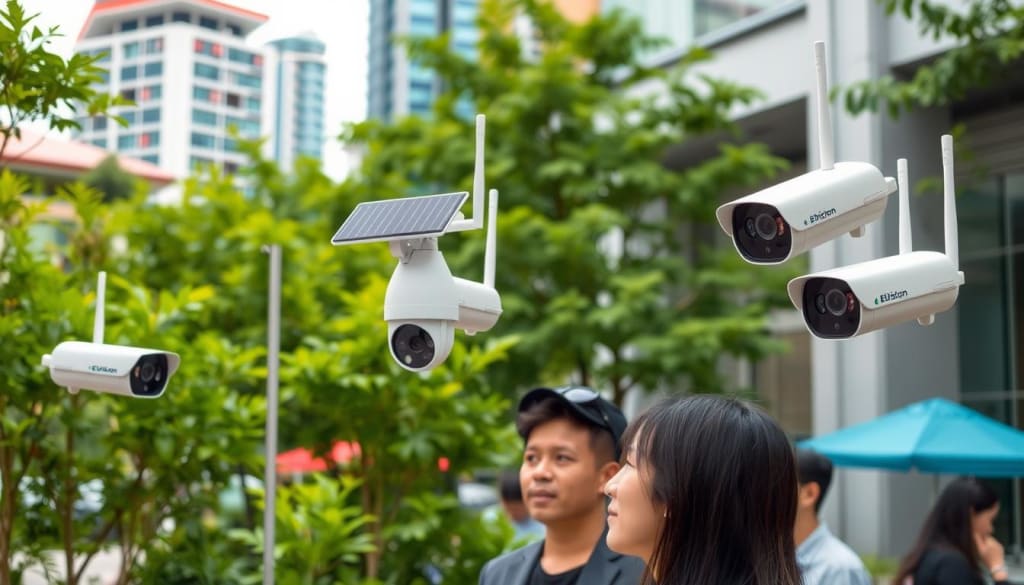
According to IMARC Group's latest research publication, Singapore CCTV camera market reached USD 204.16 Million in 2024. The market is projected to reach USD 1,100.66 Million by 2033, exhibiting a growth rate of 18.35% during 2025-2033.
How AI is Reshaping the Future of Singapore CCTV Camera Market
- Smart Surveillance and Facial Recognition: AI-powered CCTV systems in Singapore are now capable of real-time facial recognition and behavioral analysis, enabling law enforcement to respond to incidents within minutes rather than hours. The Singapore Police Force2019s expanded camera network uses these capabilities to monitor public spaces, with accuracy rates improving significantly thanks to deep learning models trained on diverse datasets.
- Predictive Threat Detection: Machine learning algorithms integrated into modern IP and PTZ cameras analyze movement patterns and flag anomalies before incidents escalate. This is particularly valuable across Singapore2019s transport hubs and MRT stations, where high foot traffic demands proactive monitoring rather than reactive response.
- Cloud-Based Centralized Monitoring: AI-driven cloud platforms are enabling businesses and government agencies to manage thousands of cameras from a single dashboard. This shift reduces operational costs while improving scalability — a key advantage for Singapore2019s Smart Nation initiative, which aims to integrate over 200,000 sensors and cameras city-wide.
Download a Free Sample Report Featuring Updated Market Data
Singapore CCTV Camera Market Trends & Drivers:
Singapore2019s government-backed Smart Nation programme is one of the strongest tailwinds driving CCTV deployment across the island. The Safe City Test Bed initiative, which piloted smart surveillance tools in public housing estates and transport nodes, set a precedent for large-scale adoption. In October 2024, Hitachi Rail and Strides Engineering secured a contract from Singapore2019s Land Transport Authority to upgrade the CCTV infrastructure across 50+ stations on the North-South and East-West MRT lines — the country2019s busiest metro corridors. Meanwhile, the Singapore Police Force issued a tender in October 2023 to double the number of police cameras nationwide, with a particular focus on new housing developments and commercial zones. These are not minor procurement exercises — they signal a sustained, policy-level commitment to surveillance infrastructure that directly fuels market demand across both public and private sectors.
The migration from analog to IP cameras is accelerating across Singapore, and it2019s easy to see why. IP cameras offer higher resolution, remote access, and seamless integration with AI analytics platforms — capabilities that analog systems simply can2019t match. This technology shift is particularly visible in the BFSI and industrial sectors, where organizations require not just footage but actionable intelligence. Businesses are upgrading their surveillance infrastructure not purely for security but to gain operational insights — monitoring foot traffic, managing access control, and even optimizing floor layouts based on camera data. Singapore2019s high broadband penetration rate (over 99% as of recent government data) makes cloud-connected IP camera deployments especially practical, enabling remote monitoring and real-time alerts without costly on-site infrastructure.
Residential and commercial real estate growth is creating steady new demand for CCTV installations. Singapore2019s HDB estates, which house over 80% of the resident population, are increasingly being fitted with modern surveillance systems as part of estate upgrading programmes. On the commercial side, new business parks, data centers, and retail developments require comprehensive security setups from day one. The Banking, Financial Services, and Insurance (BFSI) sector — a cornerstone of Singapore2019s economy — is a particularly high-value customer segment, given strict compliance requirements around premises security and surveillance log retention. As Singapore continues expanding its financial hub role in Southeast Asia, BFSI-driven CCTV procurement will remain a consistent revenue stream for market players.
Singapore CCTV Camera Market Industry Segmentation:
The report has segmented the market into the following categories:
Type Insights:
- Analog Cameras
- IP Cameras (excluding PTZ)
- PTZ Cameras
End User Vertical Insights:
- Government
- Industrial
- BFSI
- Transportation Vertical
- Others
Regional Insights:
- North-East
- Central
- West
- East
- North
Recent News and Developments in Singapore CCTV Camera Market
- October 2024: Hitachi Rail, in partnership with Strides Engineering, secured a contract from Singapore2019s Land Transport Authority to carry out a full-scale upgrade of the CCTV system along the North-South and East-West Lines. Spanning over 50 stations, the initiative focuses on improving surveillance infrastructure and increasing camera capacity across the country2019s oldest and most intensively used metro routes.
- October 2023: The Singapore Police Force issued a tender seeking to expand the nationwide deployment of police cameras, aiming to double their current number. This initiative was partly intended to enhance surveillance coverage in newly developed housing areas and infrastructure that had emerged since the introduction of these cameras.
Note: If you require specific details, data, or insights that are not currently included in the scope of this report, we are happy to accommodate your request. As part of our customization service, we will gather and provide the additional information you need, tailored to your specific requirements. Please let us know your exact needs, and we will ensure the report is updated accordingly to meet your expectations.
About the Creator
Abhishek Dixit
I am content writer and blogger by profession
Keep reading
More stories from Abhishek Dixit and writers in Futurism and other communities.
Indonesia Cybersecurity Market Outlook: Trends, Drivers & Industry Growth Opportunities
According to IMARC Group’s latest research publication, “Indonesia Cybersecurity Market Size, Share, Trends and Forecast by Offering, Deployment Mode, End User, and Region, 2026-2034”, the Indonesia cybersecurity market size reached USD 1.4 Billion in 2025. Looking forward, IMARC Group expects the market to reach USD 6.7 Billion by 2034, exhibiting a growth rate (CAGR) of 19.40% during 2026-2034.
By Abhishek Dixit6 days ago in Futurism
Anthropic Warns of “Industrial-Scale” Claude Distillation Attacks by Rival AI Labs
What Happened (Facts) In a post dated 23 Feb 2026, Anthropic says it uncovered three large-scale campaigns aimed at illicitly extracting (“distilling”) Claude’s capabilities to improve competitors’ models. Anthropic attributes the campaigns to DeepSeek, Moonshot, and MiniMax, alleging they collectively generated over 16 million exchanges with Claude using roughly 24,000 fraudulent accounts, violating Anthropic’s terms of service and regional access restrictions.
By Behind the Tech7 days ago in Futurism
This Is What I Do When People Throw Rocks At Me
Rocks have been thrown at me for a greater part of my life. Some have been small and missed hitting me. When people don't get a reaction from me, they throw bigger rocks with a better aim. Many have been hurled at me with precision over the years. For a long time, I thought my only options were to dodge them or be crushed by them.
By Margaret Minnicks5 days ago in Confessions




Comments
There are no comments for this story
Be the first to respond and start the conversation.