
The Lobster Market: From Ocean Floor to Fine Dining — and Everything In Between
Once considered poverty food, lobster has become one of the world's most coveted seafood delicacies. But the industry behind it is far more complex — and precarious — than most people realize.

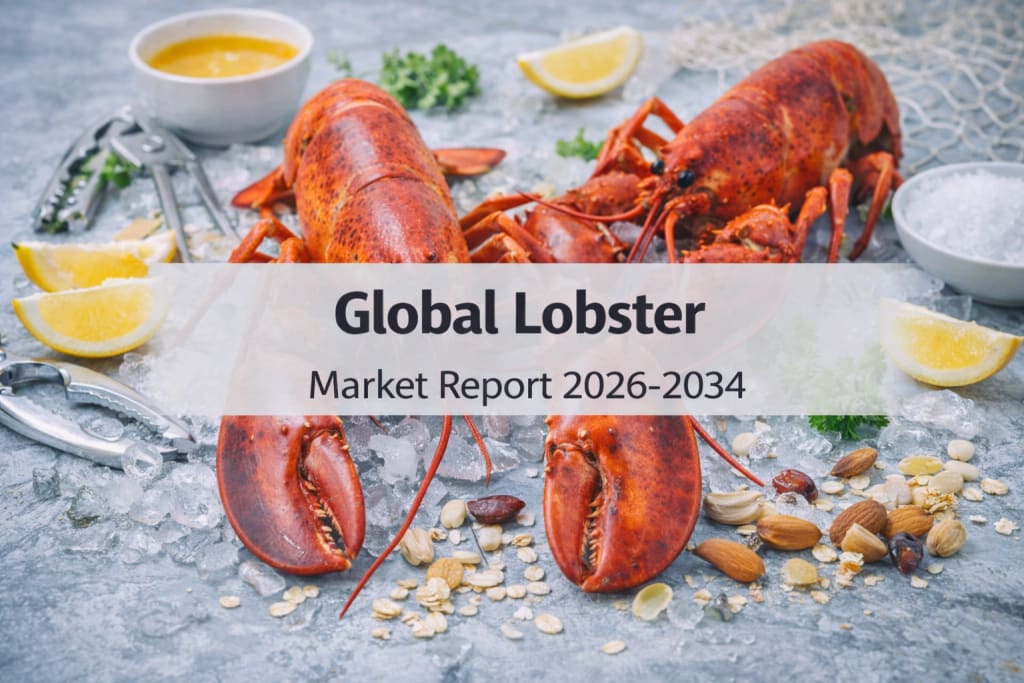
There's something almost paradoxical about lobster. It's a bottom-dwelling crustacean that scavenges the ocean floor, yet it commands some of the highest prices on restaurant menus around the world. It was once so abundant along the northeastern American coast that it was fed to prisoners and indentured servants — considered too common to be worthy of respectable tables. Today, a single lobster dinner can cost more than a week's groceries.
That transformation is one of the more remarkable stories in food history. And behind it sits a global market that is dynamic, politically charged, environmentally complex, and deeply human.
A Market Built on Tradition and Tide
The lobster industry is dominated by two main species: the American (or Maine) lobster, harvested across the northeastern United States and Atlantic Canada, and the spiny lobster, found in warmer waters across the Caribbean, Australia, and parts of Africa and Asia. These two species occupy different market positions — the American lobster, with its iconic claws, reigns supreme in the premium dining world, while spiny lobster tails are widely traded and processed for broader commercial use.
The American lobster fishery, centered in Maine and the Canadian Maritime provinces, is one of the most economically significant in North America. Tens of thousands of fishermen, processors, dealers, and support workers depend on it. Small coastal communities have organized their entire economic and cultural identity around the lobster season. It's not just a commodity — it's a way of life.
Harvesting methods have remained surprisingly traditional. Lobster traps — called "pots" — are dropped to the ocean floor, baited, and hauled back up by hand on small fishing boats. It's labor-intensive, weather-dependent work that hasn't changed dramatically in over a century. That authenticity is part of the product's story, and part of why premium buyers around the world are willing to pay for it.
The Price Rollercoaster
If there's one thing the lobster market is known for beyond its cuisine, it's its price volatility. Lobster prices can swing dramatically from season to season — and sometimes week to week — driven by a complex mix of factors that include weather, global demand, trade policy, and shipping logistics.
The COVID-19 pandemic illustrated this volatility in stark terms. When restaurants worldwide shut their doors in 2020, lobster prices collapsed almost overnight. Fishermen who had pulled traps full of product suddenly had nowhere to sell it. The market that had seemed rock-solid revealed itself to be profoundly dependent on a single channel: the full-service restaurant industry.
As restaurants recovered, so did prices — eventually surging to near-record highs as pent-up demand collided with supply chain disruptions. The boom-and-bust nature of the lobster market has pushed many industry stakeholders to advocate for greater market diversification, including expanded retail, direct-to-consumer shipping, and processed product lines that can absorb excess supply.
Geopolitics on the Half Shell
If you want to understand how global trade tensions ripple through unexpected places, look no further than the lobster market. American lobster fishermen have found themselves repeatedly caught in the crossfire of U.S.-China trade disputes, as China became one of the largest and most lucrative export markets for live American lobster over the past two decades.
When tariffs were levied on American goods during trade conflicts, Chinese buyers shifted their purchasing to Canadian lobster — leaving American fishermen watching their most valuable export market shrink in real time. The lesson was painful and instructive: in a globalized food economy, policy decisions made in Washington or Beijing can determine whether a lobsterman in coastal Maine has a profitable season or a devastating one.
Sustainability and the Future of the Fishery
Perhaps the most pressing question facing the lobster market isn't about price or trade — it's about whether the resource itself can endure. Climate change is warming the Gulf of Maine faster than almost any other body of water on Earth. Lobsters, sensitive to water temperature, have responded by migrating northward, causing population shifts that have benefited some regions and threatened others.
At the same time, the American lobster fishery operates under one of the more rigorous sustainable management frameworks in the seafood industry, with strict size limits, protected breeding females, and trap limits designed to prevent overfishing. Conservation and commerce, for now, are working in cautious partnership.
The future of the lobster market depends on that partnership holding — and on an industry willing to adapt to a changing ocean.
More Than a Meal
Lobster's journey from despised bycatch to global luxury symbol is a story about perception, scarcity, and the way culture shapes value. Today's market reflects all of that history — the traditions of coastal fishing communities, the demands of international fine dining, the pressures of climate change, and the volatility of global trade.
Next time you crack open a claw, there's quite a world inside it.
The global lobster market continues to evolve as climate shifts, trade dynamics, and changing consumer preferences reshape one of the seafood world's most iconic industries.
About the Creator
Keep reading
More stories from Frank Morgan and writers in Futurism and other communities.
The Nutritional Bar Market: How a Convenient Snack Became a Billion-Dollar Industry
Think about the last time you grabbed a bar from a shelf — maybe at a gas station checkout, tucked beside your gym bag, or buried in your desk drawer for a mid-afternoon slump. That small, wrapped rectangle of compressed ingredients represents something much larger than a quick snack. It's a window into how modern consumers think about food, health, convenience, and identity.
By Frank Morgan4 days ago in Futurism
‘Incoherent’: Hegseth’s Anthropic Ultimatum Confounds AI Policymakers
Defense Secretary Pete Hegseth has triggered alarm across the AI policy and legal communities after issuing an ultimatum to Anthropic, demanding the company lift key usage restrictions on its Claude AI model or face severe government retaliation.
By Behind the Tech4 days ago in Futurism
Jack Dorsey’s Block Cuts Nearly Half Its Workforce in Major AI Shift
Jack Dorsey’s financial technology company Block has eliminated more than 4,000 jobs — nearly half of its workforce — in what executives describe as a strategic shift toward artificial intelligence-driven operations.
By Behind the Tech4 days ago in Futurism
Pearl
1980 something. we all hung out at Pearl and you and i were nothing special, or so i thought. i mean we all danced, drenched in our own sweat, our own saline solution of fear, too many beers, shots, laughter, tears, fucks in the bathroom and i don't know when we began to be afraid. do you?
By ROCK aka Andrea Polla (Simmons)5 days ago in Fiction



Comments
There are no comments for this story
Be the first to respond and start the conversation.