
The Summer of Independence: Why the Galaxy Watch Ultra 2 is Finally Killing the Smartphone Tether
Samsung’s strategic pivot to standalone 5G and Snapdragon silicon signals a transition from "thin client" accessories to true edge computing on the wrist.

1. Introduction: The Tether is Breaking
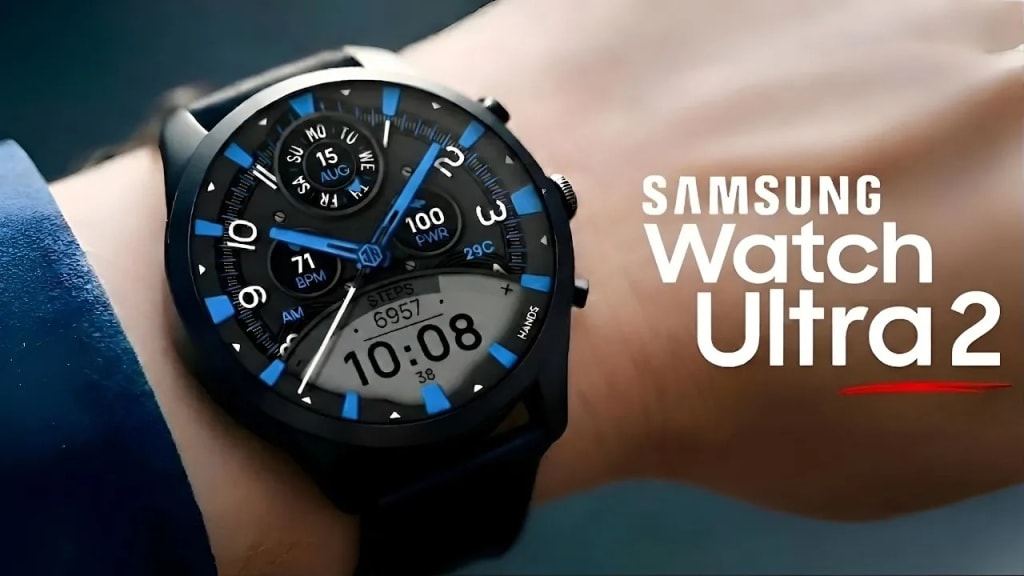
Let’s be honest: for the better part of a decade, your "smart" watch has actually been quite dumb the moment you step out of Bluetooth range. We’ve been sold the dream of mobile independence, yet we still find ourselves compulsively patting our pockets for a smartphone before heading out the door. In the Summer of 2026, Samsung is betting that the Galaxy Watch Ultra 2 will finally shatter that digital leash. This isn’t merely an incremental update; it is a hardware-driven declaration that the wearable is graduating from a secondary screen to a primary communicator.
2. Takeaway 1: True 5G Independence
The headline grabber for the Ultra 2 is the move toward comprehensive 5G support. In the industry, we often view wearables as "thin clients"—devices that essentially stream data from a host smartphone. By integrating 5G, Samsung is moving toward "edge computing" on the wrist. This shift fundamentally alters the user's relationship with the device, allowing for a level of autonomy that was previously theoretical. As the latest hardware briefings suggest:
"This feature is designed to enhance the device's independence, allowing you to make calls, stream media, and browse the internet without relying on a smartphone or Wi-Fi."
This means streaming high-fidelity audio, navigating complex routes, and managing real-time communications without the thermal and battery penalties of a tethered connection.
3. Takeaway 2: The Silicon Power Play (Goodbye, Exynos)
Perhaps the most significant "industry weight" move is Samsung’s decision to ditch its in-house Exynos architecture in favor of the Qualcomm Snapdragon Elite chip. To those of us who follow the silicon wars, this is a strategic surrender. It is a public admission that to meet the aggressive power-efficiency and multitasking demands of 5G, Samsung needed Qualcomm’s superior modem integration.
This switch is a game changer for Samsung’s performance reputation. The Snapdragon Elite is built to handle the "always-on" nature of 5G while maintaining a fluid UI. This isn't just about speed; it’s about the reliability required to anchor a premium "Ultra" experience.
4. Takeaway 3: The Battery Life Paradox
With great connectivity comes a brutal power tax. The "Balancing Act" mentioned in early reports is the ultimate hurdle. 5G modems are notoriously thirsty, and in a chassis as small as a watch, there is nowhere for the heat or the drain to hide.
Samsung is promising "next-generation battery technology" and "intelligent power management," but the stakes are high. Real-world skeptics are already pointing to devices like the Reebok Pulse, which sacrifices "smarts" for two-week longevity. If the Ultra 2 cannot sustain a full day of independent 5G usage, this bold vision of independence will be "dead on arrival." This is the make-or-break variable for 2026.
5. Takeaway 4: 5G as an "Ultra" Exclusive Luxury
Samsung is doubling down on "Exclusivity as a Differentiator." By keeping 5G connectivity exclusive to the Ultra series while the Galaxy Watch 9 remains the budget-friendly "essential" option, Samsung is clearly tiering its ecosystem.
This launch doesn’t happen in a vacuum; by debuting alongside the next generation of foldables, the Ultra 2 is part of a broader "2026 Premium Ecosystem" play. Samsung is looking to lock power users into a high-end hardware tier where the watch is no longer a peripheral, but a co-equal partner to their $2,000 foldable phone.
6. Takeaway 5: Closing the Gap with Apple
The integration of 5G is a direct counter-offensive against Apple, which has long dominated the cellular wearable space. However, Samsung knows that matching a spec sheet isn't a winning strategy. They are aiming to surpass the competition by leveraging the Snapdragon Elite’s multitasking capabilities to offer "user-centric functionality."
Expect a more personalized interface—think dynamic widgets that update autonomously via 5G and health tracking that syncs to the cloud in real-time without needing a phone "handshake." This focus on a standalone, responsive UX is how Samsung intends to stand out in an increasingly crowded premium market.
7. Conclusion: A New Benchmark for Your Wrist
The Galaxy Watch Ultra 2 represents a bold leap toward a future where the smartphone is optional. By prioritizing 5G independence and superior Qualcomm silicon, Samsung is attempting to set the gold standard for the 2026 wearable market.
As we approach the Summer 2026 launch, the hardware looks ready to lead. The only question is the one we must ask ourselves: In the summer of 2026, will you have the "wrist-confidence" to leave your $1,200 phone in a drawer and rely entirely on your watch?
About the Creator
Tech Horizons
Exploring the future of technology, AI, gadgets, and innovations shaping tomorrow. Stay updated with Tech Horizons!
Keep reading
More stories from Tech Horizons and writers in Futurism and other communities.
The Samsung Galaxy S26 Ultra: Redefining the "Ultra" Experience in 2026
The smartphone landscape has shifted from a race of raw specs to a battle of integrated intelligence. With the official release of the Samsung Galaxy S26 Ultra, Samsung has moved beyond the "megalpixel wars" to focus on ergonomics, sophisticated privacy, and a more seamless AI-human interface.
By Tech Horizonsa day ago in Futurism
Saudi Arabia Seafood Market: Aquaculture Expansion, Rising Consumption & Growth Outlook
According to IMARC Group's latest research publication, Saudi Arabia seafood market size reached USD 3.3 Billion in 2024. The market is projected to reach USD 4.3 Billion by 2033, exhibiting a growth rate (CAGR) of 2.5% during 2025-2033.
By Shubham Sharma 4 days ago in Futurism
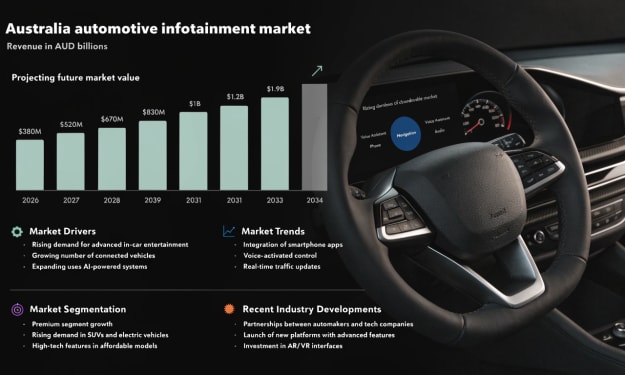
Australia Automotive Infotainment Market: Connected Car Demand, Smartphone Integration & 5G Connectivity
According to IMARC Group, the Australia automotive infotainment market is experiencing steady growth as consumers increasingly expect connected digital experiences inside vehicles. Modern drivers are demanding seamless smartphone integration, high-quality multimedia systems and real-time connectivity features that enhance convenience and entertainment during travel. Automakers and technology providers are responding by integrating advanced infotainment platforms with navigation services, voice assistants and cloud-based applications. The expansion of 5G connectivity and connected vehicle technologies is further strengthening the development of next-generation in-car entertainment and communication systems. As Australia’s automotive sector continues adopting digital technologies and connected mobility solutions, infotainment systems are becoming central components of modern vehicle design and driver experience.
By Shrestha Roy8 days ago in Futurism


Comments
There are no comments for this story
Be the first to respond and start the conversation.