
Book Review: "The Hitler Years" by Frank McDonough (Pt. 2)
5/5 - very in-depth and really interesting to read...

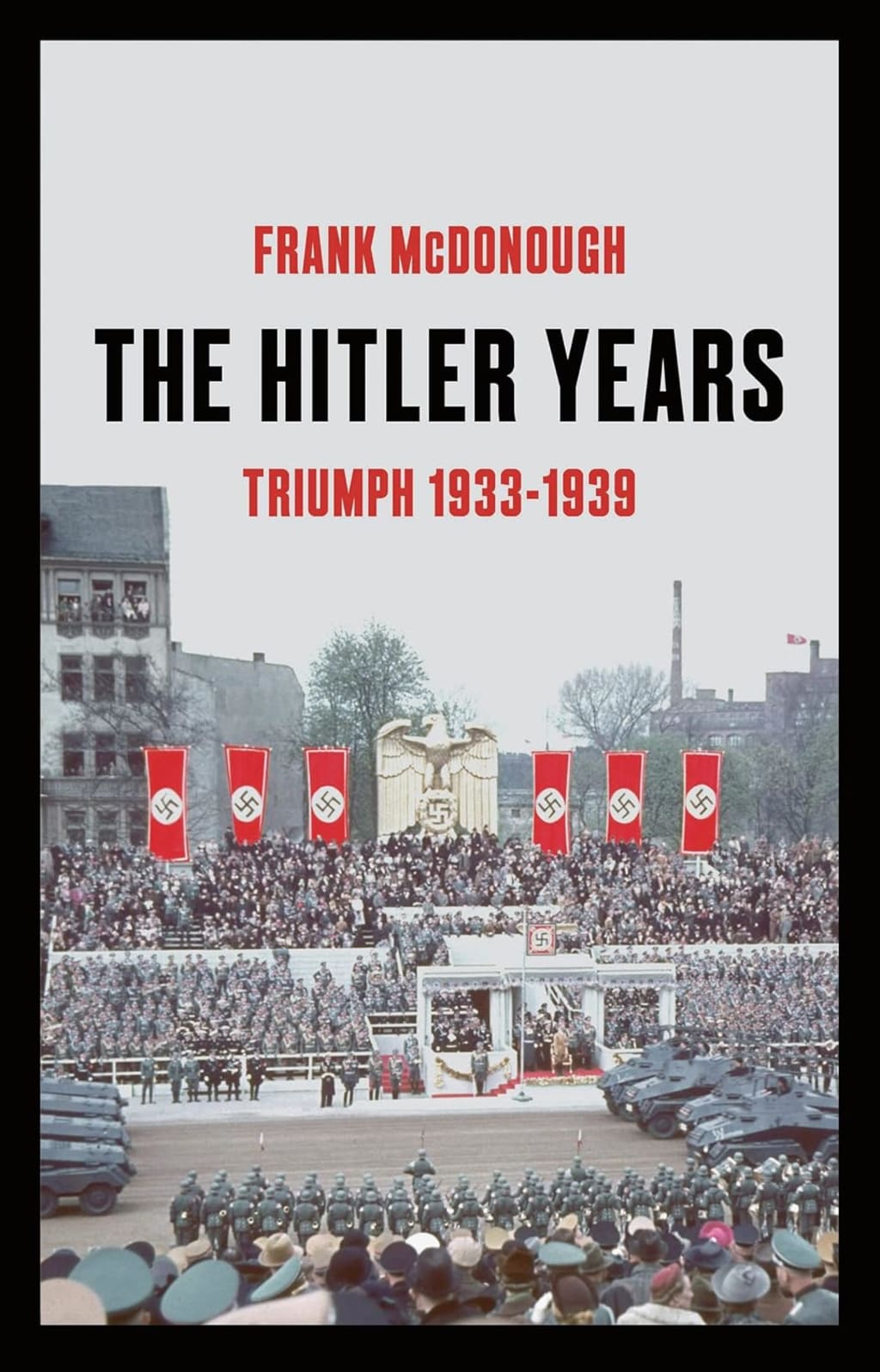
This review covers (Triumph) chapters 3 through to the end of 5
***
And so we continue with our review of The Hitler Years (Triumph) and thus it includes the creation of the 'family unit' ideology that is so prevalent in the language of the right wing American doublespeak today. The rolling back of women's roles to those that are confided to the home was a big deal because it meant that more women now had to have more children in order to fill the workforce later on. This comes towards the end of the second chapter and then, in the third chapter, we move into the creation of the Volkswagon and how Hitler was definitely trying to sell the idea that the Nazi Party was one for the average (rather) 'nuclear' family.
Of course, just like Donald Trump doesn't care about the average American, Hitler did not care about the average German. Frank McDonough makes it clear that the one thing that Hitler was trying to do was convince the average German that he was going to break the country away from the Treaty of Versailles. Instead, he just breached many of the guidelines.
The amount of lying and manipulating that is present in the Nazi Party's want to convince the German public of an ideal political party is evident in the fact that the Nazi Party were presenting one thing but behind the scenes, everything was just going to shit almost constantly. The smooth and rather 'idealistic' values presented out front were basically there to stop people scratching beneath the surface and for a long time, it actually worked.
As we move through the text, we see that within Chapters 3 and 4, Hitler is now trying to convince the German people of the terrors related to the Jewish race. These include banning German women from working in the houses of Jewish people, banning Jewish people from participating in certain aspects of society but on the flip side of this, he seems to believe that the German people will take this as him trying to 'repair' Germany.
He convinces the German people that these restrictions on the Jews is not permanent, it is necessary in order to get the country working again - to repair misalignments between the two groups. It is horrifying how manipulative this is. McDonough frames this as a deception and of course, we understand that is what it is. When the Olympics rolls around, there were 21 Jewish people selected for training but only one, a half-Jew, who competed and won a Silver Medal.
Another point made by the author is that Hitler was trying to win his place on the world stage with even the former Prime Minister, David Lloyd George, welcoming the new stance Germany was taking and stating that there was nothing to worry about when it came to the Nazis. Nowadays, we honestly think this is the stupidest thing to say - but back then, Hitler was trying to fool everyone with the image of Germany as a country, brought back up on its feet through optimism and hard-work. In reality, it was doublespeak and constant nightmares.
We learn about Hitler's doctor, a man who Hitler believed was a miracle-worker and who often put Hitler on different drugs in order to 'improve' his performance. Some of these included methamphetamines and vitamin supplements. He became a doctor to the stars of Germany and ultimately, was gifted better land in order to live. McDonough presents this as part of the portrait of Hitler in which his life was an incredibly curated series of events in which the state of Germany needed to be the forefront of the propaganda at all times. Hitler constantly needed to perform - only adding to our understandings of his manipulation of the country.
The image of 'making Germany great again' was part and parcel of the Third Reich. There were so many people involved in this that even the ambassadors to other countries were only sent in order to convince the ideas of 'peace' and 'productivity' that Germany was putting up. However in the country itself, things were very, very different. The population was growing and there wasn't enough space or means to supplement everyone and keep his shabby promises. Hitler therefore wanted Poland, he wanted to take over countries - he wanted to return the German colonies. He wanted to apply military force in order to do this and so, instead of Germany being a prosperous country (the image it put out), it was actually scaling back and convincing the people to make do with lesser products. This was honestly some twisted thinking. Not only did he not like the Jewish people, he didn't even give a damn about his own people starving to death whilst he built up the military.
As Hitler starts to punish more and more people, including the Catholic priests of Germany, there is a big foreign push to see that Hitler's image is tarnished. The Protestant Church is able to fly under the radar, but there are many arrests of everyone from Catholic priests to school-teachers which are branded by the foreign newspapers as 'show trials'. I think everyone has their own show trials, but these were among the worst in Germany because to punish the Catholics means that you've basically severed whatever friendship you thought you had with Italy. And of course, Mussolini and Hitler were once close, but Hitler's real problem was the Bolsheviks - which he believed was a Jewish conspiracy. Yes, you read that correctly. The anti-semitic movement of Bolshevik Communism was believed to be a Jewish conspiracy by the anti-semitic movement of Nazism. In reality, they are simply two sides of the same coin.
One of the sections also details the way in which Hitler managed to sell the lie of the Third Reich through art to the German people, much to his own disappointment. There were two exhibitions: one depicting classical German art which was promoted as good, and one depicting Modernist art from everywhere else which was considered evil and anti-German. Horrifyingly, both of these exhibitions went on display and the latter got three times as many visitors as the German one. Goebbels tried to spin this as the German people feeling so much pride in the German-ness that they wanted to see just how deplorable the deplorable art was. Honestly, it was a stretch and it was well-documented as the first big failure to sell the lie.
When we move into the final chapters of this volume, I have to say this is much better than the book on the Weimar Years. I definitely think that The Weimar Years should've received this sort of treatment: splitting the era up into different sections. It would have been far more in depth, like this book is.
About the Creator
Annie Kapur
I am:
🙋🏽♀️ Annie
📚 Avid Reader
📝 Reviewer and Commentator
🎓 Post-Grad Millennial (M.A)
***
I have:
📖 300K+ reads on Vocal
🫶🏼 Love for reading & research
🦋/X @AnnieWithBooks
***
🏡 UK
Keep reading
More stories from Annie Kapur and writers in Geeks and other communities.
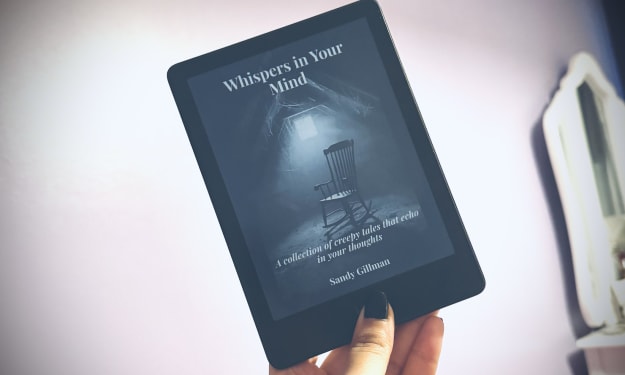
Book Review: "Whispers in Your Mind" by Sandy Gillman
Ladies and gentlemen, Sandy Gillman has written a collection of horror stories for all of us to enjoy. I'm not going to lie to you: I went feral. These are entirely my kind of thing: uncanny, dark and kind of twisted. You can definitely see where the story is heading but you're still hopeful that something will change. Written with wonderful sparse detail and in some cases, even tracking two stories from differing perspectives on the same set of events, Sandy Gillman has really broke into the horror story world with a huge bang. I absolutely love this anthology and you can see all the work that has gone into making it detail-perfect.
By Annie Kapur2 days ago in Geeks
Goodbye, Mr. Duvall
It is turning out to be an interesting year. I was in the middle of teaching a class when a pop-up appeared on the screen announcing the death of Mr. Robert Seldon Duvall (yes, that was his full name). I was in the middle of a discussion on the obsession we have with winning when it comes to sports (the Winter Olympics was a theme), and I felt as though things were coming full circle. We had already lost Gene Hackman last year, and along with that titan, it feels though one particular golden age has closed off to be replaced by...?
By Kendall Defoe 21 days ago in Geeks


Comments (1)
OMG this is what frightens us in USA. Same play, different actors…and still we refuse to learn from history! ❤️ Great review!