
Switzerland Blocks U.S. Military Planes from Airspace Amid Neutrality Concerns
switzerland war policy

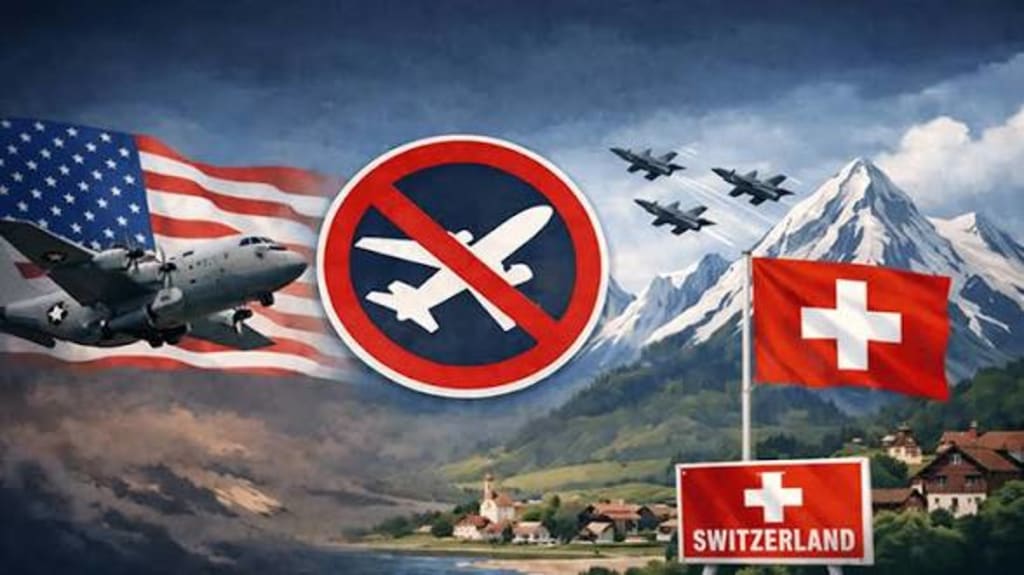
Switzerland has recently drawn global attention after refusing to allow certain United States military aircraft to pass through its airspace. The decision came during rising tensions in the Middle East and was based on the country’s long-standing policy of neutrality. While the move surprised some observers, it reflects Switzerland’s traditional approach to international conflicts: staying neutral and avoiding involvement in military operations between other nations.
Switzerland’s Tradition of Neutrality
Switzerland is known around the world for its strict neutrality. For centuries, the country has avoided taking sides in international wars and military alliances. This principle is deeply rooted in Swiss law and foreign policy. The Swiss neutrality law prohibits the country from supporting one side in an armed conflict, including allowing military operations that could benefit a party involved in the war.
Because of this policy, Switzerland carefully reviews any request by foreign military aircraft to pass through its airspace. If the purpose of the flight is connected to an ongoing conflict, the Swiss government may deny permission to ensure it remains neutral. �
Global Banking & Finance Review +1
The U.S. Overflight Requests
In March 2026, the Swiss government received several requests from the United States for military and official aircraft to fly over Switzerland. After reviewing the applications, Swiss authorities rejected two requests that were believed to be connected to military operations related to the conflict involving Iran. �
Reuters +1
The Swiss Federal Council explained that its neutrality law prohibits overflights by aircraft that serve a military purpose in an active conflict. Allowing such flights could be interpreted as indirect support for one side of the war, something Switzerland seeks to avoid. �
Global Banking & Finance Review
However, Switzerland did not completely close its airspace to the United States. Out of five total requests, three were approved because they were not directly linked to combat activities. These included two transport aircraft and one maintenance flight, which were considered unrelated to military operations in the conflict zone. �
Reuters +1
Why the Decision Matters
Although the decision may seem minor, it carries symbolic and political importance. Switzerland’s airspace is located in the center of Europe and can provide convenient routes for military aircraft traveling between regions. Denying overflight permission forces military planners to find alternative routes, which can increase travel time and logistical complexity.
More importantly, the decision reinforces Switzerland’s reputation as a neutral state. By refusing to allow flights connected to military operations, Switzerland sends a message that it will not become indirectly involved in international conflicts.
This stance is not new. Switzerland has taken similar actions in past wars. For example, during the Kosovo conflict in 1999 and the Iraq invasion in 2003, the country also restricted certain military flights to maintain its neutrality. �

SWI swissinfo.ch
Balancing Neutrality and International Relations
Switzerland’s relationship with the United States remains strong despite this decision. The two countries cooperate economically and diplomatically, and the U.S. is an important trading partner for Switzerland. Because of this, Swiss authorities try to balance their neutrality with maintaining positive relations with global powers.
By approving non-combat flights while rejecting those related to military operations, Switzerland attempted to maintain that balance. The government emphasized that humanitarian flights, medical transport, and other non-military activities would still be allowed in accordance with international law and Swiss neutrality principles. �
Global Banking & Finance Review
Looking Ahead
As global tensions continue to evolve, Switzerland may face similar decisions in the future. The government has stated that future requests for military overflights will be closely examined. Any flights that appear to support combat operations or exceed normal air traffic levels could also be rejected.
In an increasingly divided world, Switzerland’s commitment to neutrality remains a defining feature of its foreign policy. While other countries often take sides in global conflicts, Switzerland continues to prioritize independence, diplomacy, and neutrality in its international relations.
Conclusion
The claim that Switzerland blocked U.S. military planes from its airspace is partially true. The country rejected two American flight requests linked to military operations but allowed three others that were unrelated to the conflict. The decision was based on Switzerland’s long-standing neutrality law, which prohibits actions that could support one side in a war. In doing so, Switzerland once again demonstrated its commitment to staying neutral in international conflicts while maintaining diplomatic balance with global powers.
About the Creator
shaoor afridi
“I am a passionate writer dedicated to sharing informative, engaging, and well-researched articles. My goal is to provide valuable content that educates, inspires, and adds real value to readers.”
Keep reading
More stories from shaoor afridi and writers in Geeks and other communities.
Why Did Hitler Start World War II?
World War II remains one of the most devastating conflicts in human history. It began in 1939 and involved many nations across the globe, causing immense destruction and the loss of millions of lives. At the center of this catastrophic war was Adolf Hitler, the dictator of Germany. Understanding why Hitler started World War II requires examining his ideology, political ambitions, and the conditions in Germany after the First World War.
By shaoor afridiabout 5 hours ago in Geeks
Goodbye, Mr. Duvall
It is turning out to be an interesting year. I was in the middle of teaching a class when a pop-up appeared on the screen announcing the death of Mr. Robert Seldon Duvall (yes, that was his full name). I was in the middle of a discussion on the obsession we have with winning when it comes to sports (the Winter Olympics was a theme), and I felt as though things were coming full circle. We had already lost Gene Hackman last year, and along with that titan, it feels though one particular golden age has closed off to be replaced by...?
By Kendall Defoe 27 days ago in Geeks
Book Review: "The Palace"by Gareth Russell (Pt. 5)
This review covers chapter 18 to the end of the book *** Chapter 18 covers the reign of Queen Anne, the final queen of the Stuart household and mostly seems to look at the idea that she could barely marry, she had lots of miscarriages and in the end the only child she had lived to eleven years' old and so, she had no heir. There were many questions of Queen Anne's marriage, from her husband participating in homosexual affairs to the ideas put forward in the film The Favourite in which it is Queen Anne who is homosexual and promiscuous. Whatever it was, I definitely feel sorry for Queen Anne - everything must have hurt by the end of her reign, too many pregnancies and miscarriages meant her health was declining quickly towards the end. It's quite sad.
By Annie Kapura day ago in Geeks


Comments
There are no comments for this story
Be the first to respond and start the conversation.