
Holy Communion began as a meal and evolved into crackers and grape juice
The first believers in Christ observed the Lord's Supper at home before it shifted into churches.


Communion began with the Last Supper
Luke 22:19 KJV-And he took bread, and gave thanks, and brake it, and gave unto them, saying, This is my body which is given for you: this do in remembrance of me.
In our modern society, the Holy Communion in many churches is a first of the month ordinance where the last night of Christ's life is remembered. In some congregations, Deaconesses prepare grape juice and crackers for those who have accepted Jesus to remember the Last Supper.
Deacons pass the juice and crackers to the congregants, and the pastor or another ordained minister recites scriptures about the meal Jesus ate with his followers.
Since COVID-19, some congregations have pre-packaged containers that attendees can pick up as they enter the church, and Deacons and Deaconess are not utilized. The popular ritual that happens today is not the way the early believers in Christ remembered Him.

Breaking bread from house to house
The first Christian communities made Communion a part of a shared meal in private homes because Jesus and His followers were eating the Passover meal before He was arrested.
Acts 2:46 describes the first believers breaking bread from house to house." Christianity was illegal at this time, and believers in the Resurrection of Jesus were often persecuted under Roman rule, even being fed to lions. This is why they worshipped in secret.
Early Christians shared what was called an Agape feast (“love feast”), which included:
- A full communal meal
- Fellowship and teaching
- The breaking of bread
- Thesharing of the cup in remembrance of Christ
Communion was not the small symbolic cracker/wafer and a sip of grape juice we have today. It was part of a real supper meal. Unfortunately, trouble arose. In I Corinthians 11:20–22, the Apostle Paul rebukes believers because some were overeating and others were getting drunk. In the midst, the poor, the very ones Jesus said to look out for, were being excluded.
Over time, gradual changes began shifting the fellowship, and meetings became more structured. The Eucharist (Greek for “thanksgiving”) became separated from the full meal.
Constantine's influence
By the 2nd and 3rd centuries, the actual Agape meal and the Communion tradition were often separated to prevent disorder. Enter Emperor Constantine the Great, who ruled from 306 until 337 AD. He legalized Christianity in Rome in 313 and ordered large church buildings to be erected. Constantine also placed bishops and elders in leadership positions.
Christians no longer had to meet secretly in homes and began attending church services. They worshiped publicly the same way the Jews worshipped in the temple in Jesus day,
Once believers could gather publicly, Communion moved from private homes to church settings. Small gatherings of those connected through faith in Christ shifted to organized worship services as Christianity became the religion of the Roman Empire.

Public or private Communion?
Clergy/Bishops began presiding over the Eucharist/Communion. The intimate gatherings of love feasts that resembled the meal on the night of the Last Supper were eliminated. The changing traditions happened over an extended period of time. Eventually, the meal was removed, and only the bread and wine (wafer and grape juice) were used.
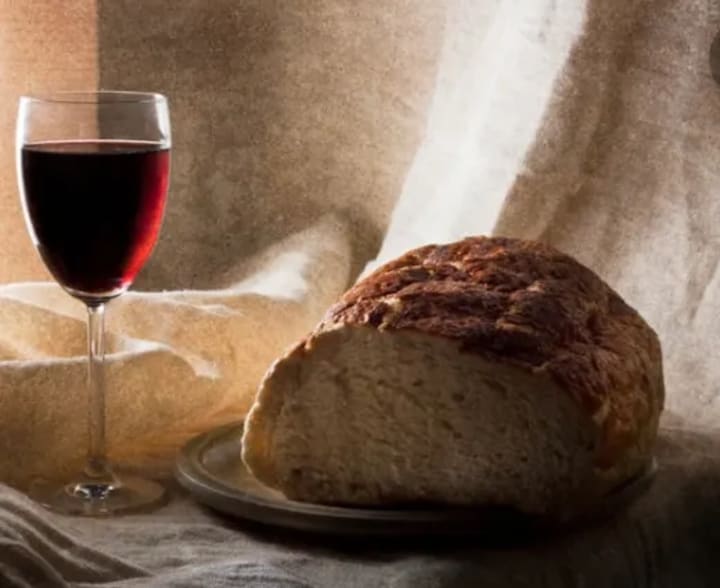
Even though the organized church follows the tradition of corporate Communion, you would not be out of order to celebrate Jesus at home. You can have wine or grape juice and bread with lunch or dinner, and discuss the importance of what happened during the Last Supper.
The only thing Jesus commanded those who follow Him is to remember His last night and the Crucifixion the following day. Since he gave no specifics, Holy Communion can be observed at home, in small gatherings at other venues, or in church settings.
The where and when of the setting are not as important as remembering the who and why. The purpose is for believers in Christ to remember that He died for us and will come again.
About the Creator
Cheryl E Preston
Cheryl enjoys writing about current events, soap spoilers and baby boomer nostalgia. Tips are greatly appreciated.
Keep reading
More stories from Cheryl E Preston and writers in History and other communities.
The Seven Last Words of Jesus on the Cross
The seven last words of Jesus on the cross are popular during the season leading up to Easter/Resurrection Sunday. When churches were filled with children they would have plays, where each child would be given one of the sayings to quote.
By Cheryl E Preston5 days ago in History
18,000-Year-Old ‘Dog’ Discovered in Siberia, Scientists Left in Awe
A remarkable archaeological discovery in Siberia has stunned the scientific community: the remains of an 18,000-year-old animal believed to be an early form of a domesticated dog. Preserved in the region’s frozen soil, this ancient find is being described as one of the most important discoveries in understanding the origins of the human–dog relationship.
By Irshad Abbasi 2 days ago in History
I was in a Toxic Relationship, with my Workplace
“You got that?” My ex yelled. His hands were balled into fists at his side. At six foot three, he towered over me. A normal person would have been afraid, but I looked up a video of George Lopez repeatedly saying, “I got this,” and showed it to him. I had grown used to this treatment, so much so that I didn’t blink when he ripped the phone from my hand and threw it across the room.
By Jade M.4 days ago in Confessions




Comments
There are no comments for this story
Be the first to respond and start the conversation.