
She Was Admired by Many, Accepted by None
The powerful story of Umrao Jaan Ada — where art meets heartbreak and society reveals its deepest hypocrisy.

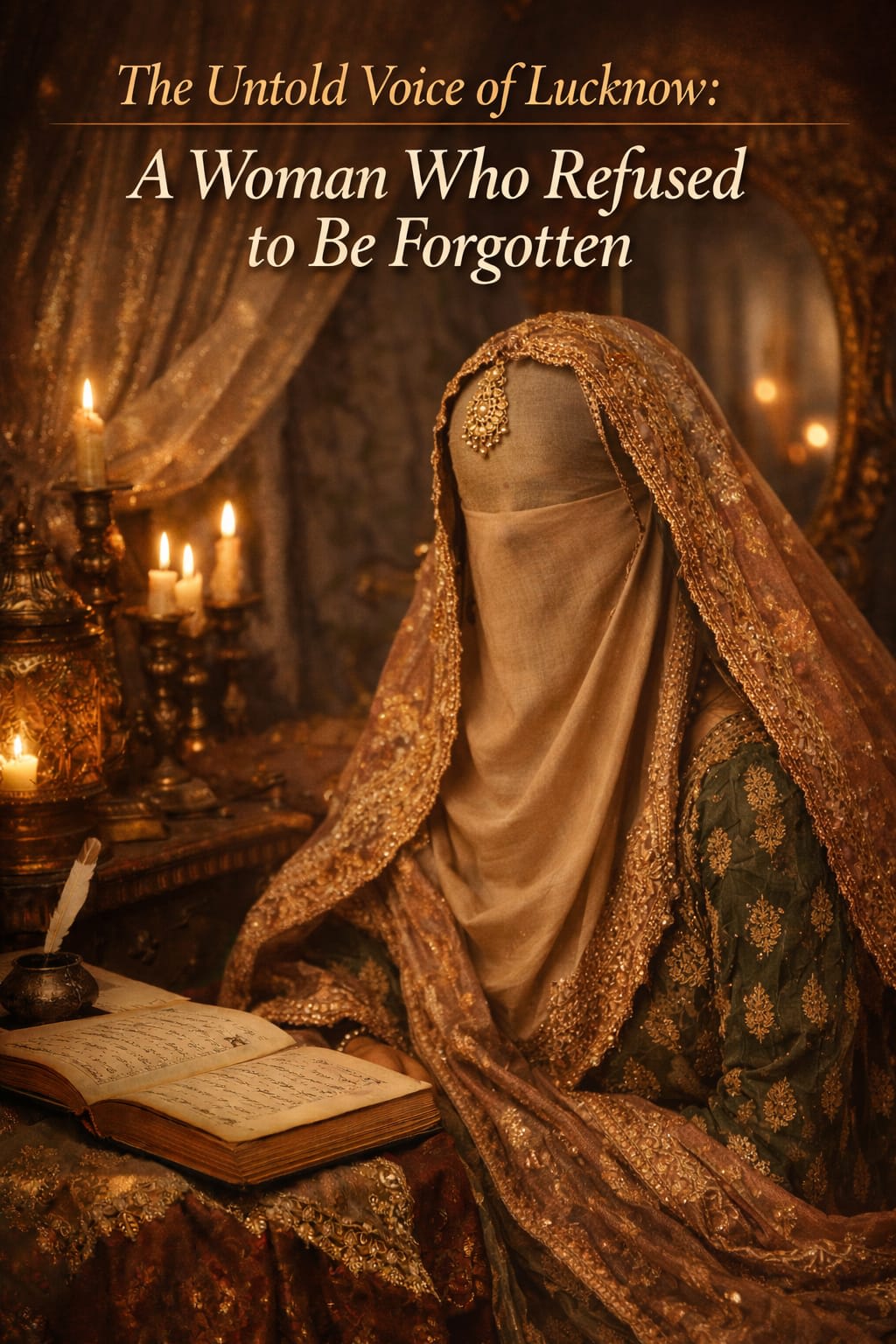
Literature often serves as a mirror reflecting the truths that society prefers to ignore. Among the masterpieces of Urdu fiction, Umrao Jaan Ada stands as a powerful exploration of identity, dignity, and social hypocrisy. Written by Mirza Hadi Ruswa in the late nineteenth century, the novel remains one of the earliest and most influential psychological narratives in South Asian literature.
The story unfolds in the culturally rich city of Lucknow, a place known for elegance, poetry, music, and refined manners. However, beneath this beauty lies a complicated social structure where reputation determines a person’s worth. The novel begins with the tragic kidnapping of a young girl named Amiran, whose life changes forever after she is separated from her family. She is eventually raised in a kotha — a house of courtesans — and grows into Umrao Jaan, a woman admired for her intelligence, artistic talent, and emotional depth.
What makes Umrao unforgettable is not simply her tragic background but her awareness of her own situation. She learns poetry, classical music, and literature, becoming a celebrated performer in elite gatherings. Wealthy nobles admire her wit and elegance, yet the same society refuses to grant her respectability. This contradiction becomes the emotional center of the novel.
Ruswa presents Umrao not as a stereotype but as a thinking, feeling individual. Through her conversations and memories, readers witness moments of hope, romance, betrayal, and disappointment. She falls in love, dreams of acceptance, and repeatedly faces rejection when reality reminds her of the limits imposed by social labels.
One of the most striking aspects of the novel is its narrative style. Written as a conversational memoir, it feels as though Umrao herself is speaking directly to the reader. This technique blurs the boundary between fiction and reality, making her experiences deeply personal and believable. Many readers have even questioned whether she was inspired by a real historical figure, which shows how convincingly the story is told.
Beyond personal tragedy, the novel also offers a detailed portrait of nineteenth-century Lucknow. Festivals, poetry gatherings, etiquette, and daily life are described with remarkable detail. These cultural elements create a vivid atmosphere while simultaneously exposing the hypocrisy hidden behind refinement and sophistication.
The character of Umrao challenges traditional moral judgments. She is neither portrayed as completely innocent nor morally flawed. Instead, she represents a human being shaped by circumstances beyond her control. Her intelligence and artistic brilliance contrast sharply with the limited opportunities available to women of her time. Through her struggles, Ruswa raises questions about justice, gender roles, and the meaning of honor.
Even today, the story resonates strongly with modern audiences. Many people continue to face prejudice based on background, profession, or social class. Umrao’s longing for dignity reflects a universal human desire — the need to be seen and understood beyond stereotypes.
For readers on platforms like Vocal Media, Umrao Jaan Ada offers more than historical interest. It provides emotional depth, cultural richness, and timeless social commentary. The novel encourages empathy by reminding us that behind every label exists a complex human story.
Ultimately, Umrao’s voice survives because it speaks about resilience. Despite heartbreak and disappointment, she continues to write poetry, observe the world thoughtfully, and search for meaning in her experiences. Her journey reminds readers that dignity does not come from society’s approval but from self-awareness and inner strength — a message that remains as powerful today as it was more than a century ago.
About the Creator
hamad khan
I write stories that touch hearts and heal minds.
Through simple words, I share real-life lessons, emotions, and moments of reflection.
Join me on a journey of healing, hope, and self-discovery.
Keep reading
More stories from hamad khan and writers in History and other communities.
The Last Godfather
CEO of Chaos: The Corporate Strategy of the Sinaloa Cartel For decades, the name Joaquín "El Chapo" Guzmán was synonymous with a specific brand of cinematic villainy: the daring prison breaks, the gold-plated AK-47s, and the hidden mountain hideouts. However, to view Guzmán simply as a bandit is to miss the terrifying brilliance of his true legacy. El Chapo wasn't just a kingpin; he was a master logistician and the "CEO" of a global conglomerate—the Sinaloa Cartel.
By Irshad Abbasi 5 days ago in History
A Historic Declaration
We the People of the Husbands of the United States of America, in Order to form a more perfect Union, and I mean you...with me...establish Justice, insure domestic Tranquility, provide for the common defence, promote the general Welfare, and secure the Blessings of Liberty to ourselves, after Puberty, do ordain and establish this Declaration of Co-Dependence.
By Gerard DiLeo5 days ago in Humans



Comments
There are no comments for this story
Be the first to respond and start the conversation.