
What the Women of Hiroshima and Nagasaki Witnessed
The Unseen Scars of the Atomic Bombs

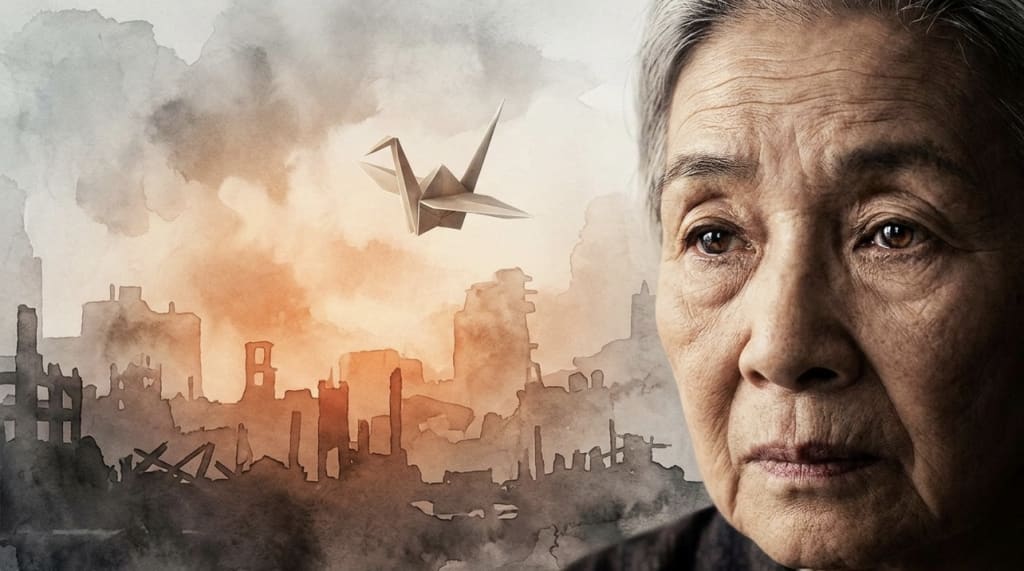
The double tragedy of Hiroshima and Nagasaki in August 1945 wasn't just a culmination of war; it was an unprecedented erasure of reality. For the thousands of women living within those two cities, the event was not an abstract historical moment but an intimate, terrifying collapse of their world. These women, known as Hibakusha (explosion-affected people), carried memories that blurred the line between the living and the dead. Their testimonies offer a searing perspective on what they saw—and what they could never unsee.
The Moment of Erasure: The Flash-Bang
For many women in Hiroshima on August 6, the morning began with ordinary tasks. Some were preparing their children's lunchboxes; others were heading to factory work or school. When the bomb detoned at 8:15 AM, the first thing they witnessed was not a sound, but a "Pika" (flash)—a blinding, silent burst of blue-white light. This was instantly followed by the "Don" (boom), a shockwave that leveled entire neighborhoods.
Women who survived often spoke of a sudden, unnatural stillness that followed the noise. Emerging from the wreckage of collapsed houses, they looked out at a landscape where all landmarks had vanished. "It was as if time had stopped and the sky had fallen," one survivor recalled. The silence was broken only by the crackle of fires and the groans of the trapped.
The Processions of Ghosts
The most haunting sights were not the physical structures but the people. As women struggled out of the debris, they walked into a waking nightmare. They described seeing crowds of people moving in a daze, their skin hanging like burnt rags, eyes swollen shut or melted, and hair standing on end. These figures moved slowly toward the rivers, driven by intense, radioactive thirst. Many were unrecognizable, and often, mothers could not find or even identify their own children. The "ghostly processions" remain one of the most vivid and traumatic images in Hibakusha testimonies.
The Horror of the Black Rain and the Unseen Poison
Shortly after the explosions, a sticky, sooty rain—the "Kuroi Ame" (Black Rain)—began to fall. At the time, unaware of radiation, many women and children, parched from the intense heat of the fires, tilted their heads back and drank this water, which was laden with radioactive fallout. Within days and weeks, women who had seemed entirely uninjured began suffering from mysterious symptoms: internal bleeding, hair loss, purple spots, and constant, debilitating fatigue. They were witnessing the emergence of radiation sickness, an invisible and terrifying killer that turned their own bodies into sources of fear.
The Burdens of Survival: Stigma and Loss
The suffering of women didn't end with the cessation of physical symptoms. They faced a double discrimination. For years, Hibakusha women were marginalized due to fears about their marriageability and health. It was widely feared that they would be physically weak or, worse, give birth to deformed children. Many young women found it impossible to marry, adding deep loneliness to their already profound trauma. Keloid scars (raised, thick scar tissue) further isolated those who bore visible reminders of the blast, with many women hiding themselves from public view for decades.
Conclusion: A Voice for Peace
Despite the unimaginable pain they witnessed and endured, the women of Hiroshima and Nagasaki did not remain silent victims. In the decades that followed, they became some of the most powerful and resilient voices in the global anti-nuclear movement. They transformed their private, painful memories into a public mission, testifying around the world to ensure that "no one else will ever suffer as we did." Their legacy is a testament to the human spirit's ability to find purpose in the deepest darkness, turning a scene of absolute destruction into an enduring plea for peace.
About the Creator
Irshad Abbasi
Ali ibn Abi Talib (RA) said 📚
“Knowledge is better than wealth, because knowledge protects you, while you have to protect wealth.
Keep reading
More stories from Irshad Abbasi and writers in History and other communities.
Al-Jahiz: The Muslim Thinker Who Proposed Evolutionary Ideas a Thousand Years Before Darwin
When the theory of evolution is discussed, the name that immediately comes to mind is Charles Darwin, the 19th-century scientist who transformed biology with his groundbreaking work On the Origin of Species. However, what many people do not know is that more than 1,000 years before Darwin, a Muslim scholar from the Islamic Golden Age had already proposed ideas that strongly resemble evolutionary thinking. His name was Al-Jahiz.
By Irshad Abbasi 3 days ago in History
Worst Mid-Air Crash in Aviation History part 2
Around 6:23 PM, Flight 1907 reached a waypoint west of Delhi called LUMKA. Waypoints function like intersections in the sky, where different airways cross. From there, the Kazakh flight was cleared to descend from 25,000 feet to 20,000 feet as it joined the “Delhi STAR” arrival route.
By Imran Ali Shah7 days ago in History
Flower Bloom 369
FLOWER Bloom 2/25/26 Wednesday By Mariann Carroll Karen had been with Tony for 7 years. Tony started acting strangely after her surgery. He would mow the lawn in the rain and be on his cellphone. He started pushing Karen away. Tony came clean about seeing someone. Karen moved out two months later. Karen moved in with a friend. She felt betrayed.
By Mariann Carroll5 days ago in Fiction




Comments
There are no comments for this story
Be the first to respond and start the conversation.