
Delaware Black Leaders
Sam Spinelli Unofficial Challenge-- Black History Celebration

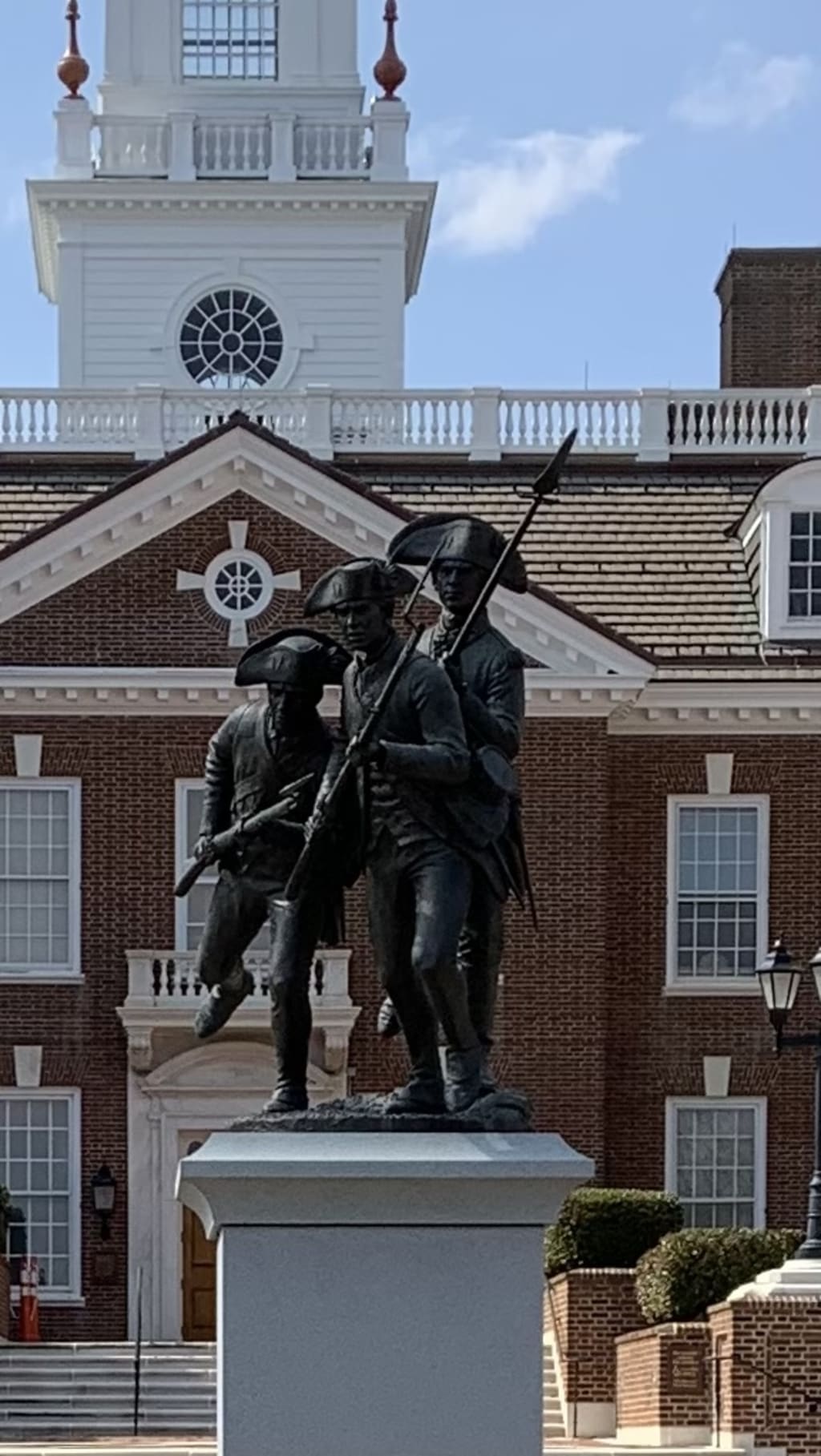
Delaware Rich History
Delaware is the called the First State, because it was the very first of the thirteen colonies to ratify the constitution. It cemented their place in history.
Delaware is rich in history, that is certain, however, they were not first in everything. Delaware was the last state to officially use the whipping post, as a legal punishment, with the final sanctioned whipping occuring in 1952.
I moved to the State of Delaware in 1962, and I entered sixth grade, in Dover, Delaware. I was shocked to see that they had paddling in the schools, and they still had separate schools, like Booker T Washington, and William Henry High School for the black children. That was a shock for this native New Jersey sixth grader, and also made me super good.
However as slow as Delaware was slow to integrate schools, they were rich in Black History.
The Eastern Seaboard and Pennsylvania
Pennsylvania
Pennsylvania became a free state primarily due to the passing the act for the abolition of Slavery on March 1, 1780, the first such legislation act in the US. Prior to that slavery was documented in this area as early as 1639. William Penn, and the colonists who settled in Pennsyvania tolerated slavery.
Maryland
Maryland was a slave state from 1664 unitl November 1, 1864. As a border state, it did not succeed during the the Civil War, yet it legally permitted salvery and was not included in the 1863 Emancipation Proclamation . Slavery in Maryland was formally abolished by a new state constitution in 1864.
Despite being a slave state, Maryland also had the largest free Black population in the country.
Delaware
Delaware was a slave state on the Mason-Dixon line. All efforts to abolish slavery in Delaware prior to the Civil War, failed due to a small number of Delawareans who were slave owners with an outsized political influence.
However, even after the Civil War ended, Delaware took no action to make slavery unlawful. Those enslaved in Delaware, remained in bondage until December 6, 1865, when the thirteenth amendment was declared ratified, without Delaware's concurrence.
Delaware was one of the last states to abolish slavery, actively resisting the 13th amendment until long after the Civil War. Although a union state, Delaware refused to ratify the amendment abolishing slavery in 1865, only officially doing so in 1901 ranking among the last states to formally end the institution.
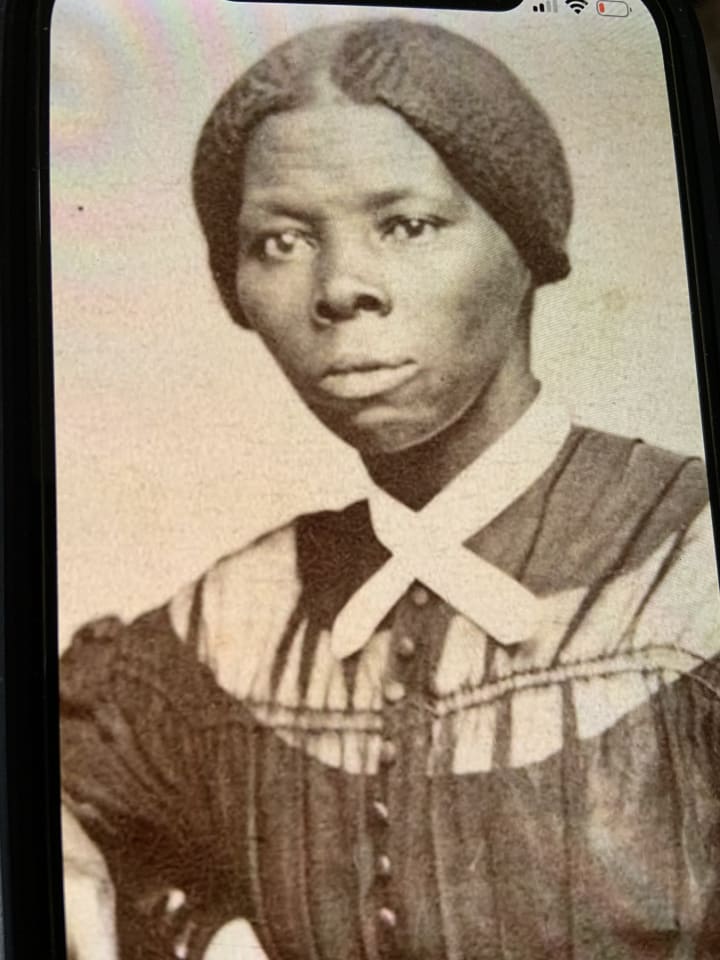
Harriott Tubman
Harriot Tubman, was born Araminta "Minty" Ross on Maryland's eastern shore, around 1822. She escaped slavery in 1849, passing through Delaware on her way to Philadelphia.
Tubman returned to Maryland at least 13 times to rescue family and friends, bringing them through Delaware which was a slave state. She faced immense danger on their way to Philadelphia and Canada.
Her Delaware Connection
She frequently used a safe house in Wilmington Delaware operated by Thomas Garrott, which she partnered with to rescue many of the 70 people, using the network of anti-slavery known as the Underground Railroad.
Tubman was an American Abolitionist and social activist. During the American Civil War, she served as an armed scout and spy for the Union Army. In her later years Tubman was activist in the movement for women's sufferage. She helped establish a home for elderly African Americans, which she was admitted to, when illness over took her in later years.
Tubman was commonly known as an icon of courage and freedon.
Alice Dunbar Nelson - July 19, 1875- September 18, 1935
Alice Dubar Nelson was an American poet, journalist and political activist. Among the first generation of African Americans born free in the Southern United States, after the end of the American Civil War. She was one of the prominent African Americans involved in the artistic flourishing of the Harlem Renaissance. She gained recognition for her poetry, short stories and essays, that explored themes of race, gender, and respectability. She advocated for Black Women's rights and anti-lynching legislation in her newspaper columns. She was know for her editorial work, highlighting African American literature.
She moved to Wilmington Delaware in 1902, and was a pivotal figure in the state, serving as a teacher in the High School and at the State College for Colored Students now known today as Delaware State University
She was a prominent advocate for women's sufferage and civil rights, working to get Black women to voe in Delaware.
She was cremated in Delaware and her ashes were scattered over the Delaware River.

Senator Margaret Rose Henry
Henry was the first African-American woman elected to the Delaware State Senate. During her time in office, she worked to reform the juvenile justice system and helped create a needle-exchange program In March of 2018, she received a Lifetime Achievement Award from the New Castle County Chamber of Commerce in Delaware.
Rose Henry supports gun control and supported a bill to ban assault weapons in 2018.
Senator Margaret Rose Henry served in the Delaware State Senate for 24 to 25 years from 1994 until her retirement in 2019. As the first African American woman elected to the Delaware Senate, she represented the Wimington East area, holding the seat for over two decades.
Louis L Redding. - October 25-1901- September28,1998
Louis L Redding was an Amerian lawyer and civil rights advocate from Wilmington Delaware. The first African American to be admitted to the Delaware Bar. Redding was part of the NAACP team that challenged school segregation in the Brown v Board of Education.
He was the only African American in Harvard Law's 1928 graduating class. Redding was admitted to the Delaware bar the following year.
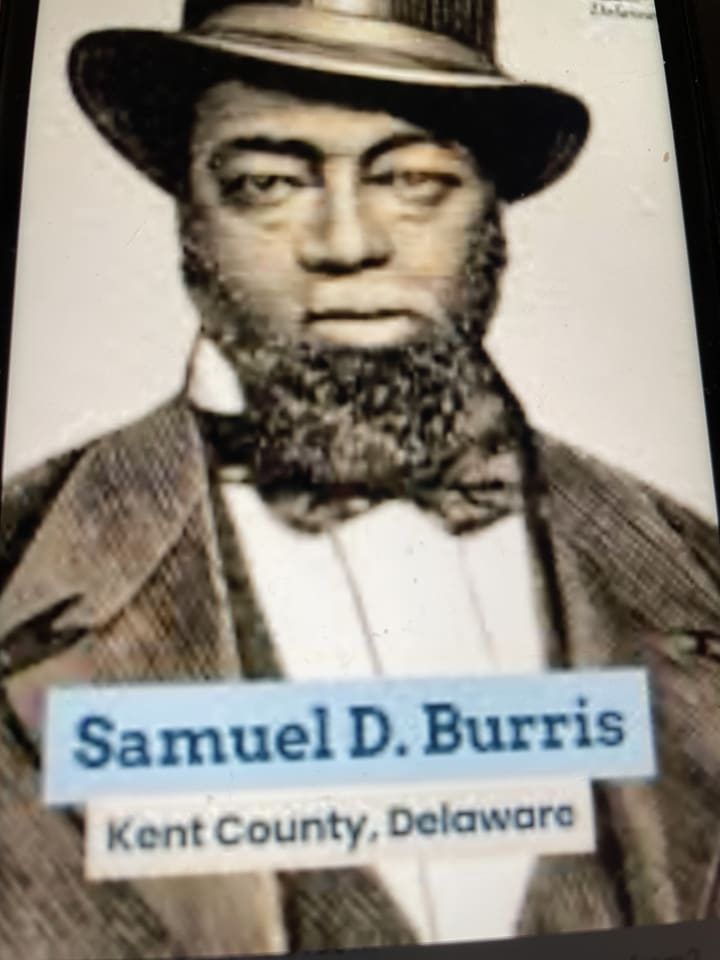
Samual Burris---October 14,1813-December 3, 1863
Samual D Burris was a member of the Underground Railroad, He had a family, who he moved to Philadelphia for safety and traveled into Maryland and Delaware to guide freedom seekers to Pennsylvania.
He was caught helping Marie Mathews escape and was aquitted, Soon after he helped two young men and a young woman, and he was arrested for enticing slaves to run away, in 1847. He served 14 months in jail awaiting trail, and he was found guilty. He was sentenced to 10 months in jail and a $500 fine. When he completed his sentence, he was put on the auction block to be sold into slavery.
Abolitionists found out he was to be sold into slavery, and Isaac Flint posed as a slave buyer, and bought Burris and then set him free.
Burris still went into Delaware to guide Freedom Seekers, until a law was passed, naming him that stated that continued assistance could result in 60 lashes of the whiping addition to being sold into slavery. He and his family, then moved to San Francisco, California, where he raised funds for education, food and shelter for former slaves. He looked for ways to help freed people become established with jobs and homes
He died in 1863.
Today - March 2026
Today, Delaware's Black population is 24.2%, making it one of the higher percentages of Black residents among US states.
What Have We Learned Over The Years
Perhaps we have learned, whether the tone of your skin, is black or white, - we are more alike than we are different.
About the Creator
Susan Payton
I love to write in every venue. I am 75 years old and try to make every day count,. I am learning a great deal about poetry on Vocal, and I am glad to be here.
Keep reading
More stories from Susan Payton and writers in Humans and other communities.
Homeless in America
You didn't see this, in this small colonial town, of Dover, Delaware. That was before Covid 19, and it seems that Covid, changed everything in America. At least the America I knew. This was an actual photo, I took of a shopping cart, on a warm sunny day this past summer. There was a man and a dog. lying on a grassy knoll about five feet from this shopping cart. I didn't have the heart, to photograph, the man and his dog, I figured he had suffered enough without the indignity of someone photographing him sleeping by the side of the road.
By Susan Payton17 days ago in Humans
Practical Dating Problem Solving Tips For Busy Professionals Seeking Love
Hectic workers are usually not able to find a balance between their work life and romantic life. Dating time has to be planned so that one does not forget about personal relationships. Dating should be taken seriously so as to make it consistent and show commitment to getting a good match.
By Robert Smith3 days ago in Humans


Comments (1)
The section on the Underground Railroad connections was fascinating. Figures like Harriet Tubman and Samuel D. Burris show just how much courage it took to challenge injustice at that time.