
Mothering Sunday
Mother's Day in the U.K.

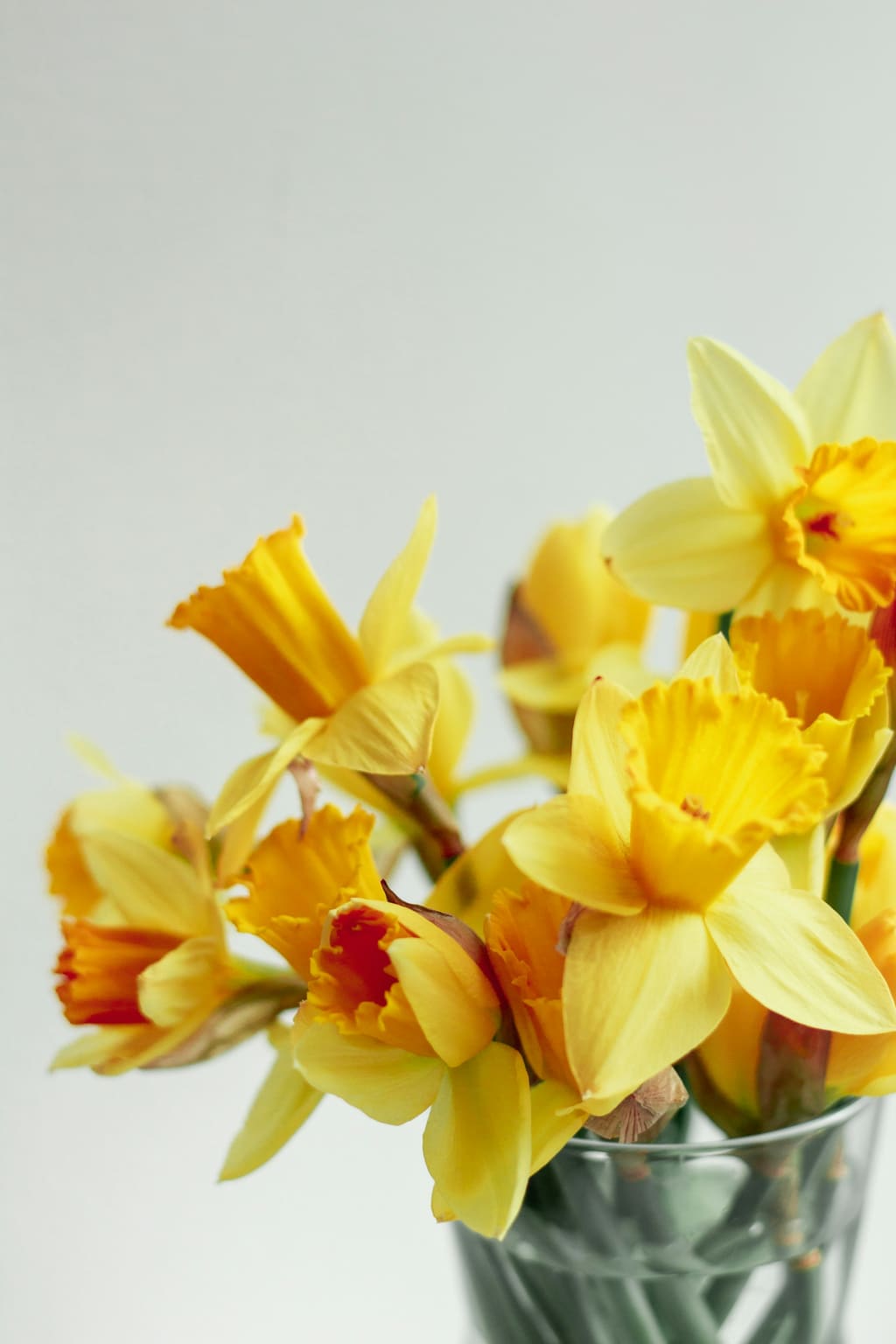
Mother’s Day in the United Kingdom has a long and winding history, one that reaches back centuries before cards, flowers, and Sunday lunches became part of the day. It began as Mothering Sunday, a quiet moment in the church calendar when people returned to the place that shaped them. Over time, that return shifted from the church itself to the women who held families together. Today, the day carries pieces of all those layers, and the daffodil has become its most familiar symbol.
Mothering Sunday began in the Middle Ages. On the fourth Sunday of Lent, people walked back to their “Mother Church,” the main church or cathedral in their region. It was a day of homecoming. Children who worked away from home were given the day off to return to their families. They often picked flowers along the road, and because March is the season when daffodils bloom across the countryside, those bright yellow flowers became the natural gift to bring home.
As the years passed, the meaning of the day shifted. The return to the Mother Church blended with the return to one’s mother, and the day slowly became a time to honor the women who raised and guided their families. By the eighteenth century, Mothering Sunday had become a familiar part of British life. But as the world changed, the tradition faded. Industrial work, long hours, and the movement of people into cities made it harder to keep old customs alive.
The holiday might have disappeared if not for a revival in the early twentieth century. A woman named Constance Penswick‑Smith worked to bring Mothering Sunday back, and during the Second World War, American soldiers stationed in Britain brought their own Mother’s Day customs with them. The two traditions blended, and by the 1950s, Mother’s Day had returned as a day to honor mothers, grandmothers, and all the women who shape our lives.
Today, Mother’s Day in the UK is a mixture of old and new. Families gather for meals. Children make cards and crafts at school. Churches hand out daffodils during services. Breakfast in bed is attempted with varying degrees of success. And everywhere you look, daffodils appear in windows, gardens, shops, and hands.
The daffodil has become the heart of the day for several reasons. The first is simple timing. Daffodils bloom in March, right when Mother’s Day arrives. They are the first bright sign of spring, pushing through cold soil and grey weather to announce that the world is waking up again. Their timing made them the perfect flower for children walking home centuries ago, and that connection has never been lost.
Daffodils also carry a deeper meaning. They stand for renewal, hope, and new beginnings. They bloom after the long winter, and their bright color lifts the spirit. They remind us that life returns, that warmth follows cold, and that love has a way of rising again. These ideas fit naturally with motherhood, which is itself a kind of renewal. Mothers carry, nurture, and guide life. They hold families together through seasons of hardship and seasons of joy. A daffodil, simple as it is, carries that truth in its shape and color.
Folklore adds another layer. In some traditions, the first daffodil of spring brings good fortune. In Wales, the daffodil is tied to St. David’s Day and is seen as a sign of prosperity and protection. Old beliefs say that giving a single daffodil can bring misfortune, but giving a bunch brings blessings. Whether or not people still believe these things, the feeling behind them remains. A bouquet of daffodils is a small, bright blessing placed in someone’s hands.
There is also a practical side. Daffodils were once free for the picking. Children could gather them from fields and hedgerows without spending a penny. They were a gift anyone could give, no matter their circumstances. That accessibility helped the tradition endure. Even now, when flowers can be bought in shops, the daffodil still carries the spirit of a simple, heartfelt offering.
Daffodils have also found their way into British art and literature. Poets like Wordsworth wrote about them, and painters have captured their color for centuries. They have become part of the cultural landscape, a sign of spring and a reminder of the beauty in ordinary things. Their presence on Mother’s Day cards and in church displays is not accidental. It is a reflection of how deeply they are woven into the season and the spirit of the day.
Mother’s Day in the UK is not just a commercial holiday. It is a day shaped by history, faith, family, and the quiet pull of home. It carries the memory of long walks back to the Mother Church, the warmth of family reunions, and the simple joy of a child handing a bunch of daffodils to the woman who raised them. It honors mothers in all their forms—those who gave birth, those who adopted, those who stepped in, those who guided, and those who are remembered with love.
The daffodil remains the symbol of the day because it holds all of that in its petals. It is bright, hopeful, and honest. It does not pretend to be more than it is. It simply stands in the early spring light and reminds us that love renews itself, that gratitude matters, and that the simplest gifts often carry the deepest meaning.
As Mother’s Day arrives each year, the daffodils bloom across the UK, just as they have for generations. They stand as a golden tribute to mothers everywhere, offering the same message they have carried for centuries: thank you, I love you, and you matter.
About the Creator
Julie O'Hara - Author, Poet and Spiritual Warrior
Thank you for reading my work. Feel free to contact me with your thoughts or if you want to chat. [email protected]
Keep reading
More stories from Julie O'Hara - Author, Poet and Spiritual Warrior and writers in Humans and other communities.
The Shift From Pisces to Aquarius: From Following to Connecting
Astrological ages describe long arcs of cultural development, each lasting roughly two thousand years. These eras are not defined by single events but by gradual changes in consciousness, values, and collective orientation. The transition from the Age of Pisces to the Age of Aquarius marks one of the most significant shifts in human history, not because of a change in the stars themselves, but because of the change in how humanity interprets meaning. The Piscean era emphasized devotion, sacrifice, and hierarchical spiritual authority. The Aquarian era emphasizes connection, shared intelligence, and the dissolution of hierarchy. This shift can be summarized in a simple contrast: in Pisces, the savior said “Follow me.” In Aquarius, the savior says “Connect.”
By Julie O'Hara - Author, Poet and Spiritual Warrior4 days ago in Humans
Thief In The Night
To the thief in the night that took and replicated what once was mine: Honestly, I feel kind of bad for you. It’s funny, because we hardly know each other. I only know of you through the magazines you’ve written and the broadcasts you have televised in the past — as well as through the public mentions of you from your show business connections there.
By Snarky Lisa8 days ago in Humans
Danielle Graham: Husband, Net Worth, Biography, Age, Career & More
Danielle Graham is a respected Canadian television entertainment reporter and media personality best known for her long-running role as co-anchor of etalk. Over the years, she has graced countless red carpets, interviewed global stars, and built a remarkable career in Canadian broadcast journalism.
By Enoch Sagini6 days ago in Humans




Comments
There are no comments for this story
Be the first to respond and start the conversation.