
An Interview with Evan Ari Kelman — Writer and Director of Barron's Cove (Part One)
Discussing the Black List, filmmaking, and where to draw the line as a storyteller.

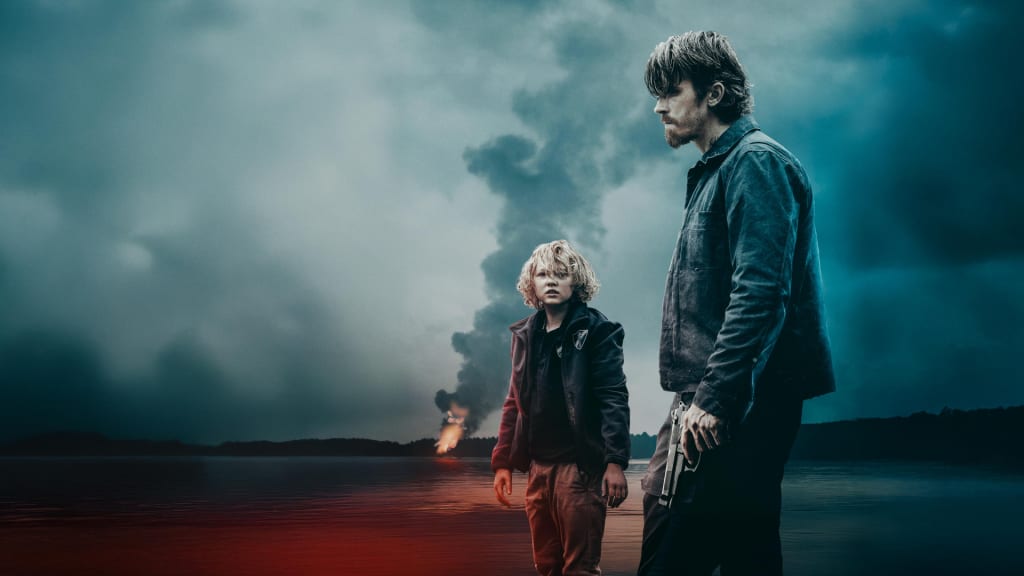
In 2025, Barron's Cove arrived in theaters and on digital platforms, introducing audiences to a harrowing story of tragedy, trauma, and revenge.
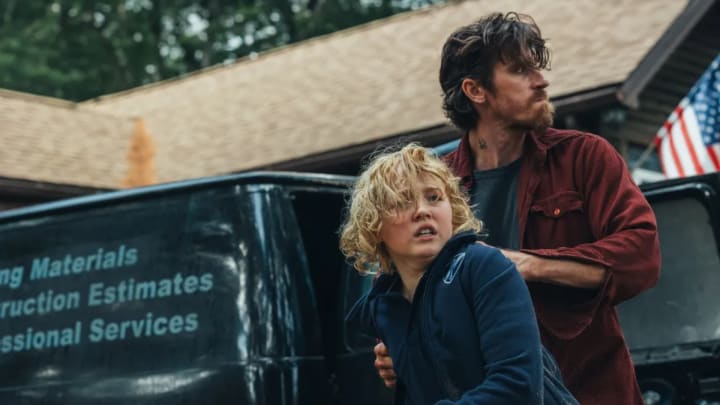
Starring Garrett Hedlund as Caleb Faulkner, a desperate father with a violent past who abducts a young boy in his hunt for the truth regarding the untimely death of his own son, Barron's Cove is a tense, often terrifying tale that dares viewers to question how far they would go under the same circumstances.
Now, fans can dive even deeper into the world of Barron's Cove courtesy of the novel of the same name by writer-director Evan Ari Kelman. While the novel offers the same narrative as the film, it expands upon what viewers have already seen in intriguing new ways that are more than deserving of being explored.
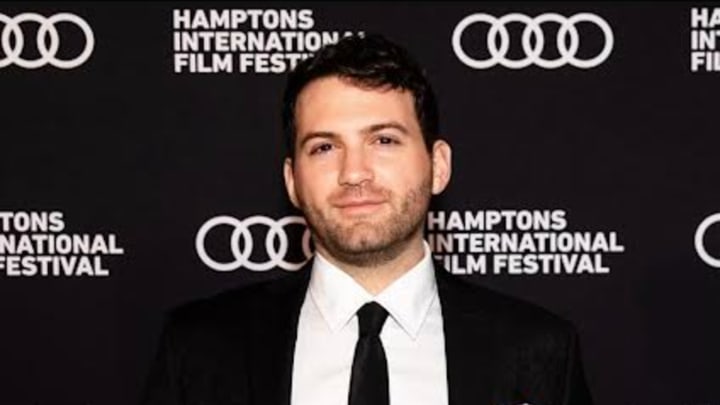
In February, I had the chance to speak to Evan Ari Kelman directly about Barron's Cove, both the film and the novel, where the gut-wrenching story came from, and what he has in store for audiences next.
John Dodge: Where did Barrett's Cove come from conceptually?
Evan Ari Kelman: I remember, you know, in the couple of years out of NYU where I went to film school, I was just always looking for what that story could be and it, it's something that's, you know, coming out of you, like, yes, you, you need to make the movie to, to start your career, but also you need to make the movie because you're a storyteller. You're a filmmaker, and narrative features just give you a canvas that, you know, short filmmaking doesn't.
EAK: And I tried to take different cracks, different stories, and nothing really settled until I heard about this news story, 0f a really tragic incident in, in England where these two young kids took another kid to train tracks. It's sort of like a game, and they tied him down to these train tracks and the train came.
I think the consensus is, you know, they didn't fully, you know, they were, they were young, maybe they didn't fully understand the consequences of what they were doing. Immediately the police were involved and the two kids that were responsible with that were arrested and I think they went to a facility where there was, you know, like a, a treatment program and they had to kind of go through a process in order to be released back into the public and they're, you know, 3 people now under different identities.
And I heard about this story, and I'm always looking at "What if?" I think that's a really important questions if you're a filmmaker is "What if? What if this happened a different way?" Or "What if there was something dramatic about this thing?" And that can be anything.
I did a short film at NYU called Bandido where the "what if" was a truck. I was looking for stories everywhere and I saw a truck in a, in a magazine, weirdly, like not even on the street. It was just the way that was framed in a magazine and I was like, what if, you know, there was something in there that, and that questioning of, you know, just kind of grew and grew.
And that's exactly what happened with Barron's Cove. I said, "Okay, well what if there was a cover up? What if there was a conspiracy? What if the murderer had to be protected? What if his father had a reputation to preserve, and what if he was politically corrupt? What if the father of the murdered boy had nothing else in his life to lfie for except his son? How far would he go to get to the truth?"
And suddenly, in that moment, and, you know, in the, in the days and weeks and years that I was thinking about the story, so much that had been building in me up to that had kind of found a canvas to kind of grow across.
JD: You mentioned Bandido, which shares at least some thematic elements with Barron's Cove. Is there any particular through line that you find or laid in as a foundation for the feature film coming from your short films?
EAK: I've asked myself that question as well. But, as the artist and the writer, a lot of that work is unconscious. You almost have to make a few films before you can look back and say, "Oh, there's something, there's a through line, between these projects." You know, it's almost like a process of self-discovery, which I think is inherent to like the artistic process.
JD: Barron's Cove made it onto the 2021 Black List, which is just a dream for so many writers. What did that feel like as a creative, and where would you rank that in terms of your personal and professional accomplishments?
EAK: I remember graduating NYU, there were people a couple of years above me who I really looked up to and I remember one of them in particular had his script on the Black List and it was like a really big deal, you know, when you're like coming out of college and you're still kind of in that environment, you know what like the people 3 or 4 years above you are doing. Kind of becomes like the buzzing news in your ecosystem and it becomes kind of like the North Star.
And I've just decided in that moment I'm like this is something that I need, I want to do. I need to do this. I wanna have a script on the Black List, like this is my goal. And it's, you know, making a, a movie is so hard. Like, of course that that was also my goal, but it felt like something a little more attainable, maybe a little bit faster.
Like the first step to making a movie is writing a great script, right? So like once you have a great script, you can theoretically have a chance at the Black List.
I literally just remember sitting there and like deciding that that was gonna be the the next goal that I wanted to achieve. And honestly, it took me a a lot of time.
This was before I ever had the idea for Barron's Cove. I had other thriller ideas that I found compelling, but I wasn't able to like crack the story. I was struggling. I was looking for shortcuts. I was looking, you know, for, for maybe existing short stories that were out there that I could adapt.
I was looking at co-writers that I could bring on cause I kind of thought of myself as like, you know, I want to direct more than I wanna write.
Maybe there's a co-writer who wants to write more than they want to direct, and we can team up. And I kind of did this process for like several years. And, finally, you know, I had, I wrote Barron's Cove. I couldn't put it off any longer.
There was no co-writer that I jived with and just realized I had to do it myself. I wrote the movie, and then the process of getting onto the Black List is a whole other thing.
I mean, the first year that we had a good chance at it, we did not get on and I thought, I thought we could get on. I knew we had people voting for us. And I remember like my producer calling me and saying, "Hey, it doesn't look like we're gonna be on the blacklist this year."
And I just remember being gutted and devastated. Disappointed and frustrated and, you know, the next year we did get on, so it was another year essentially of waiting and working on the script and getting it out there.
Because, the way the Black List works is, for people that maybe don't know is it's based on industry votes, like, people with a certain credential level voting on the Black List. And so it means, you know, exposure to those people.
It also means like a, a network effect where those people have to hear about your script somehow. So you need champions of your movie. There's almost like a political aspect where there's, it's not like all out campaigning, but you need to be plugged into the industry.
Your producers need to be plugged into the industry so that they can say, "Hey, here's something really great that, you know, you should read," and people talk about it and it becomes kind of a thing that people are aware of.
As much as it is about the quality of the script, that second component is as, if not more important, and a lot of people don't recognize that. It's not just a measure of how good a writer you are. It's also a measure of like how well connected you are to a, to a degree.
And I don't mean like connected, like, you have a huge reputation where you can do anything you want. I mean, like, how many people you actually know that are in the industry that, you know, would care to read something you wrote.
The bottom line is like when I finally got on, it was... I was ecstatic. I was thrilled, you know, to, to have a goal in your mind for so long and to work really hard at it and then to achieve it, I think it's one of the best things of being alive.
I think it's one of the reasons to be alive. You're proving yourself to yourself, which is the most important thing to do. I think that's like a good muscle, a good habit.
JD: In terms of subject matter, Barron's Cove is decidedly dark. When you were crafting the story, once you had things kind of broken down conceptually, was there a specific line that you drew in terms of how far the story or the film would go, or did you let the creative process dictate that?
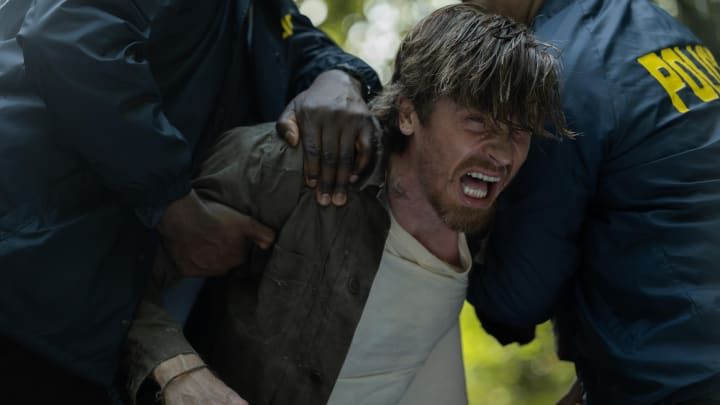
EAK: My instinct for better or worse is typically to double the conflict, like double down, double down. Like, "How intense can we make this?"
I think finding that answer is a kind of a question of like taste and experience, but especially back then, I was like, let's go further, like let's go to the extreme, you know.
And I had ideas that were so... they were so dark... I wanted to keep it sort of ambiguous exactly what the abuse was between the councilman and his adopted son. I wanted it to be just not fully understood. You know, something that was never fully uncovered.
I remember at one point writing in the script, like I wrote in part of the bruises that were revealed on Ethan, I remember writing in bite marks, and there wasn't a ton of logic to this, to be frank with you.
Like, "What? Why is the councilman biting Ethan?" Presumably there's some kind of sexual abuse aspect to that, but that is the writer in me that is like, "Oh, let's just make this as crazy as possible."
Part of the taste component comes later where it's like, "Okay, it wasn't fleshed out. It wasn't thought you." Especially when you're dealing with these darker themes, you need to be respectful to the reality, because it's not just a device and a script.
Abuse is a real thing that many people experience in all different kinds of ways, and as easy as it is for me to be at my computer and write something really ugly and dark because it's, "This is gonna push our character to do something right," these are serious themes, and they need to be treated respectfully.
At some point, my producer said to me about the sexual abuse in particular, they were like, "This is a can of worms that the script is not prepared to fully deal with," which was one hundred percent true.
In the movie, we, we toned that way down. The abuse was like more physical. There were beatings, that was very clear, but there was really very, very, very little evidence of a sexual abuse.
Although there is kind of a scene that like leans into it a little bit, but even in the edit, we had takes that were more intense and takes that were less intense, and we ended up being really, conservative with that.
Again, because we didn't want to use these very serious topics in a way that that that the film wasn't fully able to really, you know, engage with in a respectful way.
And then when I started writing the book, that was one of the things where I was like, "Okay, there's an opportunity to go deeper and be more specific with the abuse." And I can, if I want to do sexual abuse, maybe I can think about how to include that in a way that's not just accurate, but respectful to the material.
But then I started getting to the writing of it and I was like, even now, I can feel my instinct is as the writer, and it's not as, it's not coming from the right place that I think I would want to write this.
And so the book is even toned down. I don't think there is any sex any mention of sexual abuse in the book, even though that was an instinct that I had early on.
JD: In terms of the subject matter, you've got all of these characters that are either suffering abuse, they are abusers, or they've been abused previously. Everyone has this shared aspect of trauma to their character, but none of the characters feel like they bleed together.
How did you approach crafting characters that are all so deeply damaged in similar ways and still keep them feeling like unique individual people within the story?
EAK: I think the most honest answer is I don't really know. That's where just the artistry sort of is. It's instinct.
It's sort of like... The characters are distinct on the page and in the movie because they're distinct in my mind. You know, when I just started conceptualizing who the councilman is, once you start thinking about the characters, they're just, they are complete. They're totally individual people. So of course they're going to appear [as] individuals.
The councilman had, they all have abusive fathers to one respect or another, but they're very different origins. You know, the councilman's father is the governor of the state. The councilman, Lyle was never good enough, He could never impress his dad. His own true nature, to some extent, was never fully able to be realized, so there's a repression in that character that is coming out in these really horrible, violent ways, especially towards his son and towards other people.
And that's a very specific type of thing, that's different from a lower socioeconomic scenario like Caleb, where his dad is, abusive in a more physical sense and has completely destroyed his self-esteem. And his uncle has this power dynamic over him, he's helped him in this manipulative way.
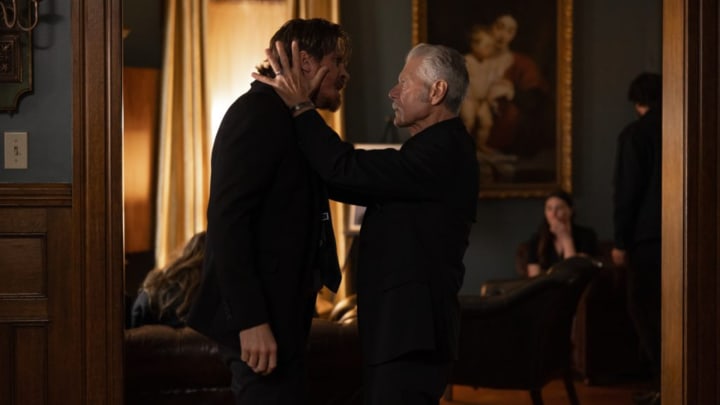
JD: So, presumably, things on set of Barron's Cove were much lighter than the, the subject matter of the film. How did you approach maintaining morale shooting something that is just a gut punch at like every single step of the way?
EAK: First of all, I love filmmaking so much that every single day I'm on set, I am just like, "It's the best day of my life."
So, I like to think that I'm coming to set with an excitement and an eagerness to figure out what we're doing that day, to hear the best ideas, and to encourage the best ideas.
Generally people are really excited and so I, I get just excited by the filmmaking process and I think that just kind of lays a foundation for. It just sort of like sets the tone that all of us are lucky to be here and, and like, having a great time.
That's the first thing. The second thing I think is, I have to give Garrett a lot of credit to this because, your lead actor I think sets the tone even more than the director does. And his nature is just, he's so fun loving and healso can be like a practical joker at times.
And then Christian is also so, he's such a great person. And the two of them and the three of us, I think we just loved working with each other so much. There was like an inherent excitement and joy on set.
Yes, there were like stink bombs also thta somebody brought to set. There were pranks that, you know, someone would like throw it near the video village, and that was kind of a recurring joke that happened a couple times. The, the feeling on set was just kind of like fun.
There were, of course, scenes, there were many scenes that were treated with a seriousness, and when the cameras were rolling, everybody is really plugged into the emotion and the honesty. But it never felt like dark in an overbearing way. Those moments felt serious in a cathartic way, I think to everybody on the set, where we're seeing something and feeling something genuine.
Garrett's such an amazing performer, Christian's such an amazing performer. All of our talent are so great that whatever darkness they're experiencing, it's never oppressive.
You know, just like the reason any of us, you know, engage with that kind of art, there's something in us that, that, that needs to breathe in that space, and we were all plugged in. It was like a privilege to be in the room during those moments.
And, and then there were other moments where there was just like... This, this illustrates my point.
Like I remember there's a scene in the shed where, you know, Christian needed to eat, like, like he needed to devour a cheeseburger, you know, in the story, he hadn't eaten for like a day or something like that, nd Caleb brings him fast food.
And so his character is like absolutely starving and famished and shoving this cheeseburger in his face. And after like three takes of that, Christian was like, "I don't think I can do that a 4th and 5th time." Like just as a heads up.
And so that was like the only time we approached any kind of like limit, which wasn't even like a limit, you know, we've gotten the take, but like I think that everybody laughed because it illustrated just how, comfortable we all were.
JD: What about for you personally, when you were putting this all together, writing, producing. How did you keep yourself from feeling the weight of the subject matter?
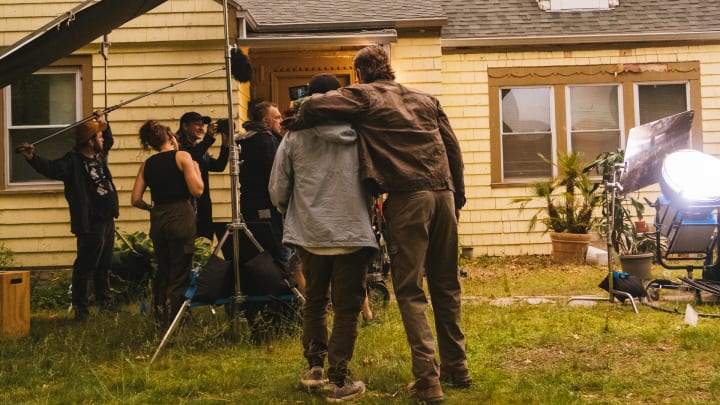
EAK: Shooting this movie was really intense for me, but not because of the story... The intense part for me was the shoot. It was just we had so little time. Very little time. The whole movie was filmed in like 21 days or so. Which is a very short amount of time.
I mean half of one of those days was shooting underwater where we — It's like, I don't know, like 8 shots or maybe like 5 shots in the movie that are underwater for a few fractions of a second towards the end. That's a half day of shooting on a 22 day shoot, like that's, that's a huge commitment.
We also had a lot of locations. We had a lot of extras. We had a lot of stunts. That was the hard part for me was knowing what I wanted and having to, you know, conscientiously do something else because what I wanted to do wasn't achievable with the time that we had.
That's a hard thing for a filmmaker, especially someone who's had so much time to think of the idealized version of how to tell their story. You have to choose between, other options that just aren't as ideal in your mind.
That's emotionally taxing, you know. In some scenes, I would get a wide shot, you know, you need a wide shot, and then I would only have time for a medium shot on two characters, and those medium shots would have to cover the entire scene.
Those compromises, like over days and weeks, really stack up, and you just have to do the very best you can and find whatever opportunities are there. I had to cut a lot out of the script while we were scouting locations. The schedule is being put together and there's not enough time to shoot every page that we have.
And so I was — The script was in my mind like locked for a year or [more], and now all of a sudden at the very last second I was asked to cut, I don't know, it could have been like 10 or 15 pages, which in a 120 page script is a lot.
I had to lose subplots. I had to lose set pieces. I had to lose moments that I felt were important to me. And that's filmmaking. That's what it means to make a movie like. You have to, you have to negotiate with reality. You have to negotiate with time, you have to negotiate with your budget, you have to negotiate with your, with your equipment.
It's part of the fun at the same time, but it also can be emotionally difficult when you've had such a specific idea in your mind for so long. And that was actually the inspiration to write the book.
Because in the edit, I really started writing this during the edit of the movie, cause I was like mourning in a sense, some of what we were not able to film and some of what we filmed, but we were not able to include in, in the edit.
And some of that is on me. A lot of that is on me as the writer. You know, I realize now that there were cuts that we made that were the right thing for the film because they were tangential or they were world building or they were a level of detail that you actually don't need in a movie.
Maybe you would need, you would want a TV show, you know, me as the writer, I had a lot to say. But you don't need all that in a film and a lot of these cuts for the right thing.
But they would still lived in my head, you know, they, they were haunting me to an extent because they were deepening the world. There were parts of the world, there were parts of the story that didn't exist in the movie and should not have existed in the movie, and I really want to be clear about that because it's not just, "Oh, I cut stuff and you know it's a tragedy, you know, the movie would be so much better if this were in in in the film."
That's not true. A lot of what we cut was for for the better. But those moments still had value on their own, and that's why I wrote the book because I wanted to have the space to tell the full story without the constraints of time, budget, and without the requirements for making a feature film, because a feature film does need to be really specific and focused.
And so these tangents and world building, like, yeah, they might be great ideas, but they don't belong in the film, but they can have space to breathe in a book.
And I just felt like for me to move on from this project completely, I needed the full story as I had conceived it for, you know, five plus years to exist somewhere where people could access it, and that was the motivation for writing the book.
Click here for Part Two of my interview with Barron's Cove writer-director Evan Ari Kelman.
About the Creator
Keep reading
More stories from John Dodge and writers in Interview and other communities.
An Interview with Evan Ari Kelman — Writer and Director of Barron's Cove (Part Two)
A few weeks ago, writer-director Evan Ari Kelman and I spoke about Barron's Cove, both the film and the novel. Part one can be found right here, while part two can be found down below.
By John Dodge3 days ago in Interview
Part 2 Interview With Joe Patterson, Author Of Melanin Memoirs
This is my second interview with Joe Patterson. His 4th anniversary writing on Vocal will be in March 2026. He has one achievement on Vocal, The Other Foot. He has over 17,000 reads on Vocal since he started on Vocal in 2022. Joe Patterson is very creative poet and rapper. Joe is deep thinker and I feel it is reflected in his latest published book, Melanin Memoirs.
By Mariann Carroll24 days ago in Interview


Comments
There are no comments for this story
Be the first to respond and start the conversation.