
The Great Transformation: Two Decades of Evolution in African Trade, As Told by Expert Daniel Holztreger of DH Consult
In the early 2000s, the narrative surrounding trade with the African continent was often one of untapped potential hampered by logistical bottlenecks and a heavy reliance on a few primary commodities.

Fast forward twenty years, and the landscape has undergone a seismic shift. While challenges remain, the continent—particularly West Africa—has emerged as a dynamic hub of regional integration, digital innovation, and burgeoning industrial capacity.
Daniel Holztreger, a distinguished international trade expert with over 25 years of experience, has had a front-row seat to this evolution. From his early days at the French multinational Saint-Gobain to founding his own multimillion-dollar trading firm, DH Consult, Holztreger has navigated the complexities of the African market with a focus on resilience and adaptability. In a recent analysis, Holztreger detailed how the continent has transformed from a collection of fragmented markets into an increasingly integrated and digitally savvy economic powerhouse.
Two Decades of Structural Modernization
According to Holztreger, the most significant driver of change over the last 20 years has been a strategic shift toward economic resilience. "Over the past two decades, Africa has experienced a significant expansion in trade, driven by deeper regional integration, substantial investments in infrastructure and logistics, and the gradual strengthening of manufacturing capacity," Holztreger explains.
This modernization is not merely accidental. It is the result of deliberate policy shifts by African governments aiming for domestic production and "economic security." By focusing on manufacturing and agriculture, countries like Nigeria and Ghana are working to reduce their reliance on imports and fix persistent balance of payments deficits.
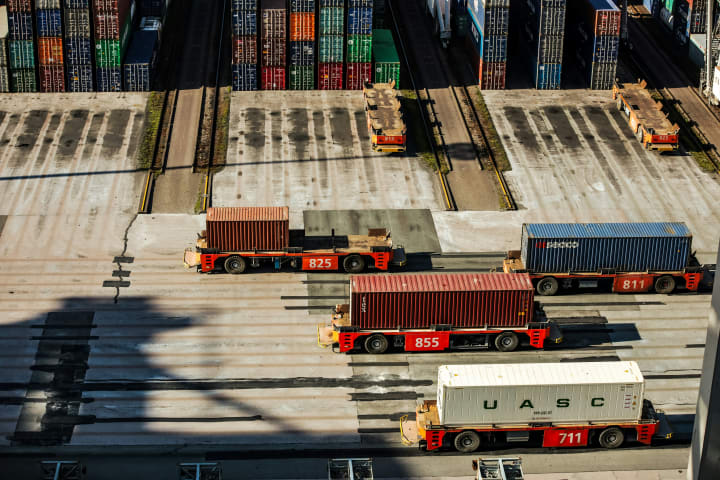
The physical landscape of trade has also changed. "Strategic public investments in roads, railways, and port modernization—notably in countries such as Nigeria and Ghana—have significantly improved trade corridors and reduced logistical bottlenecks," Holztreger notes. These improvements have been vital in facilitating both intra-African commerce and international trade flows, making the movement of goods faster and more cost-effective than at the turn of the millennium.
The Rise of Regional Blocs: The Case of ECOWAS
A cornerstone of this transformation has been the strengthening of regional frameworks, most notably the Economic Community of West African States (ECOWAS). These organizations have worked tirelessly to dismantle tariff and non-tariff barriers that once stifled cross-border commerce.
The numbers tell a compelling story. Between 2004 and 2024, ECOWAS countries saw their exports balloon from roughly USD 41 billion to nearly USD 120 billion. Despite this nominal success, Holztreger points out a lingering structural hurdle: "The composition of exports remains largely concentrated in primary commodities, including oil, minerals, gold, diamonds, and cocoa. This continued reliance underscores the structural challenge of limited value addition and industrial diversification."
While the volume of trade has tripled, the "value-add" remains the next great frontier for the continent's economists and entrepreneurs.
The Digital Leapfrog: Services Take the Lead
Perhaps the most surprising shift over the last two decades is not found in the shipping containers of the ports, but in the fiber-optic cables and mobile towers stretching across the continent. When asked which sector has changed the most, Holztreger is unequivocal: "Among all sectors, services trade has undergone the most profound transformation in West Africa."
Driven by digital finance, telecommunications, and technology-driven activities, the services sector has, in several nations, surpassed goods trade in relative economic importance. In many regions, services now contribute more to the GDP than agriculture and industry combined.
"The rise of mobile money solutions and digital financial inclusion has not only transformed domestic markets but also strengthened cross-border commercial integration," says Holztreger. With programs like the World Bank’s Digital Economy for Africa, hundreds of millions of people have gained internet access in the last seven years, fueling a fintech revolution that allows a small-scale vendor in a rural village to conduct international business via a smartphone.
The Art of the Pivot: Lessons from the Field
Holztreger’s own career mirrors the adaptability required to survive in the African trade market. Having founded DH Consult in 2011 and grown it into a $50 million operation, he has had to navigate sudden regulatory shifts that would have sidelined less agile players.
One of the most poignant examples of this occurred in 2017. At the time, DH Consult was a major exporter of white and brown eggs to the Democratic Republic of Congo and Angola. However, when these nations implemented import bans to protect and stimulate their domestic poultry industries, Holztreger’s business model was under threat.
"Rather than withdrawing entirely, we adapted by repositioning our activity within the value chain," he recalls. "We began to supply soybean meal to local egg producers as feed input. What began as a mitigation strategy has since evolved into a consolidated and strategic product within our portfolio."
This lesson—moving from the finished product to the raw materials required for domestic production—has been applied to other categories as well, including laundry bars, margarine, and tomato paste. For Holztreger, "Adaptability is not optional; it is central to long-term sustainability."
A Glimpse into the Future: 2026 and Beyond
As he looks toward the end of the decade, Holztreger anticipates that the "industrialization of West Africa" is an inevitability. He predicts that the next ten years will see many African nations achieve food self-sufficiency, meaning the current model of exporting finished food products to the continent will need to evolve.
A forward-looking perspective is what Holztreger is currently bringing to the U.S. market. Born and raised in Brazil and educated in the United Kingdom, he is now leveraging his 25 years of expertise to establish stable channels for American food exports to West Africa. His goal is to align high-quality American goods—specifically the raw materials and inputs needed for the next phase of African industrialization—with the growing demands of the West African market.
"As domestic production capacity expands, many food products currently imported may no longer be required within the next decade," Holztreger said. "New trade opportunities will emerge not necessarily in finished goods, but in the supply of raw materials, ingredients, and intermediate inputs required by expanding local industries."
About the Creator
Lisa Rosenberg
I am a writer based in New York City writing about artists, creative leaders and entrepeneurs.
Keep reading
More stories from Lisa Rosenberg and writers in Interview and other communities.
Shalev Grados on the Art of Hybrid Scoring for ‘Star Trek: Strange New Worlds’
In the vast universe of Star Trek: Strange New Worlds, where the starship Enterprise explores the final frontier with classic episodic storytelling, a new sonic frontier is being charted every week.
By Lisa Rosenberg24 days ago in Interview
Part 2 Interview With Joe Patterson, Author Of Melanin Memoirs
This is my second interview with Joe Patterson. His 4th anniversary writing on Vocal will be in March 2026. He has one achievement on Vocal, The Other Foot. He has over 17,000 reads on Vocal since he started on Vocal in 2022. Joe Patterson is very creative poet and rapper. Joe is deep thinker and I feel it is reflected in his latest published book, Melanin Memoirs.
By Mariann Carroll18 days ago in Interview
Podcaster Profiles
Multicultural is defined as relating to or constituting several cultural or ethnic groups within a society. Multiculturalism is the coexistence of multiple cultures. The word is used in sociology, in political philosophy, and colloquially. Right now in the U.S., multiculturalism has been attached to three words condemned by the present administration: diversity, equity, and inclusion.
By Frank Racioppi5 days ago in Interview




Comments