
Earthquake in the Gulf: Iran War Expands to a Dozen Countries in 72 Hours
How a Rapid Military Escalation Between Iran, the U.S., and Israel Triggered a Multi-Nation Crisis and Shook the Middle East in Just Three Days
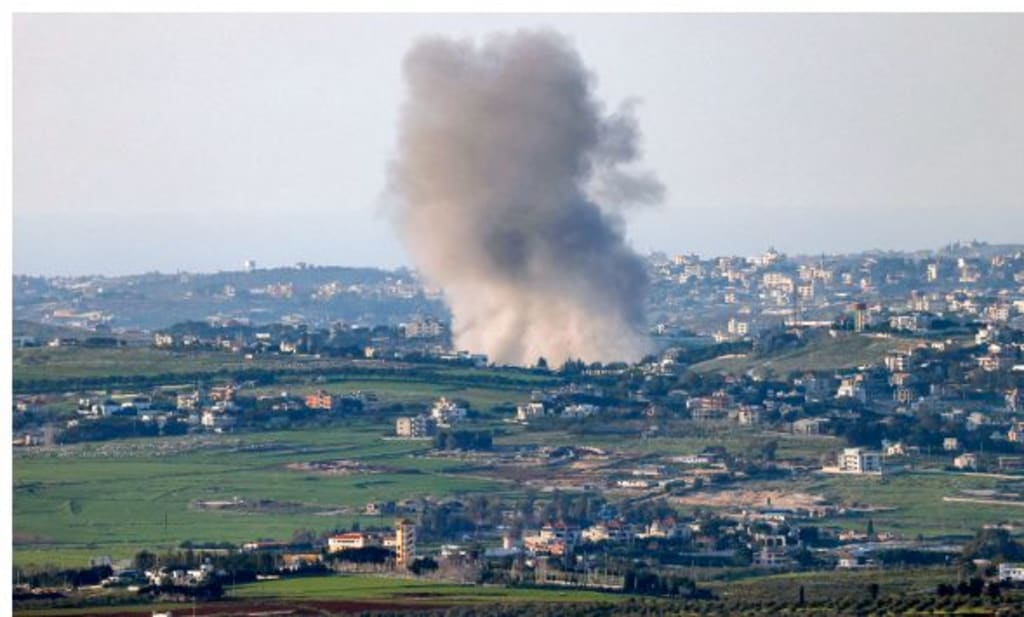
The Middle East has witnessed wars before. But what unfolded over a span of just 72 hours feels different — faster, broader, and more destabilizing than anything in recent memory.
What began as coordinated military strikes by the United States and Israel against Iran has rapidly spiraled into a multi-country conflict involving at least a dozen nations either directly or indirectly. In three days, the geopolitical ground beneath the Persian Gulf has shifted — an earthquake in every sense except the geological one.
Let’s break down how it happened and what it means for the region — and the world.
Day One: The Opening Strike
The crisis erupted when the United States and Israel launched a large-scale military operation targeting Iranian military infrastructure, missile facilities, and strategic command centers.
Washington and Tel Aviv justified the action as necessary to halt Iran’s nuclear ambitions and dismantle what they described as growing regional threats. Israeli leadership signaled that the strikes were preemptive and aimed at preventing long-term escalation.
Iran, however, had warned for years that any direct attack on its territory would trigger consequences far beyond its borders.
Within hours, those warnings proved real.
Day Two: Retaliation Without Borders
Iran responded swiftly and forcefully. The Islamic Revolutionary Guard Corps (IRGC) launched waves of ballistic missiles and drones targeting not only Israel but also U.S. military assets and strategic installations across the Gulf.
Countries that had hoped to remain on the sidelines suddenly found themselves in the crossfire.
In Bahrain, explosions near security installations caused casualties and infrastructure damage.
Qatar temporarily closed its airspace after missile interceptions over its territory.
The United Arab Emirates reported strikes near key urban centers, heightening panic in cities like Abu Dhabi and Dubai.
Kuwait placed its military on high alert as nearby facilities were targeted.
In northern Iraq, Iranian strikes hit areas Tehran accused of harboring hostile elements.
What had been framed as a bilateral conflict between Israel, the U.S., and Iran quickly transformed into a region-wide confrontation.
Proxy Forces Enter the Fight
Beyond direct missile exchanges, Iran’s regional network of allied militias activated almost immediately.
In Lebanon, Hezbollah exchanged fire with Israeli forces, opening a dangerous northern front. Iraqi militias launched rockets toward U.S. bases. Tensions flared along multiple borders simultaneously.
This multi-layered battlefield — combining state militaries and non-state actors — dramatically complicates any effort to contain the crisis.
Unlike traditional wars with clear front lines, this conflict stretches across urban centers, airspace corridors, sea lanes, and cyber domains.
Why the Gulf Matters So Much
The Persian Gulf is not just a regional waterway. It is one of the world’s most critical energy arteries.
Roughly one-fifth of global oil supply moves through the Strait of Hormuz. Even the threat of disruption is enough to rattle global markets.
Within hours of the escalation:
Oil prices surged.
Shipping insurance premiums spiked.
Airlines rerouted or canceled Gulf-bound flights.
Investors fled toward gold and other safe-haven assets.
The fear isn’t just about bombs — it’s about economic shockwaves. A prolonged conflict could trigger inflation spikes, supply chain breakdowns, and renewed energy crises in Europe and Asia.
Day Three: Diplomacy Under Pressure
As missiles crossed borders, diplomatic lines heated up.
Gulf Cooperation Council (GCC) nations convened emergency meetings. Leaders condemned violations of sovereignty and reaffirmed their right to self-defense.
Saudi Arabia, historically a rival of Iran but recently engaged in cautious diplomatic normalization, summoned Iranian representatives in protest.
Meanwhile, global powers urged restraint — though concrete ceasefire proposals remain unclear.
The United Nations called for immediate de-escalation, warning that further expansion could ignite a full-scale regional war with global consequences.
But diplomacy moves slowly. Missiles move fast.
The Strategic Stakes
This is not merely about retaliation.
For Iran, the conflict represents a test of deterrence and regional influence. By demonstrating its ability to strike multiple nations quickly, Tehran signals that it cannot be isolated or attacked without widespread consequences.
For the United States, the operation raises questions about long-term objectives. Is this a limited strike designed to weaken military capabilities — or the opening phase of a broader campaign?
For Israel, the calculus centers on survival and strategic dominance. Neutralizing threats before they fully materialize has long been a cornerstone of its defense doctrine.
But once conflict spreads, control becomes harder to maintain.
Civilians Caught in the Middle
Beyond military strategy and geopolitics, ordinary people across the region are bearing the brunt.
Families in Gulf cities spent nights sheltering from intercepted missile debris. Airports halted operations. Schools closed. Markets fluctuated wildly.
In border regions, displacement has already begun.
Modern warfare doesn’t just destroy buildings — it disrupts daily life, commerce, and psychological stability. The uncertainty alone creates a climate of fear.
Could This Expand Even Further?
History suggests that once multiple actors enter a conflict, escalation risks multiply.
If additional regional powers intervene directly, or if global powers deepen involvement, the war could evolve into a broader international crisis.
Cyberattacks, naval confrontations in the Gulf, and retaliatory strikes outside the Middle East are all plausible scenarios.
The speed of the first 72 hours demonstrates how quickly alliances can activate and how rapidly tensions can explode.
Final Thoughts: An Earthquake Still Shaking
The phrase “earthquake in the Gulf” is not an exaggeration.
In just three days, the region has transformed from uneasy stability to multi-front warfare. Political calculations have shifted. Markets have reacted. Borders have blurred.
Whether this conflict stabilizes into a tense standoff or escalates into prolonged war depends on decisions being made right now in Washington, Tehran, Tel Aviv, and Gulf capitals.
What is certain is this:
The first 72 hours have already reshaped the Middle East.
And the aftershocks may only be beginning.
If you’d like, I can also create:
A timeline version of the 72-hour escalation
An SEO-optimized Vocal Media version with stronger hooks and tags
Or a human-interest angle blog focusing on civilian impact
About the Creator
I wanted to title this something different, but worried that my chosen title might cause problems entering the United States in the future so this is the new title. It's the greatest title. No one has ever written a title better than this. (All titles unrelated to content).
Let me be honest. I am finding this difficult. Now, I like a challenge, a stretch, a bit of an obstacle course. “Write about the decline of the British Empire in the form of a narrative poem in which your protagonist is an artichoke” I read, and flex my fingers. “Write a haiku to evoke the sensation of sibilance using only the first half of the alphabet.” “Well”, I think to myself, “this should be fun.” But “write about a system that isn’t working”? A system that isn’t working? Now? In 2026? ONE system? My favourite system that isn’t working? The sexiest system that isn’t working? The one giving me the most angst day to day? The one giving me the most existential dread? I am, as I say, finding this difficult. I will own that I have contemplated writing a thousand words on why the steady “all on” setting on my fairy lights is the EIGHTH of seven options which must be sequentially activated to get there, because that is a system that some fool came up with and it definitely doesn’t work, and now who is paying the price, eh? But how can I write about my fairy lights when…. When…. When….
By Hannah Moore4 days ago in Humans




Comments
There are no comments for this story
Be the first to respond and start the conversation.