
Office Furniture Market Shaping the Modern Workspace
Quiet shifts in office furniture reveal deeper changes in the way people work
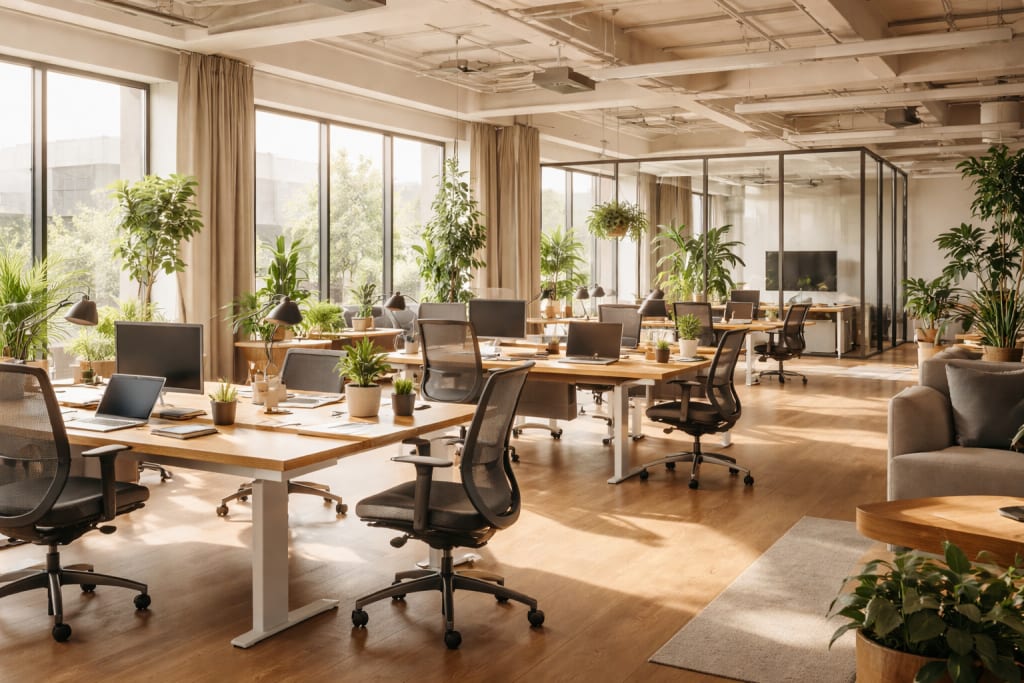
The office used to be predictable. Rows of desks. Identical chairs. Neutral carpets that muffled footsteps and creativity alike.
Today, walk into a modern workspace and the story is entirely different. Sunlit collaboration hubs replace cubicles. Adjustable desks invite movement. Quiet pods hum with focused energy while lounge, style meeting corners spark spontaneous ideas. Behind these subtle transformations lies a rapidly evolving office furniture market, one quietly redefining the architecture of productivity and comfort across the globe.
Companies are no longer buying furniture simply to fill a room. They’re investing in environments that influence focus, collaboration, and well, being. Data, design, and human psychology are converging, and the ripple effect is reshaping an entire global industry.
Market Momentum Behind Workspace Transformation
Behind the visual transformation of offices lies measurable economic momentum. The global market for workplace furnishings has been steadily expanding as companies redesign offices to support hybrid work models and collaborative environments.
According to data from Mordor Intelligence, the Office Furniture Market is experiencing steady expansion as organizations invest in flexible workspaces and ergonomic design solutions.
The office furniture market size is projected to expand from USD 78.10 billion in 2025 and USD 82.60 billion in 2026 to USD 116.80 billion by 2031, registering a CAGR of 7.15% between 2026 and 2031.
These numbers reflect more than corporate spending, they mirror a fundamental shift in workplace philosophy.
Businesses are redesigning spaces to encourage interaction rather than isolation. Conference rooms are shrinking while collaborative lounges grow larger. Fixed desks are replaced with modular stations that can be rearranged overnight. Furniture now supports fluid workflows rather than rigid structures.
Hybrid work has also introduced new purchasing patterns. Companies may maintain smaller offices but invest more heavily in high, quality furnishings to create compelling, multifunctional spaces. A single meeting area might serve as a brainstorming lounge, a client presentation room, and a remote collaboration hub.
In this environment, the office furniture industry is evolving from simple manufacturing into design, driven innovation.
The Evolving Role of Office Furniture in Modern Workspaces
Furniture might seem like a background detail in the grand narrative of work culture, yet it plays a surprisingly powerful role. The modern office is no longer designed around hierarchy but around experience, how people move, think, collaborate, and recharge.
Organizations now view workspace design as a strategic asset. Ergonomic seating reduces fatigue. Modular desks adapt to hybrid teams. Acoustic panels and privacy pods balance open collaboration with quiet concentration. The goal isn’t simply comfort; it’s performance.
This transformation is closely tied to shifts in workplace expectations. Employees returning to offices after years of remote work expect environments that justify the commute. Employers are responding by designing spaces that feel more dynamic and human, centered.
Within this transformation, analysts tracking the office furniture market share note growing competition among manufacturers focusing on ergonomic innovation, modular systems, and sustainable materials. Brands that once specialized in traditional desks now develop adaptable solutions for hybrid offices, coworking hubs, and creative studios.
The demand is also being influenced by corporate wellness initiatives. Adjustable standing desks, posture, support chairs, and biophilic furniture designs reflect a deeper understanding of how physical environments shape productivity and health.
What appears to be a design trend is, in reality, a strategic shift in how organizations think about the workplace.
Design Innovation Driving Market Expansion
The most exciting changes in office environments often start with furniture design. Designers are blending technology, ergonomics, and sustainability to meet new workplace expectations.
Desks now integrate wireless charging surfaces and cable, management systems that eliminate clutter. Chairs automatically adjust lumbar support as users shift posture throughout the day. Modular walls double as whiteboards, acoustic panels, and display screens.
These innovations are helping fuel sustained office furniture market growth as businesses recognize that workspace design can directly influence productivity and employee satisfaction.
Sustainability has also become a defining factor. Recycled materials, low, emission finishes, and circular manufacturing processes are gaining attention as companies pursue greener operations. Many modern offices now highlight furniture made from reclaimed wood or recycled metals, turning functional pieces into visible statements of environmental commitment.
Technology integration is another emerging frontier. Smart desks capable of tracking sitting time, posture, and workspace utilization are beginning to appear in forward, thinking offices. These tools provide organizations with real, time insights into how their physical spaces are actually used.
The result is a workplace ecosystem where furniture is no longer static, it adapts, responds, and evolves alongside the people using it.
The quiet transformation of desks, chairs, and collaborative spaces reveals something larger: the future of work is being built not only through software and strategy, but through the environments where ideas come to life.
And as offices continue to evolve, one question remains for every organization redesigning its workspace:
Does your office furniture simply fill the room, or does it shape the way people think, create, and connect?
About the Creator
Traveling to 5 Countries on a Single Budget:
The Journey Begins Traveling has always been a source of inspiration for me, filled with tales of diverse cultures, cuisine, and breathtaking landscapes. Recently, I embarked on an adventurous journey to five different countries, navigating the complexities of travel on a tight budget. My motivations for this trip stemmed from a strong desire to experience firsthand the vibrant life stories that each destination holds, as well as the thrill of budget traveling itself.
By Wilson Igbasi4 days ago in Journal
REEEEEEEEE!
I'm on a low road right now. There are a literal million things to do and not one of them worth my time. I would rather sit in place and burn but the orbit takes me on its inevitable route 'round the center; and I a center in my own right, around which others orbit, and so on and so forth, ad infinitum, ad nauseum.
By C. Rommial Butler6 days ago in Poets


Comments
There are no comments for this story
Be the first to respond and start the conversation.