
‘The Most Bitter News’: Iran Reels as More Than 100 Children Reportedly Killed in School Bombing
Grief and outrage sweep Iran as reports of a deadly school strike spark global concern and urgent calls for accountability.
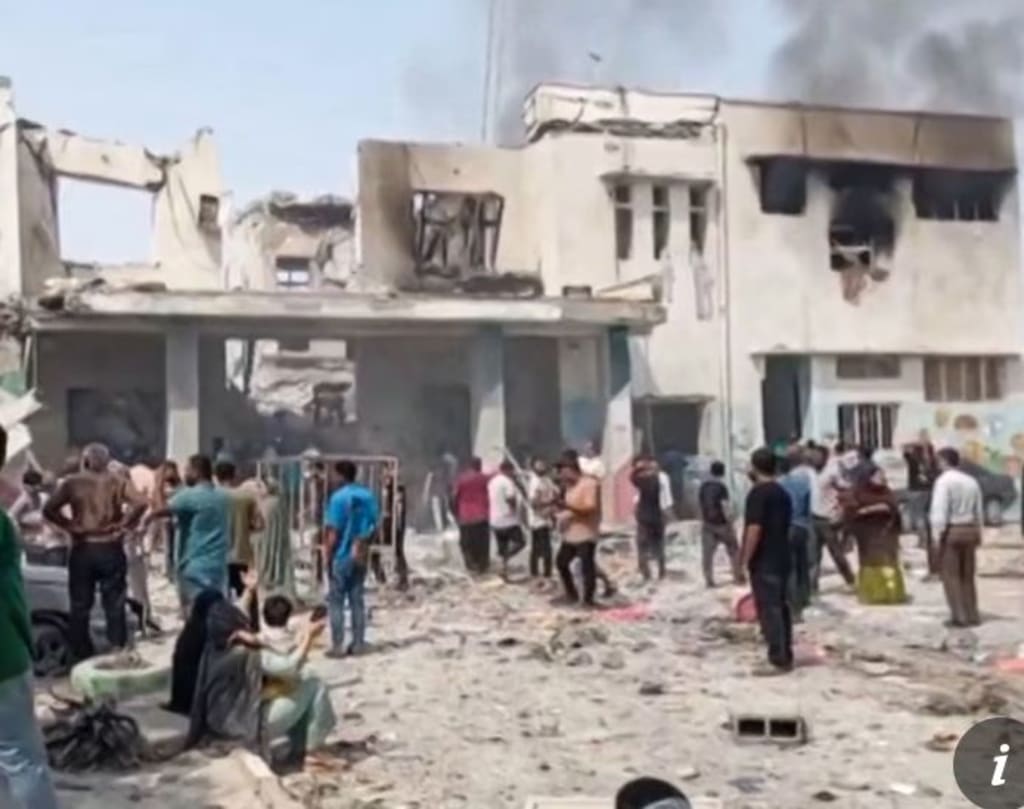
In moments of conflict, headlines often speak in numbers — casualties, targets, responses. But sometimes a single sentence carries a weight that numbers cannot fully capture. Iranian officials described it as “the most bitter news”: reports that more than 100 children were killed when a school was struck during a wave of military escalation.
The alleged attack, said to have taken place in the southern city of Minab, has sent shockwaves across Iran and drawn intense international reaction. While details remain contested and independently verified information is still emerging, the emotional impact has been immediate and profound.
This is not just a story about geopolitics. It is a story about classrooms, families, and a country in mourning.
What We Know So Far
According to Iranian officials, a missile strike hit a primary school during a period of heightened military confrontation involving Israel and the United States. Authorities in Tehran claim that the school was full of children at the time of the explosion.
Initial statements from Iranian representatives placed the death toll at over 100 children, with dozens more injured. Some local sources reported slightly lower figures, while others suggested the number could rise as rescue workers continue to sift through debris.
However, international media outlets have noted that casualty figures have not yet been independently verified. In the fog of conflict, confirming details is notoriously difficult. What is clear, though, is that a school building was heavily damaged — and that children were among the victims.
A Community Shattered
Images and videos shared by Iranian media show scenes of chaos and heartbreak: parents searching for missing sons and daughters, rescue workers digging through rubble, ambulances rushing the injured to nearby hospitals.
For families in Minab, the tragedy is not abstract. It is deeply personal.
Schools are meant to be sanctuaries — places of learning, laughter, and safety. The idea that a classroom could become a site of destruction has intensified the sense of shock. Across Iran, vigils were reportedly held in mosques and public squares. Candles flickered beside photographs of young faces, many still wearing school uniforms in their last family pictures.
The phrase “the most bitter news” began circulating widely on social media, capturing a national mood of grief and disbelief.
Political Fallout and Accusations
Iranian leaders were quick to condemn the strike, accusing Israel and the United States of targeting civilians and violating international law. Officials described the bombing as a war crime and called on the international community to intervene.
Both Israel and the United States have repeatedly stated that they do not intentionally target civilian infrastructure, including schools. Military officials from those countries have not confirmed responsibility for a strike on a school, and broader details of the operation remain unclear.
This clash of narratives has deepened tensions. In times of conflict, information itself becomes contested territory. Each side presents its version of events, while independent verification lags behind.
For ordinary citizens, however, political blame offers little comfort in the face of loss.
The Broader Context of Escalation
The reported school bombing occurred amid a broader wave of strikes and counter-strikes that have heightened fears of regional instability. The Middle East has once again found itself at the center of global concern, with diplomats urging restraint and de-escalation.
In recent years, the region has experienced periodic flare-ups involving Iran, Israel, and allied forces. But the reported scale of child casualties in this incident has added a new and particularly painful dimension.
When children become the headline, the moral weight of conflict intensifies.
The Challenge of Verifying the Truth
One of the most troubling aspects of modern warfare is the speed at which information — and misinformation — spreads. Social media platforms amplify images and claims before investigators can confirm their authenticity.
Some reports question the exact death toll. Others debate the circumstances surrounding the strike. Satellite imagery analysis and independent journalism may eventually clarify what happened, but that process takes time.
For now, the numbers remain fluid. The grief does not.
International Reaction
Human rights organizations have expressed alarm at reports of civilian casualties, especially involving children. International humanitarian law is explicit: schools and civilian infrastructure are protected during armed conflict.
Several global leaders have called for investigations and renewed diplomatic efforts to prevent further escalation. The United Nations has urged all parties to prioritize civilian protection and adhere to international norms.
Even in geopolitical rivalries, there is widespread recognition that attacks affecting children carry a unique moral and political consequence.
The Human Cost Behind the Headlines
Beyond statistics and statements lies the enduring human cost. Teachers who survived may carry trauma for years. Classmates who escaped injury may struggle with fear and grief. Parents face a future defined by absence.
Conflicts often reshape borders, alliances, and policies. But they also reshape childhoods.
For the families of Minab, the school year will never resume as it once did. Empty desks will stand as silent reminders of lives interrupted.
A Nation Searching for Meaning
In the days following the reported bombing, Iranian citizens have grappled with questions that echo across generations: Why did this happen? Could it have been prevented? What comes next?
Public mourning has mixed with anger. Some voices call for retaliation. Others plead for diplomacy and restraint. All are united in sorrow.
If the reported figures are confirmed, this incident could become one of the deadliest school-related attacks in the region’s recent history. Even if the toll is ultimately revised, the emotional impact has already left a scar.
Final Thoughts
War often begins with strategic calculations and political decisions. But its consequences are measured in human lives.
The reported deaths of more than 100 children in Minab represent more than a headline — they represent futures lost and families forever changed. As investigations continue and narratives compete, one truth remains undeniable: when children pay the price of conflict, the tragedy resonates far beyond national borders.
Whether this moment becomes a catalyst for escalation or a turning point toward diplomacy remains to be seen. For now, Iran mourns — and the world watches.
About the Creator
What Is Hypervigilance?
If you’ve gone through something painful or overwhelming, you might notice that you never really feel “off duty.” Maybe your body feels jumpy, your mind is always scanning for danger, and it’s hard to relax—even at home, running simple errands, or during what should be a calm evening with family.
By Phoenix Rebellion Therapy2 days ago in Journal




Comments
There are no comments for this story
Be the first to respond and start the conversation.