
Curious Photography Tips Every Beginner Should Try
Discover essential photography tips for beginners. Learn camera basics, composition, lighting, and focus techniques to start capturing better photos today.

Have you ever wondered why two people using the same camera can produce completely different photos? The answer often lies in how well the photographer understands the camera itself. For beginners, cameras can seem filled with confusing buttons, dials, and settings. But what if those settings are actually the key to better photos?
One of the most important concepts to explore is the exposure triangle, which includes aperture, shutter speed, and ISO. But how do these three settings really change a photograph?
Aperture controls how wide the lens opens when taking a picture. A wide aperture, such as f/2.8, allows more light into the camera and creates a blurred background that many people love in portrait photos. But what happens when the aperture becomes smaller, such as f/11? Suddenly more of the scene stays in focus, making it ideal for landscapes.
Shutter speed raises another interesting question: how does time affect a photograph? A fast shutter speed freezes motion, which is perfect for capturing sports or wildlife. Meanwhile, a slower shutter speed can blur movement, creating artistic effects like smooth waterfalls or light trails.
ISO introduces yet another curiosity. Increasing ISO helps the camera capture photos in darker environments, but why do images sometimes appear grainy at high ISO levels? This happens because the camera sensor becomes more sensitive to light, which can also introduce digital noise.
Exploring these settings allows beginners to discover how cameras truly capture light and motion.
Have you ever looked at a photograph and wondered why it feels more visually appealing than others? The answer often lies in composition, which refers to how elements are arranged within the frame.
One commonly discussed technique is the rule of thirds. But why does dividing the frame into nine sections make a photo look better? When subjects are placed along these imaginary lines or where they intersect, the image often feels more balanced and natural.
Another fascinating composition technique involves leading lines. Roads, rivers, bridges, and pathways can guide the viewer’s eyes through the photo. Why does this work so well? Because our eyes naturally follow lines, which helps direct attention toward the subject.
Framing also raises interesting possibilities. What happens when a photographer places the subject inside a natural frame such as a window, doorway, or tree branches? The subject becomes more noticeable, and the photo gains depth.
Backgrounds are another detail that invites curiosity. Why do some photos feel cluttered while others look clean and focused? Often, the difference comes from paying attention to what appears behind the subject.
By exploring these composition techniques, beginners can learn how small visual adjustments can dramatically improve a photograph.
If photography literally means “drawing with light,” then an important question arises: how does light change the mood of a photo?
Photographers often talk about the golden hour, which occurs shortly after sunrise and before sunset. But why is this time so popular for photography? During these moments, sunlight is softer and warmer, producing gentle shadows and pleasing colors.
In contrast, midday sunlight can appear harsh and create strong shadows. This leads to another question: how can photographers still take good photos during bright daylight? One solution is to move subjects into shaded areas, where the light becomes softer and more balanced.
The direction of light also plays a surprising role. When light comes from the front, the subject appears evenly illuminated. But what happens when light comes from the side? Side lighting can reveal textures and create depth.
Backlighting raises even more creative possibilities. When the light source is behind the subject, silhouettes or glowing outlines can appear. This technique can transform ordinary scenes into dramatic photographs.
Learning to observe and experiment with different lighting conditions helps beginners understand how light shapes every image.
Have you ever taken a photo that looked perfect in the moment, only to discover later that it appeared blurry? This common beginner experience raises an important question: what causes images to lose sharpness?
One reason may be improper focus. Cameras usually offer autofocus systems that help lock focus on the subject. But why do some photos still focus on the wrong area? Sometimes the camera chooses the closest object instead of the intended subject.
Another cause of blur is camera shake. Even small movements while pressing the shutter button can affect sharpness, especially in low-light situations. This explains why photographers often hold the camera firmly with both hands and keep their elbows close to their body.
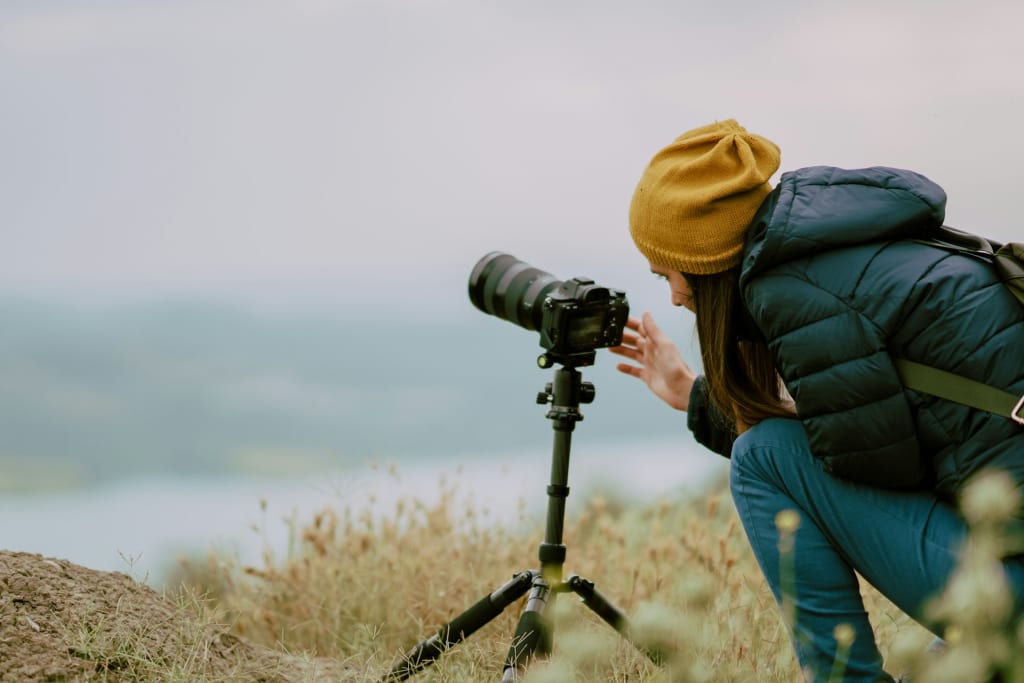
Tripods introduce another interesting solution. Why do photographers frequently use them for landscapes or night photography? A tripod stabilizes the camera, allowing slower shutter speeds without introducing blur.
Taking multiple photos of the same scene also increases the chance of capturing a perfectly sharp image. This simple habit can make a noticeable difference, especially when photographing moving subjects.
Photography is not only about technical settings or equipment—it is also about curiosity. Many skilled photographers constantly ask questions while exploring new scenes.
What happens if you change the angle of a shot? How does a photo look if you move closer to the subject? What difference does lighting make at different times of day?
Experimentation often leads to surprising discoveries. Trying different perspectives, adjusting camera settings, or exploring new locations can reveal creative possibilities that beginners may not expect.
Observation also plays a major role in learning photography. Looking carefully at professional photos and asking why they work well can help beginners develop their own visual awareness.
Photography invites curiosity at every stage of learning. Each photo raises new questions about light, composition, focus, and perspective. By exploring how cameras work, experimenting with composition techniques, observing different lighting conditions, and practicing stability, beginners gradually develop stronger photography skills.
More importantly, curiosity encourages photographers to keep experimenting and learning. Every scene offers an opportunity to try something new and see the world from a different perspective.
Perhaps the most exciting part of photography is that the next great photo might simply begin with a question: what happens if I try this shot differently?
About the Creator
Craig Spiesman
Craig Spiesman, a retired Restoration Account Manager from Parsippany, NJ, enjoys interests, community involvement, hobbies, and meaningful time with family.
Portfolio 1: https://craigspiesman.com/
Portfolio 2: https://craigspiesmannc.com/
Keep reading
More stories from writers in Photography and other communities.
Leavie Scott
ORDER HERE Chicago – A Radiant Urban Masterpiece by Leavie Scott Arts & Culture Review – Feature Story In his striking new work Chicago, photographer Leavie Scott captures the soul of the Windy City with a level of vibrancy and emotional resonance that is impossible to ignore. The image immerses viewers in a dazzling skyline bathed in mesmerizing tones of purple, pink, and gold—a palette rarely seen in traditional urban photography and one that instantly distinguishes Scott’s artistic voice.
By Organic Products 3 days ago in Photography
When the Shelter Closes
Across the street from my house, a man slept under a tree, his dog by his side. My first, naive thought: he must be traveling through. But he kept coming back, often sleeping there during the day. Then it hit me—that person might not have a home.
By Bride of Sound8 days ago in Humans


Comments
There are no comments for this story
Be the first to respond and start the conversation.