


The first time I muted the news, it felt like self-care.
The fifth time, it felt like guilt.
By the tenth, I realized I wasn’t protecting my peace. I was protecting myself from responsibility.
War is loud.
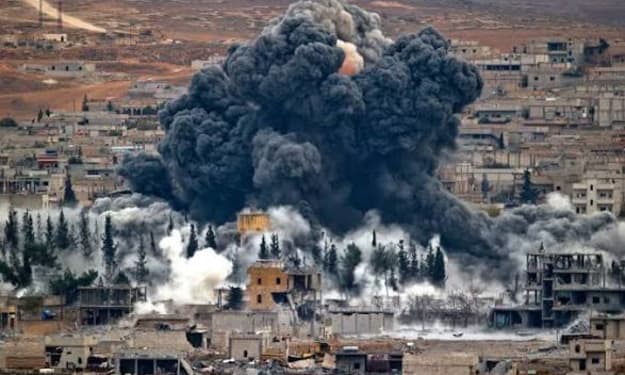
It’s sirens cutting through phone speakers. It’s shaky videos filmed from balconies. It’s headlines in bold red fonts that make your stomach drop before you even finish reading.
But silence is quiet.
And it’s seductive.
A few months ago, I stopped sharing anything about what was happening in the Middle East. I told myself I was tired. Overwhelmed. That everyone was already arguing online, and my voice wouldn’t change anything anyway.
I convinced myself that staying out of it made me “neutral.”
Neutral felt mature.
It felt safe.
But it also felt like standing in a burning room and whispering, “I don’t want to pick sides.”
The war didn’t live in my neighborhood. No missiles were falling near my home. I still had grocery runs and work emails and weekend plans.
Life kept moving.
And that was the problem.
One night, I was sitting on my couch scrolling. A video popped up of a father carrying his child through dust and smoke. He looked stunned, like his brain hadn’t caught up to his body yet.
I almost scrolled past it.
That scared me more than the video itself.
When did I become someone who could almost scroll past that?
I put my phone down and just sat there.
I thought about how easy it is to confuse distance with detachment. Just because something isn’t happening to me doesn’t mean it isn’t happening.
But there was another layer.
I wasn’t only afraid of the images. I was afraid of saying the wrong thing. Afraid of being judged. Afraid of losing followers. Afraid of someone replying with a paragraph longer than my courage.
So I stayed quiet.
Have you ever done that? Stayed silent not because you didn’t care, but because you cared and didn’t know how to carry it?
I told myself silence was respectful.
That it was better than adding noise.
But slowly, I realized something uncomfortable: silence can also protect comfort.
And comfort is addictive.
A friend of mine messaged me one evening. She has family in the region. Real people. Real names. Real houses that now might not exist.
She didn’t ask me to post anything. She didn’t demand statements or slogans.
She just said, “It’s hard watching people act like this isn’t happening.”
That sentence stayed with me.
She wasn’t asking for perfection.
She was asking for acknowledgment.
There’s a difference.
I started thinking about what “speaking up” actually means. It doesn’t always mean having the perfect political take. It doesn’t mean debating strangers in comment sections at midnight.
Sometimes it means saying, “I see this. I’m not pretending it’s invisible.”
That feels small.
But small things matter when everything else feels massive.
The next day, I shared a post. It wasn’t polished. It wasn’t a deep analysis of decades of conflict. It was simple. Human.
I said I was heartbroken. I said civilians on all sides deserve safety. I said I’m still learning.
My finger hovered over the post button for a full minute.
Then I pressed it.
Nothing exploded. No digital mob showed up at my door. A few people disagreed. A few people thanked me. Most people just… kept scrolling.
And that was its own lesson.
The fear in my head had been louder than reality.
But here’s the deeper part.
Speaking up didn’t change the war.
It changed me.
It forced me to confront the version of myself that values comfort over conscience. The version that would rather stay liked than be honest.
And I didn’t like that version.
There’s something heavy about watching suffering and choosing invisibility. It creates this quiet tension inside you. You can’t name it at first.
It feels like restlessness.
Like a rock in your shoe you keep pretending isn’t there.
The cost of silence isn’t always public. It’s internal.
It’s the slow erosion of empathy.
It’s training yourself to look away.
And once looking away becomes habit, it doesn’t stop at war zones. It spills into friendships. Into injustice at work. Into moments when someone needs you to say, “That’s not okay.”
I had to ask myself something uncomfortable:
If I can’t speak when it’s “just” online, would I speak when it’s in front of me?
That question changed me more than any headline.
I’m still not perfect. I still take breaks from the news because constant exposure can numb you. Protecting your mental health is real.
But there’s a difference between resting and retreating.
Between pausing and pretending.
Now, when I feel the urge to mute everything, I ask myself why. Am I overwhelmed? Or am I avoiding discomfort?
Sometimes the answer humbles me.
War is loud. It will continue to be loud.
But silence is powerful too.
It can either be a space for reflection.
Or a shield for indifference.
And only we know which one we’re choosing.
I don’t think every person needs to become an activist overnight. I don’t think everyone has to post daily updates or argue policy.
But I do think we owe it to our own humanity not to become numb.
Because numbness spreads quietly.
It makes tragedies feel like background noise.
It makes real people feel like statistics.
It makes us smaller.
So I’m asking you — gently, not accusingly — what does your silence cost you?
Does it give you peace?
Or does it take something from you that you didn’t realize you were losing?
I don’t have perfect answers. I’m still figuring it out in real time.
But I know this much:
I don’t want to be someone who can scroll past a father carrying his child through smoke and feel nothing.
If the world is going to be loud with war, I at least want my heart to stay loud with compassion.
And maybe that’s where it starts.
About the Creator
John Smith
Man is mortal.
Keep reading
More stories from John Smith and writers in Serve and other communities.
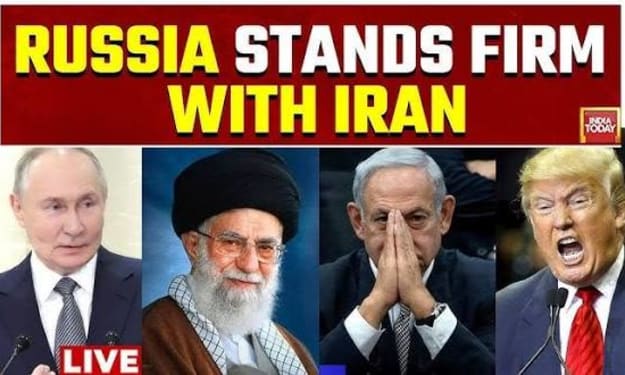
Rising Tensions: U.S.-Iran Conflict Escalates After Leader's Death"
In a dramatic escalation of tensions in the Middle East, Iran’s Supreme Leader Ayatollah Ali Khamenei has been confirmed dead following a large-scale military operation conducted by the United States and Israel. This development marks one of the most serious confrontations between the U.S. and Iran in decades, with region-wide impacts and uncertain global consequences.�
By shaoor afridia day ago in Serve
Pearl
1980 something. we all hung out at Pearl and you and i were nothing special, or so i thought. i mean we all danced, drenched in our own sweat, our own saline solution of fear, too many beers, shots, laughter, tears, fucks in the bathroom and i don't know when we began to be afraid. do you?
By ROCK aka Andrea Polla (Simmons)5 days ago in Fiction


Comments
There are no comments for this story
Be the first to respond and start the conversation.