
Best Way Forward for Iran Would Be Negotiated Settlement, Says Starmer
UK Prime Minister Keir Starmer urges diplomacy over military escalation, saying a negotiated settlement with Iran offers the best path forward amid rising conflict.

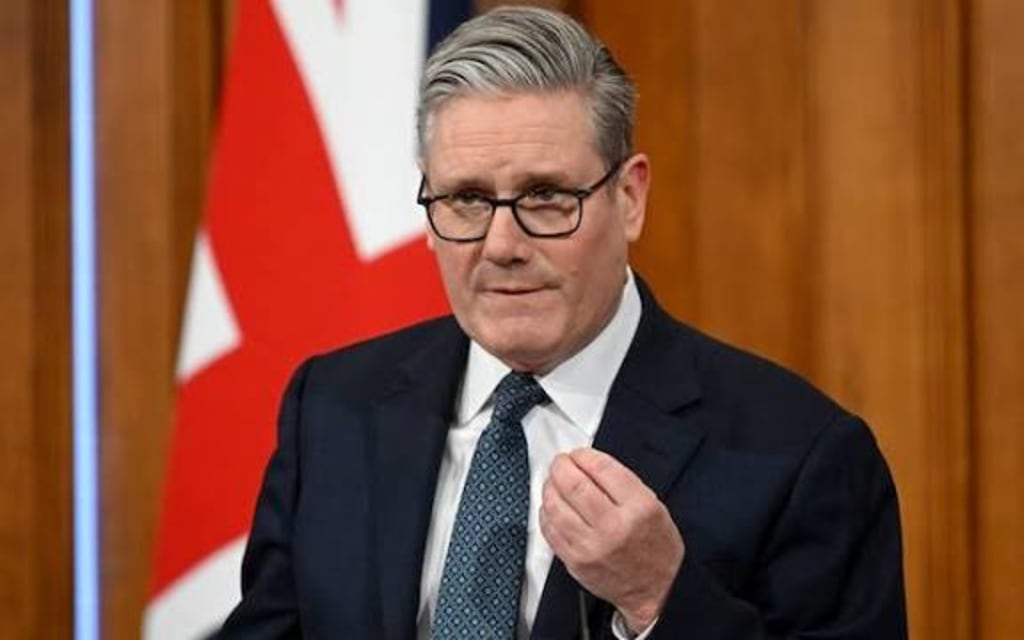
British Prime Minister Keir Starmer has called for a diplomatic path forward in the escalating conflict involving Iran, saying that the most sustainable outcome for the region and the world would be a negotiated settlement rather than further military escalation. His remarks mark a clear divergence from the position taken by Donald Trump, who has indicated that military pressure and a tougher stance are necessary.
Speaking at a press conference in Downing Street, Starmer reaffirmed that the United Kingdom’s “long‑standing position” is that a diplomatic resolution is the best way forward — one that includes an agreement with Tehran in which Iran agrees to relinquish nuclear ambitions and halt destabilizing activities. Starmer said that this principle guided his decision not to support the initial offensive strikes on Iran carried out by the United States and Israel, emphasizing that the UK’s restraint was “deliberate” and in the “national interest.”
A Diplomatic Approach in a Volatile Crisis
Starmer’s comments come amid a widening conflict that has drawn in multiple countries and raised fears of a broader regional war. Within the UK government, he has faced pressure on multiple fronts: from allies urging a firmer defense stance, from critics at home who argue the UK has been too cautious, and from political opponents, including Trump, who has publicly criticized Starmer — even deriding him as “not Winston Churchill.”
Despite such criticism, Starmer insisted that Britain must place long‑term stability and diplomacy at the center of its response. “No matter the pressure to do otherwise,” he said, “the best way forward for the region and the world is a negotiated settlement with Iran.” The prime minister added that such an agreement would include Tehran agreeing to abandon its nuclear ambitions — a key concern for Western nations.
The UK has also deployed additional military assets to the region, including Typhoon fighter jets to Qatar and anti‑drone Wildcat helicopters to Cyprus, in a dual effort to protect British citizens and allies while reinforcing a defensive posture. Still, Starmer argued that defense and diplomacy are not mutually exclusive, asserting that a negotiated path remains the most constructive means to end the crisis.
Difference With U.S. Policy
Starmer’s diplomatic approach contrasts sharply with Trump’s strategy. The U.S. president has signaled that military efforts and direct pressure on Tehran, including targeting missile infrastructure and other strategic systems, are necessary to compel Iran to curb what Washington views as dangerous nuclear and military ambitions. Trump has also made comments suggesting that negotiation may no longer be feasible at this stage of the conflict.
The Prime Minister urged restraint and communication, arguing that diplomacy — even in the midst of conflict — could prevent further escalation and reduce the human and economic cost of war. He told reporters that “the longstanding British position is that diplomacy and negotiation remain our best hope for a stable outcome.”
Political and Public Reaction
Starmer’s stance has drawn mixed reactions. Senior figures in the UK government — including members of the national security council — are said to have backed the negotiated‑settlement position. However, allies in the Gulf have expressed concern that Britain’s cautious approach has not sufficiently protected regional partners from Iranian drone and missile attacks. Critics argue that the UK should have taken a more robust military role alongside the United States and Israel to deter further aggression.
Domestically, Starmer defends his policy as prudent and aligned with Britain’s diplomatic traditions. He has stressed that military engagement should be defensive only, aimed at safeguarding British citizens and interests, while diplomatic efforts should be pursued to achieve a lasting settlement.
Challenges to Negotiation
While Starmer calls for negotiation, many analysts note that finding common ground with Tehran will be extraordinarily difficult amid ongoing hostilities, mutual distrust, and competing strategic objectives. Iranian leaders have repeatedly rejected external pressure to halt their nuclear program, and ultra‑hardline factions appear resistant to concessions. At the same time, any negotiated settlement will require assurances that go beyond mere verbal commitments, demanding verification mechanisms and international oversight.
Despite these challenges, Starmer’s comments underscore a broader debate in global policy circles about the role of diplomacy versus force in resolving international conflicts. For the UK prime minister, the answer is clear: sustained negotiation, even amid crisis, offers the best hope for long‑term regional stability and world security.
About the Creator
Fiaz Ahmed
I am Fiaz Ahmed. I am a passionate writer. I love covering trending topics and breaking news. With a sharp eye for what’s happening around the world, and crafts timely and engaging stories that keep readers informed and updated.
Keep reading
More stories from Fiaz Ahmed and writers in The Swamp and other communities.
As Trump Out-Putins Putin, Russia’s Global Influence Erodes
Russia’s position on the global stage appears to be weakening as former U.S. President Donald Trump asserts influence over international politics in ways that challenge Moscow’s strategic objectives. Analysts say that while Russia once projected power across Europe, the Middle East, and beyond, its ability to shape global events is increasingly constrained by economic pressures, military setbacks, and diplomatic isolation. Observers argue that Trump’s approach to foreign policy — characterized by transactional diplomacy, aggressive economic leverage, and a willingness to recalibrate alliances — has unintentionally outmaneuvered Russian President Vladimir Putin on several fronts. By reinforcing relationships with traditional U.S. allies while simultaneously expanding influence in strategic regions, Trump has underscored the limits of Russian soft and hard power. (foreignpolicy.comussia’s recent military engagements, particularly in Ukraine, have further highlighted the country’s declining global clout. Despite years of heavy investment in modernizing its armed forces, Moscow has faced setbacks that have weakened its bargaining position internationally. Military analysts note that logistical challenges, operational missteps, and sustained resistance from Ukrainian forces have eroded perceptions of Russian invincibility. Beyond the battlefield, Russia’s economy continues to suffer under international sanctions and trade restrictions. Financial isolation has curtailed Moscow’s ability to invest in foreign projects or incentivize partners through economic aid. Key trading partners in Europe and Asia have diversified their energy and defense relationships, reducing reliance on Russian resources. These trends have weakened Moscow’s ability to influence global markets and political decisions. Trump’s influence, by contrast, has emphasized American economic and military leverage in ways that directly counter Russia’s ambitions. Former administration officials and strategists argue that his approach to international energy markets, defense partnerships, and arms sales has created opportunities for countries to pivot away from Russian dependence. For instance, U.S. energy exports have reached new markets in Europe and Asia, undercutting Moscow’s role as a primary supplier. Trump’s strategy has also complicated Russia’s traditional alliances. By pressuring NATO members to increase defense spending and actively engaging in Middle Eastern diplomacy, he has reduced Moscow’s room to maneuver. Countries that historically maintained closer ties with Russia are increasingly aligning their security and economic policies with U.S.-led frameworks. The erosion of Russian influence is not limited to Europe. In Asia, Moscow faces challenges in competing with the growing economic and strategic presence of the United States and its partners. While China remains a significant ally, analysts caution that Beijing’s support for Russia is transactional rather than ideological, leaving Moscow vulnerable to shifts in global power dynamics. Political experts suggest that Russia’s soft power is likewise declining. Propaganda efforts, cultural exchanges, and diplomatic outreach that once bolstered Moscow’s image abroad have lost traction in a world more attuned to economic stability and security guarantees provided by other powers. International opinion surveys indicate waning confidence in Russia as a reliable partner, further limiting its global influence. Some analysts note that Trump’s assertive posture reinforces the perception that U.S. leadership can outmaneuver Russian objectives without direct confrontation. By leveraging economic tools, alliance networks, and strategic messaging, Trump has effectively undercut many of Moscow’s geopolitical ambitions. Despite these trends, Russia retains significant military and nuclear capabilities, making it impossible to discount entirely. Nevertheless, the country’s diminished ability to project influence across multiple theaters signals a structural decline that will take decades to reverse. In summary, Russia faces a combination of economic, military, and diplomatic constraints, while former President Trump’s foreign policy strategies have strengthened U.S. influence in regions where Moscow once held sway. The result is a geopolitical environment in which Russian power is increasingly contested, and its ability to shape global events is steadily declining.
By Fiaz Ahmed 3 days ago in The Swamp
Parallel Protests
I haven't written for quite some time, but I have A LOT of thoughts about yesterday's protest rally against our government's involvement and complicity in America's war on Iran, on the harbourside of my home city Bristol, and I need to put them somewhere. My gorgeous girlfriend is always a loving and listening ear and sharing it all with her will always be a healthy and happy way of processing the mental and emotional weight, but getting it straight in my brain to share means writing it all down in straight lines, so, here we are and thanks for being here.
By Steph Cole6 days ago in The Swamp
From ad men to mad men
It's after 2am in the morning when a local police patrol vehicle in Northern New Jersey spots a figure costumed as Quasimodo, The Hunchback of Notre Dame, proceeding southbound on the sidewalk along Lydecker Street. Though the hunchback’s costume stuffing offers added insulation, it's January, and friggin’ freezing. Carefully, the officers slow down, gently question the subject, and offer him a ride home.
By David W. Maury4 days ago in Humor


Comments
There are no comments for this story
Be the first to respond and start the conversation.