
CDF Munir discusses Iranian attacks in meeting with Saudi defence minister
Pakistan’s top military official meets Riyadh counterpart to address regional security concerns amid rising tensions.

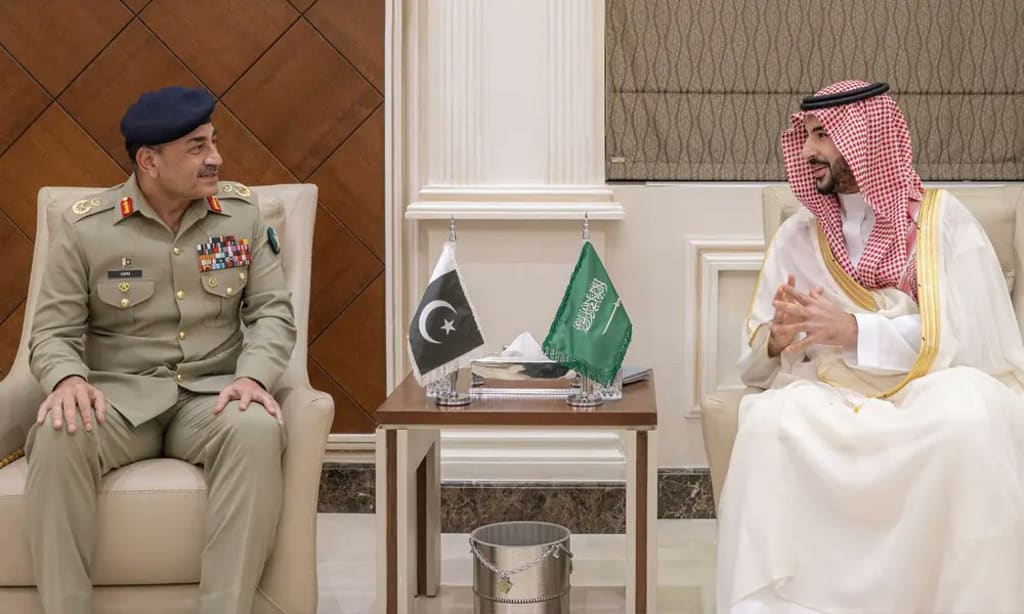
Chief of the Defence Staff (CDF) Asim Munir visited Saudi Arabia on Thursday for high-level talks with Saudi Defence Minister Prince Khalid bin Salman, focusing on recent Iranian missile and drone attacks and their potential impact on regional security. The meeting, held at the Ministry of Defence headquarters in Riyadh, comes amid heightened tensions across the Gulf, as attacks on civilian and strategic infrastructure have intensified over the past months.
During the discussion, both officials examined intelligence reports detailing cross-border strikes linked to Iran, including drone operations targeting critical energy and transport installations. These attacks have raised alarms for Gulf countries, prompting renewed assessments of their defensive capabilities and emergency response mechanisms. CDF Munir emphasized the importance of preparedness, warning that even minor miscalculations in such a volatile environment could escalate into broader conflicts.
“Regional security is a shared responsibility. Collaboration and coordination among like-minded nations are essential to prevent further escalation,” Munir said, underscoring Pakistan’s commitment to peace and stability while maintaining a neutral diplomatic stance. Prince Khalid reaffirmed Saudi Arabia’s dedication to strengthening defence cooperation, particularly in air defence, intelligence sharing, and rapid response operations.
The officials discussed joint measures to enhance early warning systems along key borders, improve surveillance technologies, and coordinate air and naval patrols. They also explored the possibility of conducting joint military exercises, personnel exchanges, and training programs to ensure both countries are fully prepared to respond to emerging threats. According to sources familiar with the meeting, discussions included sharing advanced radar and drone detection systems, as well as cyber-defence initiatives to protect critical infrastructure from digital attacks.
Security analysts have noted that this meeting reflects an increasing trend of closer alignment between Gulf states and neighbouring countries like Pakistan in addressing Iranian-backed proxy attacks. By engaging in strategic dialogue, both nations aim to mitigate risks posed by regional instability while safeguarding energy routes, shipping lanes, and civilian populations.
Historically, Pakistan has maintained a careful balance in Middle Eastern conflicts, striving to preserve neutrality and maintain strong ties with multiple actors. However, meetings such as this suggest a pragmatic shift, with Islamabad demonstrating a willingness to cooperate more closely with Gulf nations on security matters while continuing to advocate for peaceful resolution of conflicts.
During the meeting, both sides acknowledged that regional stability cannot be achieved through military preparedness alone. They emphasized the importance of ongoing diplomacy, conflict de-escalation, and intelligence cooperation to anticipate potential threats. Experts say that this dual approach—combining defensive readiness with active diplomatic engagement—is essential in preventing incidents from spiraling into larger confrontations.
The dialogue also touched on protecting maritime routes in the Gulf, which are vital to the global oil supply. Attacks on tankers and shipping lanes in recent months have underscored the fragility of commercial traffic in the region. By coordinating patrols and sharing real-time intelligence, both countries hope to deter hostile actors and maintain uninterrupted trade.
CDF Munir and Prince Khalid concluded the meeting with a joint commitment to continue strategic consultations, strengthen bilateral defence ties, and enhance intelligence-sharing protocols. Officials highlighted that sustained collaboration will not only safeguard national interests but also contribute to wider regional stability.
Observers say this engagement signals a proactive stance by both Pakistan and Saudi Arabia, demonstrating that military dialogue, combined with strong diplomatic channels, can play a crucial role in deterring aggression and ensuring security in the Gulf.
As tensions persist, such high-level meetings underscore the importance of multinational cooperation, with Pakistan positioning itself as a responsible partner in maintaining peace and stability across a region increasingly vulnerable to conflict escalation.As tensions persist, such high-level engagement underscores the importance of proactive diplomacy alongside military preparedness. Officials from both Pakistan and Saudi Arabia stressed that continued dialogue, joint exercises, and intelligence sharing are essential to prevent miscalculations that could escalate into wider conflicts. Regional analysts say that by working together, the countries aim not only to protect their own populations and assets but also to stabilize key maritime routes, energy supply lines, and trade networks critical to the global economy. The meeting ultimately reflects a strategic effort to combine defence readiness with multilateral cooperation in an increasingly volatile Gulf region.
About the Creator
Fiaz Ahmed
I am Fiaz Ahmed. I am a passionate writer. I love covering trending topics and breaking news. With a sharp eye for what’s happening around the world, and crafts timely and engaging stories that keep readers informed and updated.
Keep reading
More stories from Fiaz Ahmed and writers in The Swamp and other communities.
In the Gulf, a Cruise Line Steps Up to Get Stranded Passengers Home
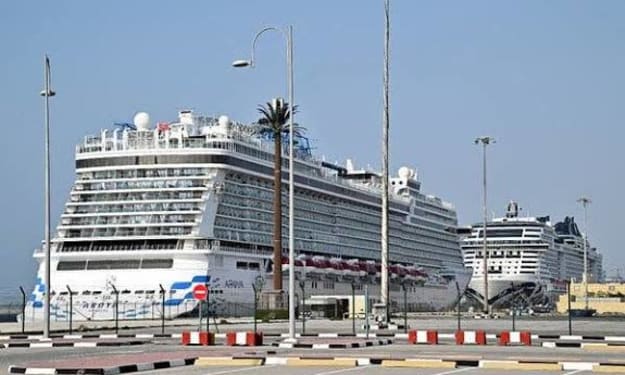
As conflict and airspace closures disrupt commercial flights across parts of the Middle East, a major cruise company has stepped in to help hundreds of stranded travelers find a way home. With airports overwhelmed and airlines canceling routes, the unusual rescue effort has transformed a leisure cruise ship into an emergency transport vessel for passengers unable to leave the region. The situation escalated after rising tensions between Iran and Israel led several governments to issue security warnings and restrict flights over parts of the Gulf. Major airlines quickly began rerouting aircraft or suspending services entirely, leaving thousands of international travelers stranded in cities across the region. Among those affected were tourists, business travelers and families who had been visiting countries such as the United Arab Emirates and Qatar. Many suddenly found themselves unable to return home as flight schedules collapsed with little notice. In response, Royal Caribbean Group announced that one of its vessels operating in the region would offer additional sailings designed specifically to transport stranded passengers to ports where flights remain operational. The ship, already scheduled for leisure voyages in the Gulf, quickly became part of an improvised evacuation network. Cruise officials coordinated with port authorities and foreign embassies to identify travelers in urgent need of transportation. Extra cabins were opened and departure schedules were adjusted to accommodate the unexpected demand. Passengers boarding the emergency voyage described scenes of relief and exhaustion. Many had spent days trying unsuccessfully to rebook flights or secure land transport to neighboring countries. For some families traveling with children, the uncertainty had become increasingly stressful. “Once we heard there was a ship leaving the Gulf that could take us somewhere flights were still running, we booked immediately,” said one passenger who had been stranded in Dubai for several days. The cruise route was adjusted to sail toward safer ports such as Muscat and Doha, where international airports remain open and functioning. From there, passengers could continue their journeys home on commercial flights. Government officials praised the cruise operator’s decision to assist. Diplomats said private-sector support can play an important role during regional crises, particularly when traditional transportation networks are disrupted. Cruise companies typically focus on leisure travel, but maritime vessels can sometimes provide alternative evacuation routes during emergencies. Ships are not constrained by the same airspace restrictions that affect aviation, allowing them to operate even when flight corridors are closed. Security analysts say the incident highlights how geopolitical tensions in the Gulf can rapidly affect global travel. Several airlines had already begun avoiding parts of Middle Eastern airspace due to safety concerns. For the passengers boarding the cruise ship, however, the journey was less about geopolitics and more about getting home. Crew members welcomed the unexpected travelers aboard, offering meals, temporary accommodations and assistance arranging onward travel plans. For many, the ship represented a rare moment of stability during a chaotic travel situation. As the vessel departed the Gulf waters carrying hundreds of relieved passengers, it symbolized an unusual but effective response to a modern travel crisis—where a cruise liner became a lifeline for those stranded far from home.Crew members onboard worked around the clock to accommodate the unexpected surge of passengers, providing meals, temporary lodging, and assistance with travel documentation. The ship sailed toward ports such as Muscat, where airports continued operating and travelers could reconnect with international flights. Diplomats from several countries praised the effort, noting that private companies can play a crucial role during travel emergencies. Analysts say the incident demonstrates how maritime transport can provide an alternative when aviation networks break down. For many stranded travelers, the cruise ship offered more than transportation—it provided reassurance and a safe path home during a deeply uncertain moment.
By Fiaz Ahmed 2 days ago in The Swamp
Parallel Protests
I haven't written for quite some time, but I have A LOT of thoughts about yesterday's protest rally against our government's involvement and complicity in America's war on Iran, on the harbourside of my home city Bristol, and I need to put them somewhere. My gorgeous girlfriend is always a loving and listening ear and sharing it all with her will always be a healthy and happy way of processing the mental and emotional weight, but getting it straight in my brain to share means writing it all down in straight lines, so, here we are and thanks for being here.
By Steph Cole6 days ago in The Swamp



Comments
There are no comments for this story
Be the first to respond and start the conversation.