
Exclusive: CIA Warned Hardline IRGC Could Replace Khamenei If He Is Killed
Intelligence officials warned that removing Iran’s Supreme Leader could empower hardline Revolutionary Guard commanders rather than open the door to reform
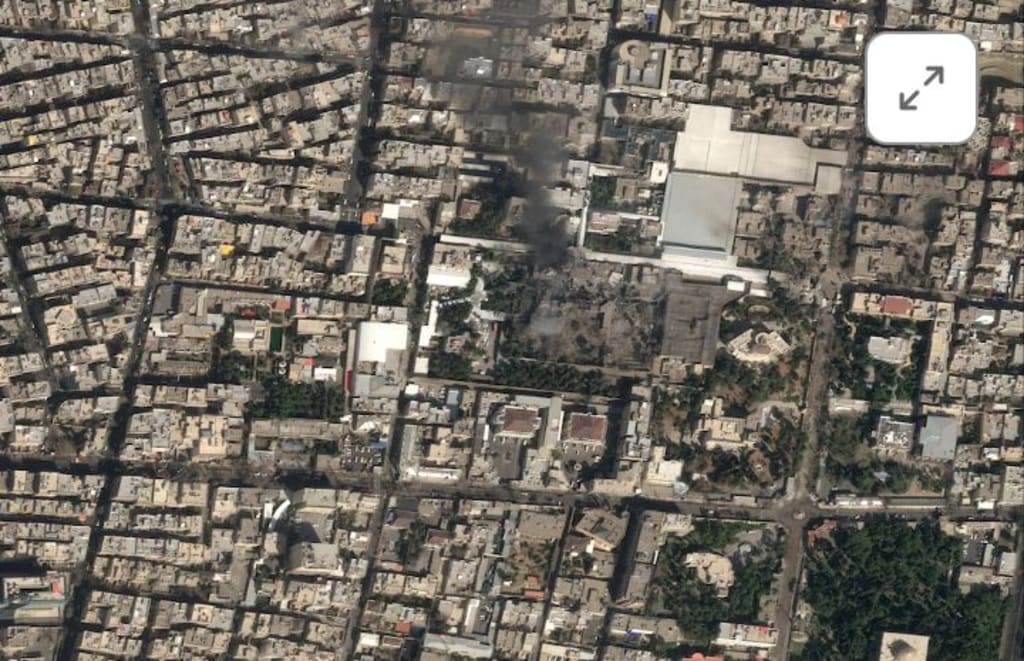
As tensions between the United States and Iran continue to escalate, new details have surfaced about how American intelligence agencies assessed the potential consequences of targeting Iran’s top leadership.
According to sources familiar with classified briefings, the Central Intelligence Agency evaluated scenarios in which Iran’s Supreme Leader, Ali Khamenei, could be killed during military operations. Their conclusion was striking: rather than paving the way for reform or moderation, such an event would likely result in hardline figures from the Islamic Revolutionary Guard Corps (IRGC) consolidating power.
The assessment challenges assumptions that removing a long-standing leader automatically weakens a political system. In Iran’s case, analysts warned it might do the opposite.
The Context: Rising Military Pressure
The intelligence review reportedly took place before the latest U.S.–Israel strikes on Iranian targets. At the time, policymakers were debating not only the tactical benefits of military action but also the broader political consequences.
Leadership decapitation strategies — targeting top figures in hostile governments — have long been part of military planning worldwide. However, such approaches carry enormous risks, particularly in systems where power is deeply institutionalized rather than centered on one individual.
In Iran, the Supreme Leader holds ultimate authority, but the political structure is supported by clerical bodies, security institutions, and powerful armed organizations. Removing one figure does not automatically dismantle the system.
Why the IRGC Matters So Much
To understand the CIA’s concern, it’s essential to examine the role of the IRGC.
The Islamic Revolutionary Guard Corps was created after Iran’s 1979 revolution to protect the new Islamic Republic and its ideology. Over decades, it evolved into far more than a military force. Today, it exerts influence over:
National security policy
Intelligence operations
Economic sectors
Regional proxy networks
Internal political stability
Unlike conventional armed forces, the IRGC blends military power with ideological commitment. Many of its commanders are deeply aligned with conservative religious governance and resistant to Western diplomatic influence.
According to sources, the CIA assessed that if Khamenei were suddenly removed, the IRGC would likely act quickly to prevent instability — and ensure that a successor aligned with its worldview assumes power.
In short, the power vacuum would probably be filled not by moderates, but by hardened insiders.
The Myth of Automatic Reform
In Washington policy circles, there has long been debate about whether removing authoritarian leaders creates openings for reform. History offers mixed examples.
In some cases, leadership change has triggered democratization. In others, it has resulted in chaos, civil conflict, or even more rigid governance.
The CIA’s reported analysis suggests Iran may fall into the latter category.
Iran’s political structure includes institutions designed to preserve revolutionary continuity. The Assembly of Experts, clerical councils, and security forces all operate within a framework meant to sustain ideological rule. The IRGC’s entrenched power means it is positioned to influence succession heavily.
Rather than collapse, the system might tighten.
Strategic Debate Inside Washington
The intelligence assessment reportedly informed discussions among senior officials before military decisions were finalized. While the public conversation often centers on immediate battlefield results, internal briefings focus on long-term geopolitical outcomes.
Key questions reportedly included:
Would removing Khamenei destabilize Iran enough to weaken it?
Could it spark widespread public uprisings?
Or would it consolidate hardline power?
The CIA’s conclusion leaned toward the latter risk.
That doesn’t mean regime change was considered impossible — only that the most likely successor scenario did not involve moderation or compromise.
The Risk of a Hardline Successor
If an IRGC-aligned figure were to become Supreme Leader, several consequences could follow:
1. Stronger Military Influence
Governance could shift even more heavily toward security-driven decision-making.
2. Reduced Diplomatic Flexibility
Hardline leadership may reject negotiations with Western governments.
3. Regional Escalation
Support for proxy groups and regional allies could intensify rather than diminish.
4. Internal Crackdowns
Domestic dissent could face harsher suppression to demonstrate authority.
These potential outcomes highlight why intelligence agencies weigh succession dynamics carefully before endorsing leadership-targeted strategies.
Iran’s Complex Power Structure
Iran is not governed solely by one person. Although Khamenei wields immense authority, the political ecosystem includes:
Religious councils
Military leadership
Parliamentary bodies
Security services
This layered structure makes sudden systemic transformation unlikely without broader institutional shifts.
Even widespread public dissatisfaction does not guarantee political change if security institutions remain unified and loyal.
A Calculated Warning
It is important to note that intelligence assessments are not predictions carved in stone. They represent informed probabilities based on available data.
The CIA did not reportedly claim with certainty that the IRGC would take over — only that it was a strong possibility.
Still, such a scenario presents a sobering warning: decapitating leadership may not weaken Iran’s hardline stance. It may strengthen it.
About the Creator
The Saddest Thing - The Billionaires Who Rule America Aren't Even Enjoying Themselves
This single post says more about our ruling class than a thousand policy papers. The saddest thing about today's system is that the men robbing the rest of us - sabotaging our economic prospects, our pensions, our access to affordable healthcare - are not even happy.
By Scott Christenson🌴24 days ago in The Swamp
Here Are The 10 Most Powerful Air Forces in the World in 2025 – And France Is Second to Last
As global military technology continues to evolve, the ranking of the world’s most powerful air forces has shifted dramatically in 2025. Military analysts have assessed air forces based on a combination of fleet size, technological sophistication, readiness, operational experience, and strategic reach. The results reveal significant disparities between nations, with some long-standing military powers retaining dominance, while others, including France, surprisingly lag behind despite their historical military reputation. At the top of the list is the United States Air Force (USAF), which continues to maintain an unmatched edge in technology, global reach, and operational readiness. The USAF’s fleet of fifth-generation stealth fighters, including the F-22 Raptor and F-35 Lightning II, along with advanced bomber aircraft such as the B-2 Spirit and the B-21 Raider, provides the United States with unmatched aerial dominance. Coupled with a global network of bases, satellite reconnaissance, and rapid deployment capabilities, the U.S. remains the uncontested leader in air power. Second on the list is China, whose People’s Liberation Army Air Force (PLAAF) has grown rapidly in both size and sophistication. China has invested heavily in stealth fighters, such as the Chengdu J-20, and has expanded its strategic bomber capabilities with aircraft like the Xian H-20, reflecting the nation’s ambitions to project air power regionally and globally. The PLAAF has also developed advanced drone programs, hypersonic weapons, and integrated electronic warfare capabilities, making it a formidable opponent in any potential conflict scenario. Third place is held by Russia, which continues to maintain a strong air force with a focus on both quantity and quality. The Sukhoi Su-57 stealth fighter and modernized versions of the Su-35 provide Russia with a credible air combat capability. Additionally, Russia’s strategic bomber fleet, including the Tu-160 and Tu-95, enhances its long-range strike potential. While Russia faces challenges in logistics and modernization, its operational experience and robust defense industry keep it among the top air powers. Other countries in the top ten include India, Japan, Israel, South Korea, Turkey, and the United Kingdom, each demonstrating a mix of advanced aircraft, operational readiness, and domestic aerospace production capabilities. India and Japan have heavily invested in modern fighters and domestic production programs, while Israel is known for its highly trained pilots and integrated defense networks. South Korea and Turkey balance modern Western aircraft with indigenous upgrades, while the UK leverages its nuclear deterrent and fifth-generation fighter capabilities. Surprisingly, France, traditionally regarded as a military power with one of Europe’s most advanced air forces, ranks second to last in the 2025 assessment. Analysts point to several factors contributing to France’s low ranking. Although France possesses modern aircraft such as the Dassault Rafale, the air force suffers from limited fleet size, aging support systems, and budget constraints that restrict large-scale modernization. Additionally, France’s global deployment capacity is constrained compared to the U.S., China, or Russia, limiting its strategic reach. While operationally competent and technologically advanced, France’s air force cannot match the scale or depth of its global rivals. Several key takeaways emerge from the 2025 ranking. First, technological sophistication alone does not guarantee top ranking; fleet size, maintenance, training, and logistical support play equally important roles. Second, countries investing in domestic aerospace programs, such as China and India, are gaining strategic advantages by reducing reliance on foreign suppliers. Third, nations with limited defense budgets may struggle to maintain parity with more resource-rich powers, regardless of technological competence. Experts suggest that France’s position should not be interpreted as an immediate strategic weakness. Its air force remains capable for regional operations, NATO missions, and nuclear deterrence. However, the ranking highlights the increasing importance of scale, industrial capacity, and integrated technology in defining air power in the 21st century. In conclusion, the 2025 assessment of the world’s most powerful air forces reflects the shifting balance of global military power. While the U.S. continues to dominate, emerging powers such as China and India are rapidly advancing, and traditional European powers, including France, face challenges in maintaining competitive edge. The rankings underscore that in modern warfare, a combination of technological innovation, fleet size, strategic reach, and industrial capability determines the strength of a nation’s air force.
By Fiaz Ahmed a day ago in The Swamp


Comments
There are no comments for this story
Be the first to respond and start the conversation.