
Foreign secretary Yvette Cooper: ‘Making decisions based on what the US do or say doesn’t feel like sensible foreign policy’
UK Foreign Secretary Yvette Cooper rejects following the US line uncritically, saying Britain must decide in its own national interest rather than react to American policy decisions.

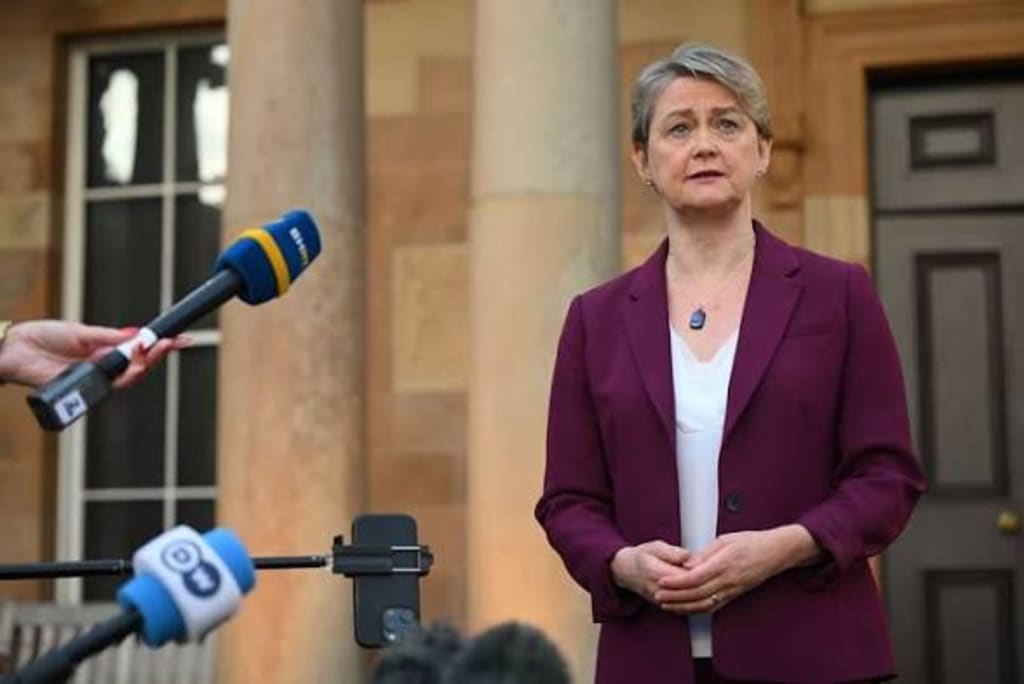
UK Foreign Secretary Yvette Cooper has made a candid defence of Britain’s independence in international affairs, saying the government will not simply follow the United States’ lead — even amid global crises such as the escalating conflict in the Middle East.
Cooper’s comments come amid heightened tensions following US and Israeli military operations against Iran, in which the UK has taken a more cautious diplomatic approach than its transatlantic ally. In a major policy intervention, the foreign secretary emphasised that Britain will put its own national interests and values first, rather than making decisions solely on the basis of what Washington says or does.
Addressing media scrutiny and criticism from some quarters — including from US President Donald Trump and former British prime minister Tony Blair — Cooper stressed that foreign policy should be rooted in British judgment and legal principles, not reactionary alignment with allies.
Background: UK–US tensions over Iran conflict
The comments reflect an ongoing row between London and Washington over the UK’s role in the conflict sparked by US and Israeli strikes on Iran. The Labour government led by Prime Minister Keir Starmer opted not to participate directly in early military strikes, choosing instead to emphasise de‑escalation and adherence to international law.
President Trump publicly criticised the UK’s reluctance to join the initial assault, accusing British leaders of delayed and insufficient support. But Cooper has firmly rejected the idea that Britain should act as a “junior partner” in American interventions, arguing that such an approach would undermine the country’s strategic autonomy.
In a BBC interview, she said it was legitimate for the US president to prioritise US national interests, but that the UK government’s job was to decide for itself what serves the British national interest — not simply to echo decisions made in Washington.
Rejecting unconditional support
Cooper explicitly dismissed suggestions that Britain should have automatically backed US action on Iran “from day one” — a position advanced by Blair and echoed by some conservative politicians. Instead, she framed her government’s foreign policy direction as one that avoids “outsourcing” decisions to other governments.
She made similar remarks in response to Blair’s comments at a private event, where the former prime minister argued the UK should have more robustly supported US military efforts. Cooper said such instinctive alignment is not in the UK’s national interest and warned against unquestioning foreign policy.
This stance signals an assertive shift in how Britain approaches security alliances. While the UK remains committed to transatlantic cooperation and membership of NATO, Cooper’s remarks underline a more independent foreign policy posture that evaluates policy on its own merits rather than through the prism of US leadershing
Domestic political context
Within British politics, Cooper’s position has won mixed responses. Supporters argue that prioritising national interest and caution in engaging in foreign conflicts demonstrates prudent leadership, particularly given the complex legal and ethical implications of the Iran crisis. Critics, including several senior figures in the Conservative Party and some commentators, liken it to a retreat from historical alliances, arguing that close consultation with the US remains vital for global security.
The debate touches on a deeper tension within UK foreign policy: whether London should primarily act in concert with longstanding allies, especially the United States, or adopt an approach that emphasises strategic independence and multilateral diplomacy.
Looking ahead
Cooper’s comments come at a moment when UK foreign policy is under intense scrutiny. The Middle East conflict shows no sign of quick resolution, and Britain’s decisions — from arms transfers to diplomatic engagement — will be watched by allies and adversaries alike.
By asserting that decisions should not be shaped solely by US influence, Cooper is signalling a foreign policy philosophy that seeks to balance global partnerships with Britain’s own strategic judgment — a stance likely to shape diplomatic debates for months to come.
About the Creator
Fiaz Ahmed
I am Fiaz Ahmed. I am a passionate writer. I love covering trending topics and breaking news. With a sharp eye for what’s happening around the world, and crafts timely and engaging stories that keep readers informed and updated.
Keep reading
More stories from Fiaz Ahmed and writers in The Swamp and other communities.
Wealthy British nationals fleeing Gulf conflict bypass UK to avoid tax bills
Wealthy British nationals living in the United Arab Emirates (UAE) and neighbouring Gulf states are choosing to relocate to countries such as Ireland and France rather than return to the United Kingdom amid rising conflict in the region — a decision driven largely by concerns over the UK tax system as the current tax year draws to a close. With only a few weeks left before the 2025–26 UK tax year ends on 5 April, many high‑net‑worth individuals who have established non‑resident status are hesitant to risk returning home for fear of triggering significant tax liabilities. The UK’s tax authority, HM Revenue & Customs (HMRC), counts the number of days an individual spends in the UK as a key determinant of tax residency; exceeding allowable days could make a non‑resident liable for UK income tax and capital gains tax on worldwide income and gains. Conflict prompts decisions rooted in tax, not safety The rising conflict in the Gulf region has forced many Britons to contemplate where to regroup. Rather than risk being treated as UK tax residents by spending too much time in Britain — and potentially face retroactive taxation — they are instead flying to countries perceived as more tax favourable until the new UK tax year begins. Ireland and France have become popular temporary destinations, offering a buffer until Britons can return without altering their tax status. A wealthy business owner, speaking to The Guardian, said he was spending time in Dublin to avoid returning prematurely to London, which could have triggered capital gains tax on assets or businesses that had been sold while he was abroad. “I’m happy to pay income tax and tax on investments next tax year, but I don’t want the sale of a business that I sold years ago to fall within UK capital gains tax,” he said. Exceptional circumstances relief unlikely Some expatriates hoped that current travel advisories related to the conflict might qualify them for HMRC’s “exceptional circumstances” rule — a provision that, in the past (notably during the COVID‑19 pandemic), allowed flexibility over residency tests for people unable to leave certain regions. But tax professionals warn that HMRC is unlikely to be sympathetic, noting that governments generally don’t consider advisory alerts sufficient to trigger tax‑year leniency. Nimesh Shah, chief executive of tax advisory firm Blick Rothenberg, told The Guardian that the current situation around the Gulf does not meet the stringent criteria HMRC applies for exceptional circumstances. “In HMRC’s mind they’ve chosen to go [to the UAE] to not pay tax in the UK,” he said, adding that those leaning on that provision may be disappointed. Tax rules and residency traps Under UK tax law, the Statutory Residence Test governs whether an individual is considered a UK resident for tax purposes. Spending too many days in the UK — typically more than 90 or 120 in a year, depending on circumstances — can trigger residency status. Once deemed resident, individuals may face income tax on worldwide earnings and capital gains tax (CGT) on gains realised abroad, including sales of businesses or investment assets. Those who have been non‑resident for fewer than five full tax years are particularly vulnerable. If they return and restart UK residency status, the UK’s Temporary Non‑Residence (TNR) rules could subject them to CGT on gains made while they were outside the country — even if those gains occurred years earlier. Broader context: wealthy Britons and tax migration This latest bout of relocation sits within a wider debate over the UK’s changing tax landscape. In recent years, reforms to the so‑called “non‑domiciled” tax regime and moves to tax worldwide income more comprehensively have prompted some wealthy individuals to reconsider their tax affairs and, in some cases, their residency. While broader “millionaire exodus” claims are contested and likely exaggerated, these current moves reflect how tightly the timing and interpretation of tax laws influence where the wealthy choose to live during periods of geopolitical stress. Public reaction and policy implications Reaction among the public and on social media has been mixed. Some commentators argue that if wealthy Britons benefit from UK services — including evacuation support — they should contribute to the tax base. Others take a more laissez‑faire view, noting that existing residency rules allow people latitude in where they live and pay tax, and that individuals often make these choices for legal, financial reasons rather than a disdain for their home country. For policymakers, these developments highlight ongoing tensions between tax competitiveness and fairness — a debate that is likely to continue as the UK navigates the post‑Brexit economic and political landscape. Subtitle: Wealthy British expatriates displaced by Gulf conflict are avoiding returning to the UK to protect tax‑favourable status, choosing alternative European destinations to evade potentially costly tax residency rules.
By Fiaz Ahmed 2 days ago in The Swamp
The Forsyth House Fire
Since 1851, Forsyth House has stood on the corner of Union Street and Gordon Street in the heart of Glasgow. Its iconic, or was... because on Sunday 8th of March, 2026, a fire broke out in a small, seemingly un-named shop in the building and tore all that history down. As I write, the rubble is still unsettled and the street is still blocked off. Central Station is quiet on the upper level, and around 30 small businesses have quite literally gone up in smoke.
By S. A. Crawford3 days ago in The Swamp
A Transparent Look at Vocal Challenges and Top Stories
Almost three years ago, we shared a resource article that served as a place for people to suggest new challenge prompts. We thought it would be a good idea to refresh that thread, and take the opportunity to answer a few common questions about top stories, how challenges are judged and how submissions are reviewed.
By Vocal Curation Team4 days ago in Resources



Comments
There are no comments for this story
Be the first to respond and start the conversation.