
Hegseth Claims Iran's Supreme Leader Is "Wounded and Likely Disfigured"
U.S. Defense Secretary Pete Hegseth’s remarks raise new questions about the health, visibility, and authority of Iran’s newly appointed supreme leader amid escalating regional conflict.
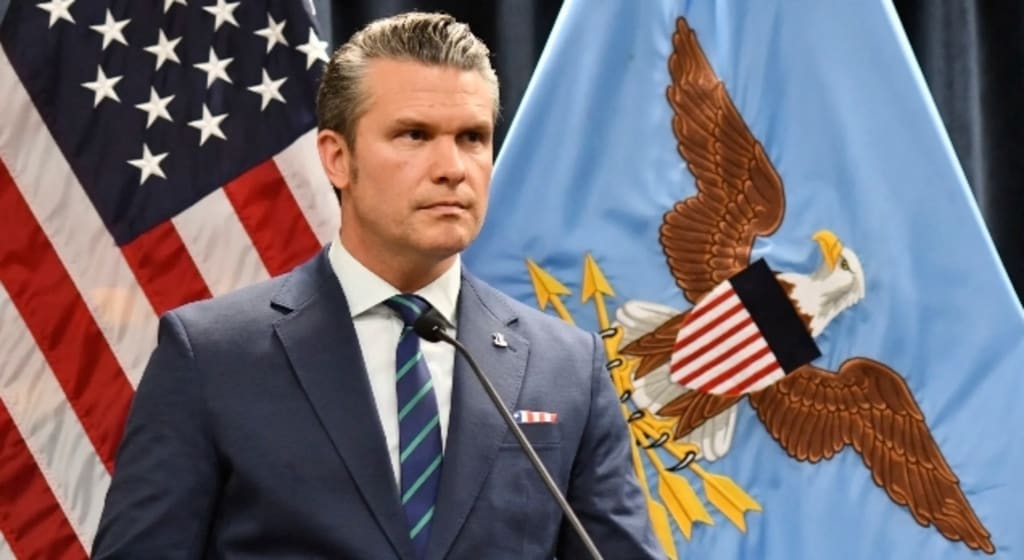
The already volatile conflict between the United States, Israel, and Iran took another dramatic turn this week after U.S. Defense Secretary Pete Hegseth claimed that Iran’s new supreme leader, Mojtaba Khamenei, has been “wounded and likely disfigured.” The statement, delivered during a press briefing, has added new uncertainty to a war that has already reshaped the region’s political and military landscape.
The claim comes at a critical moment for Iran, which is navigating leadership upheaval, intense military pressure, and global scrutiny. With conflicting reports emerging about Khamenei’s health and whereabouts, speculation is growing about what his condition might mean for Iran’s future and the broader Middle East.
A Leader Who Has Not Been Seen
Mojtaba Khamenei rose to power under extraordinary circumstances. His father, former supreme leader Ali Khamenei, was reportedly killed during the opening phase of a large-scale U.S. and Israeli military campaign targeting Iranian leadership and military infrastructure earlier this year. Following his father’s death, Iran’s Assembly of Experts quickly appointed Mojtaba to assume the country’s highest political and religious office.
However, the new leader’s sudden rise has been accompanied by a conspicuous absence from public view. Since his appointment, no verified video or live appearance has been released. His first statement as supreme leader came not through a televised address but as a written message read by a presenter on Iranian state television.
This absence has fueled speculation about his condition. During a Pentagon briefing, Hegseth questioned why a newly appointed national leader had yet to appear publicly, suggesting that the explanation may lie in serious injuries sustained during the early strikes.
According to Hegseth, Khamenei is “wounded and likely disfigured,” a claim he used to highlight what he described as the instability and desperation of Iran’s leadership during the ongoing conflict.
Conflicting Accounts of His Health
While U.S. officials have raised doubts about Khamenei’s physical condition, Iranian authorities have pushed back strongly against the narrative. Tehran insists the supreme leader remains capable of governing and has dismissed reports of severe injury.
Some Iranian officials have acknowledged that Khamenei may have been wounded during the initial strikes but insist the injuries were minor. State media has described him using a term often reserved for war veterans injured in battle, implying that he survived an attack but remains functional as a leader.
Independent reports paint a far murkier picture. Intelligence assessments and unconfirmed sources suggest the airstrikes that killed his father also struck the leadership compound where Mojtaba was located. In some accounts, he suffered injuries to his face and limbs. Other claims, far less verified, suggest his condition could be more severe.
The absence of verified footage or public appearances has allowed these competing narratives to flourish.
A War That Has Already Changed Iran
The controversy surrounding Khamenei’s health cannot be separated from the broader war that has engulfed Iran. The conflict escalated dramatically at the end of February when the United States and Israel launched an extensive bombing campaign aimed at Iran’s missile programs, naval capabilities, and military leadership.
Since then, thousands of strikes have targeted Iranian military infrastructure across the country. Reports indicate that the campaign has destroyed missile sites, drone bases, and naval facilities, while also killing senior officials within Iran’s military hierarchy.
The war has also inflicted devastating human costs. Tens of thousands of casualties have been reported across the region, and the conflict continues to disrupt oil shipments, international shipping lanes, and global energy markets.
Amid this chaos, Iran’s leadership has been forced to operate under extreme secrecy and security.
The Symbolism of a Wounded Leader
Whether or not Khamenei is truly disfigured may ultimately be less important than what the rumor represents.
In geopolitics, narratives matter. For the United States, portraying Iran’s new leader as injured and hidden could undermine his authority and signal weakness within the Iranian regime. For Iran, maintaining the image of a resilient leader is crucial to preserving domestic stability and projecting strength to its allies and adversaries.
History shows that wounded leaders can sometimes become powerful symbols. In some cases, surviving an assassination attempt or military strike can strengthen a leader’s legitimacy among supporters.
If Mojtaba Khamenei truly survived the strike that killed his father, the story could evolve into a narrative of resilience rather than weakness.
Strategic Messaging and Psychological Warfare
Statements like Hegseth’s also highlight the role of information warfare in modern conflicts. Governments frequently use public messaging to shape perceptions both at home and abroad.
By questioning the health of Iran’s supreme leader, U.S. officials may be attempting to pressure Tehran into revealing more information. A public appearance by Khamenei could prove he is healthy, but it would also expose his location and security arrangements.
Remaining hidden, on the other hand, allows the speculation to continue.
This strategic ambiguity is not unusual during wartime. Leaders often disappear from public view when security threats are high, especially after targeted strikes against political figures.
What Comes Next
For now, the true condition of Mojtaba Khamenei remains uncertain. Iran insists its leader is functioning and capable of governing, while American officials continue to question that claim.
What is clear, however, is that the war has fundamentally altered Iran’s leadership and political landscape. The death of Ali Khamenei ended more than three decades of rule and ushered in an unpredictable new era for the Islamic Republic.
Whether Mojtaba Khamenei emerges as a strong leader or a symbolic figurehead may depend not only on his health but also on the outcome of the war itself.
Until he appears publicly, the mystery surrounding Iran’s new supreme leader is likely to deepen—along with the geopolitical tensions that surround him.
About the Creator
The Forsyth House Fire
Since 1851, Forsyth House has stood on the corner of Union Street and Gordon Street in the heart of Glasgow. Its iconic, or was... because on Sunday 8th of March, 2026, a fire broke out in a small, seemingly un-named shop in the building and tore all that history down. As I write, the rubble is still unsettled and the street is still blocked off. Central Station is quiet on the upper level, and around 30 small businesses have quite literally gone up in smoke.
By S. A. Crawforda day ago in The Swamp
Mass firings leave national security ranks thinned as war raises threats
A wave of mass firings across several U.S. national security agencies has raised alarm among lawmakers and policy experts, who warn that the country’s defense and intelligence institutions may be increasingly strained at a time of growing global conflict. The dismissals, which have affected analysts, policy advisers, and security officials, come as tensions escalate in several regions, including the Middle East and Eastern Europe. Officials familiar with the situation say the layoffs have reduced staffing levels in key departments responsible for monitoring global threats, coordinating intelligence, and advising government leaders on military and diplomatic responses. Critics argue that the sudden loss of experienced personnel could weaken the country’s ability to respond effectively to emerging crises. Some of the firings have reportedly occurred within agencies connected to the United States Department of Defense and the Central Intelligence Agency, where specialized analysts and operational experts play crucial roles in tracking security developments around the world. Although officials have not released detailed numbers, insiders say the impact has been felt across multiple national security units. Growing Concerns Amid Global Conflict The timing of the dismissals has heightened concern because they coincide with increasing geopolitical tensions. The ongoing confrontation involving the Iran, the United States, and Israel has already placed heavy demands on intelligence agencies responsible for monitoring military movements, cyber threats, and regional instability. National security experts warn that intelligence work relies heavily on experienced analysts who possess deep regional knowledge and long-developed networks of contacts. Losing these professionals can slow the government’s ability to interpret complex situations and anticipate potential threats. “National security institutions depend on continuity and expertise,” said one former intelligence official. “When you remove large numbers of experienced staff during a period of international instability, you risk weakening the system that protects the country.” Political and Administrative Factors The dismissals are believed to be part of a broader effort to restructure government agencies and reduce bureaucratic inefficiencies. Supporters of the policy argue that national security organizations must adapt to new technologies and changing strategic priorities. However, critics contend that the scale and speed of the firings may undermine the institutional knowledge that has been built over decades. Many of the affected employees reportedly worked on highly specialized areas such as counterterrorism, cyber defense, and geopolitical analysis. Lawmakers from both political parties have called for more transparency about the decisions, urging government officials to clarify how national security capabilities will be maintained despite the staffing reductions. Intelligence Gaps and Operational Risks Experts say that sudden workforce reductions could create gaps in intelligence coverage, particularly in areas requiring continuous monitoring. Modern national security threats—from cyberattacks to drone warfare—often evolve rapidly, making constant analysis essential. The challenge becomes even greater during wartime or periods of heightened international tension. Intelligence agencies must track multiple developments simultaneously, ranging from military deployments to economic sanctions and diplomatic negotiations. In addition to operational risks, morale within national security institutions could also be affected. Former officials note that uncertainty about job security may discourage skilled professionals from entering or remaining in government service. Balancing Reform and Security Supporters of the restructuring argue that national security agencies must become more efficient and technologically advanced. They say investments in artificial intelligence, data analysis, and automated surveillance systems could offset some of the effects of personnel reductions. Yet many analysts believe that technology alone cannot replace the experience and judgment of trained professionals. Interpreting intelligence data often requires contextual understanding that machines cannot easily replicate. As global tensions continue to rise, the debate over the firings is likely to intensify. Policymakers will face increasing pressure to ensure that national security institutions remain capable of addressing threats while pursuing administrative reforms. Looking Ahead The long-term consequences of the mass firings remain uncertain. Much will depend on whether agencies can quickly recruit new personnel and reorganize their operations without losing critical expertise. For now, the developments have sparked a broader discussion about how governments should balance efficiency and preparedness in an increasingly unpredictable world. At a time when international conflicts are expanding and technological threats are multiplying, maintaining strong and capable national security institutions remains a central challenge for policymakers.
By Fiaz Ahmed 8 days ago in The Swamp
My First Time Skiing and I Got Lost, Alone, in the French Alps
Looking back, I can trace some of my life’s biggest adventures to a simple action from my sister. She’d introduced me to Tommy (a very long time ago), a colleague of hers, who had overshared his penchant for Italian-looking women, and I ticked that box.
By Chantal Christie Weissa day ago in Humans



Comments
There are no comments for this story
Be the first to respond and start the conversation.