
India Becomes World’s Second-Largest Arms Importer: Report
Rising regional tensions and military modernization keep India among the world’s biggest buyers of foreign weapons

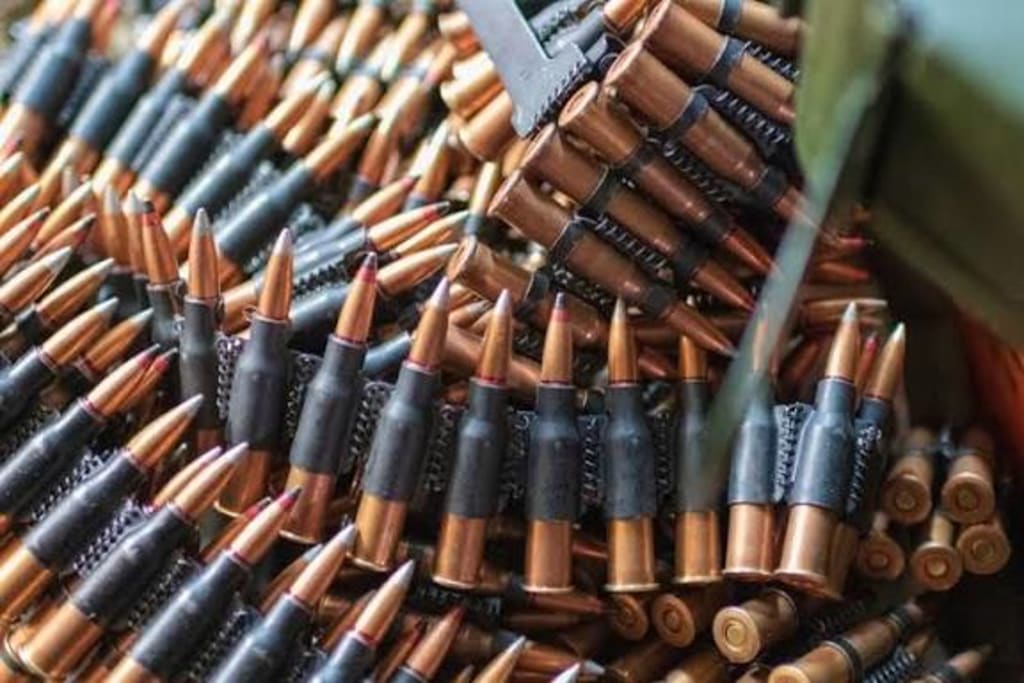
India has emerged as the world’s second-largest arms importer, reflecting its ongoing efforts to modernize its military and respond to growing regional security challenges. According to data released by the Stockholm International Peace Research Institute, India accounted for roughly 8.2–8.3 percent of global arms imports in the 2021–2025 period, placing it second only to Ukraine in global rankings.
The findings highlight India’s continued reliance on foreign military equipment even as the country works to strengthen its domestic defense industry. Analysts say the scale of India’s imports reflects the size of its armed forces, the complexity of its security environment, and the need to upgrade aging military hardware.
India faces multiple security challenges in its neighborhood. Tensions with China along the disputed Himalayan border have intensified in recent years, while the longstanding rivalry with Pakistan remains a major strategic concern. These threats have encouraged New Delhi to accelerate defense modernization and ensure that its armed forces remain technologically competitive.
To address these challenges, India has been purchasing advanced weapon systems from several international suppliers. These include fighter aircraft, missile systems, submarines, helicopters, and surveillance technologies. The goal is to strengthen capabilities across all three branches of the military—army, navy, and air force.
Historically, Russia has been India’s largest arms supplier. Many of India’s most important military platforms, including tanks, fighter jets, and air-defense systems, originated from Russian designs. However, recent years have seen a gradual shift in India’s procurement strategy.
SIPRI data indicates that India is increasingly diversifying its sources of weapons, reducing its dependence on Moscow while strengthening partnerships with Western countries. Nations such as the United States, France, and Israel have become important defense partners, supplying advanced technology and equipment.
France, for example, has delivered Rafale fighter jets to the Indian Air Force, while Israel has provided sophisticated drones and radar systems. The United States has also expanded defense cooperation with India, supplying helicopters, surveillance aircraft, and other advanced platforms.
Despite remaining a major importer, India’s arms purchases have slightly declined compared with earlier years. SIPRI data shows that India’s imports dropped by about 9 percent between the periods 2015–2019 and 2020–2024, partly because of growing domestic production capabilities.
The Indian government has been promoting policies aimed at reducing reliance on foreign suppliers. Through initiatives such as “Make in India,” authorities hope to encourage local production of military equipment and develop an indigenous defense industry capable of meeting the country’s long-term needs.
Several domestic companies have already begun manufacturing military hardware ranging from artillery systems to drones and armored vehicles. Government officials argue that expanding domestic defense production will not only strengthen national security but also create jobs and support economic growth.
Nevertheless, experts say that achieving complete self-reliance in defense manufacturing will take years. Many advanced technologies—such as aircraft engines, sophisticated missile systems, and stealth capabilities—remain difficult to develop domestically. As a result, India is likely to continue importing certain high-tech weapons in the near future.
Globally, the arms trade has been influenced by increasing geopolitical tensions and rising defense spending. Conflicts in Europe, the Middle East, and parts of Asia have prompted many countries to upgrade their militaries and secure new weapons systems. In this environment, major exporters such as the United States and France continue to dominate the global defense market.
For India, maintaining a strong and modern military remains a strategic priority. With one of the world’s largest armed forces and a rapidly evolving security environment, the country is expected to remain a significant participant in the international arms market for years to come.
While the push for self-reliance continues, the latest report underscores a key reality: India’s military modernization still depends heavily on global defense suppliers. As geopolitical tensions persist, the country’s position as the world’s second-largest arms importer is likely to remain an important feature of the global arms trade landscape.
About the Creator
Fiaz Ahmed
I am Fiaz Ahmed. I am a passionate writer. I love covering trending topics and breaking news. With a sharp eye for what’s happening around the world, and crafts timely and engaging stories that keep readers informed and updated.
Keep reading
More stories from Fiaz Ahmed and writers in The Swamp and other communities.
Here’s What Happened in the Conflict on Sunday
Sunday brought another intense round of violence in the rapidly expanding Middle East conflict, with missile strikes, cross-border attacks, and growing humanitarian concerns across several countries. The fighting now stretches from Iran and Israel to Lebanon, Iraq, and the Gulf, highlighting how the war has transformed into a broader regional crisis. One of the most significant developments on Sunday was a new wave of missile and drone attacks launched by Iran and its allies. Air-defense systems in several Gulf countries—including Saudi Arabia, Kuwait, and the United Arab Emirates—were activated after missiles and drones were detected entering their airspace. Explosions reported in multiple locations were largely the result of air-defense systems intercepting the incoming projectiles. The attacks illustrated how the conflict is no longer limited to Israel and Iran but is increasingly affecting neighboring states as well. Israel responded with fresh airstrikes across Iranian territory on Sunday. According to military statements, the strikes targeted military infrastructure and strategic facilities believed to be connected to Iran’s missile and drone programs. In recent days, Israeli forces have also targeted oil depots and energy facilities, signaling an effort to weaken Iran’s economic and logistical capabilities during the war. Iran, meanwhile, continued to retaliate with missile attacks directed at Israel. One of the strikes killed at least one person in Israel and raised the overall death toll in the conflict there. The repeated missile barrages have forced millions of Israelis to seek shelter as air-raid sirens sound across major cities. The conflict also intensified along Israel’s northern border with Lebanon. Fighters from Hezbollah launched attacks into northern Israel, prompting heavy Israeli airstrikes on Hezbollah-linked targets in Lebanon. The fighting has triggered a major humanitarian crisis, with hundreds of thousands of people displaced from their homes. Reports indicate that nearly 700,000 people in Lebanon have fled areas affected by the violence as Israeli strikes continue to hit locations linked to Hezbollah operations. Meanwhile, tensions are rising in Iraq as well. Iran-aligned militias have launched drone and rocket attacks on American military bases and diplomatic sites, prompting retaliatory airstrikes by U.S. forces. The renewed fighting has turned Iraq into another potential battleground in the wider conflict, raising concerns about the country’s fragile political stability and security situation. The international dimension of the war also became clearer on Sunday after Iranian officials acknowledged support from Russia in their confrontation with the United States and Israel. Iranian leaders said cooperation between Moscow and Tehran includes assistance “in many different directions,” though details of the support remain unclear. Western officials have downplayed the impact of this assistance but acknowledge that the growing alignment between Iran and Russia adds a new layer of geopolitical complexity to the conflict. Beyond the battlefield, the economic consequences of the war are becoming increasingly visible. Oil prices have surged as fears grow that the conflict could disrupt energy supplies moving through the Strait of Hormuz—one of the world’s most important oil shipping routes. Economists warn that prolonged disruption could trigger global inflation and even push some economies toward recession. Travel and aviation have also been heavily affected. Airlines have canceled thousands of flights across the Middle East as security risks and closed airspace disrupt global air travel. Major airports in the region have experienced significant delays and cancellations as airlines attempt to reroute flights away from conflict zones. The war itself began with large-scale airstrikes by the United States and Israel against Iran on February 28, targeting key military and leadership sites. Iran responded with missile and drone attacks against Israel, U.S. bases, and allied countries throughout the region, rapidly escalating the confrontation into a multi-front war. As Sunday came to a close, there were few signs that the violence would slow. Diplomatic efforts to secure a ceasefire remain limited, and both sides appear determined to continue their military campaigns. With more countries drawn into the conflict and humanitarian conditions deteriorating, the Middle East now faces one of its most dangerous and unpredictable crises in decades.
By Fiaz Ahmed about 5 hours ago in The Swamp
Parallel Protests
I haven't written for quite some time, but I have A LOT of thoughts about yesterday's protest rally against our government's involvement and complicity in America's war on Iran, on the harbourside of my home city Bristol, and I need to put them somewhere. My gorgeous girlfriend is always a loving and listening ear and sharing it all with her will always be a healthy and happy way of processing the mental and emotional weight, but getting it straight in my brain to share means writing it all down in straight lines, so, here we are and thanks for being here.
By Steph Cole6 days ago in The Swamp


Comments
There are no comments for this story
Be the first to respond and start the conversation.