
Iranian missile fragment hits US consul residence building in Israel, no injuries
Incident underscores rising regional tensions as conflict between Iran and Israel continues to spill across borders
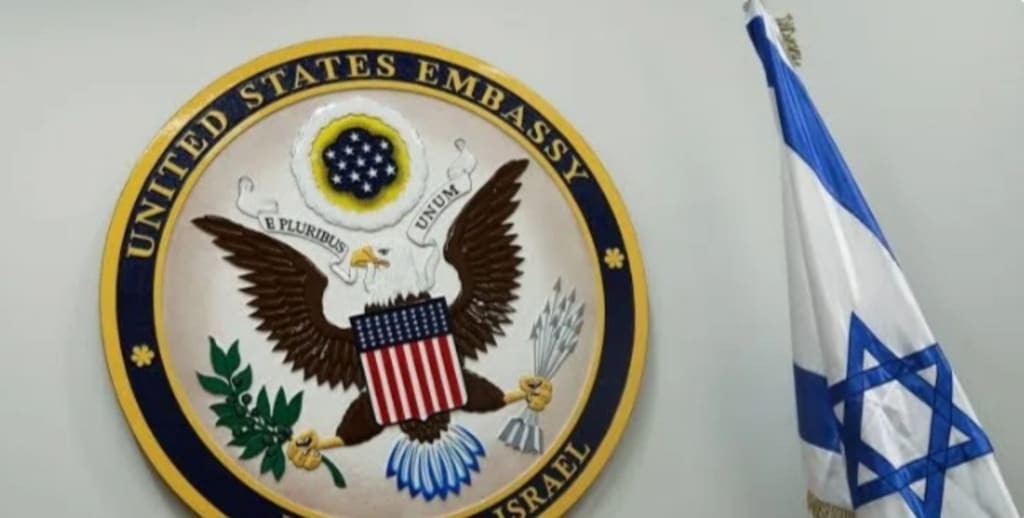
A fragment from an Iranian missile has struck a building used as the residence for a United States consul in Israel, according to officials, in an incident that highlights the growing risks posed by the escalating conflict between Iran and Israel. Despite the damage to the structure, authorities confirmed that no injuries were reported.
The strike occurred amid a broader wave of missile launches and retaliatory attacks that have intensified tensions across the Middle East. While the fragment did not cause casualties, its impact on a building connected to a U.S. diplomatic mission has drawn international attention and raised concerns about the safety of foreign personnel in the region.
A close call for diplomatic staff
According to preliminary reports, the missile fragment struck the exterior of the residential building used by a U.S. consul during a barrage of Iranian missiles aimed at Israeli targets. Israeli air defense systems intercepted many of the incoming projectiles, but debris from one of the missiles or its interception fell in the vicinity of the residence.
The impact caused visible structural damage, including shattered windows and marks on the building’s exterior walls. Emergency responders quickly arrived at the scene to secure the area and assess the damage.
U.S. and Israeli officials confirmed that the consul and other residents were not injured in the incident. Security personnel were already operating under heightened alert due to the ongoing hostilities, and emergency protocols were activated immediately after the strike.
Although the damage was limited, the event illustrates how rapidly the conflict has expanded beyond military installations and into areas where civilians and diplomatic staff live and work.
Escalating conflict between Iran and Israel
The missile fragment incident comes amid one of the most serious confrontations between Iran and Israel in recent years. Over the past several weeks, both countries have exchanged strikes targeting military sites, infrastructure, and strategic facilities.
Iran has accused Israel of carrying out attacks inside its territory, including strikes on military compounds and leadership facilities. Israel, in turn, has stated that its actions are intended to prevent Iran from strengthening military capabilities that it believes threaten Israeli security.
As tensions escalated, Iran launched multiple waves of missiles and drones toward Israeli territory. Israel’s multilayered missile defense systems, including long-range interceptors and rapid-response radar networks, have been activated repeatedly to neutralize incoming threats.
While many of the projectiles have been intercepted before reaching populated areas, fragments from destroyed missiles can still fall to the ground, sometimes causing damage or injuries.
Diplomatic sites caught in the middle
The strike near the U.S. consul’s residence highlights the difficulty of protecting diplomatic missions during large-scale missile exchanges. Diplomatic compounds are usually secured with reinforced structures and protective barriers, but they are not designed to withstand the indirect impact of falling missile debris during active conflict.
The United States maintains several diplomatic facilities in Israel, including the U.S. embassy in Jerusalem and various consular residences and offices in other cities. These facilities often house diplomats, administrative staff, and their families.
Security conditions for diplomatic personnel have tightened significantly since the conflict escalated. Movement restrictions, emergency planning, and shelter procedures have been implemented across multiple diplomatic missions.
The U.S. State Department has not indicated that the fragment strike was a deliberate attack on an American facility. Instead, officials described it as a consequence of missile interceptions occurring nearby.
Missile defense and debris risks
Israel’s air defense network is widely regarded as one of the most advanced in the world. Systems designed to intercept rockets, drones, and ballistic missiles operate in coordinated layers to detect and destroy incoming threats before they reach populated areas.
However, intercepting missiles often produces falling debris. When a missile is destroyed in midair, fragments from both the interceptor and the original projectile can scatter across wide areas.
In densely populated regions, this debris sometimes lands on buildings, roads, or open land. While the fragments are usually smaller and less destructive than an intact missile, they can still cause structural damage or injuries.
Authorities frequently warn residents to avoid touching missile debris and to report any fragments to security forces, as unexploded components may still pose a danger.
Regional implications
Although the incident caused no injuries, it carries symbolic and political significance because it involved a building linked to the United States.
Washington has been closely monitoring the escalating conflict between Iran and Israel and has repeatedly called for restraint to prevent a broader regional war. The United States also maintains military forces and strategic partnerships across the Middle East.
Any incident involving U.S. diplomatic personnel or facilities can draw heightened scrutiny and potentially influence diplomatic responses.
For now, officials have emphasized that the fragment strike appears to have been accidental rather than a targeted attack. Nevertheless, the event underscores how quickly regional hostilities can affect international actors operating nearby.
Heightened alert across Israel
Following the incident, Israeli authorities continued to maintain high alert levels across major cities and strategic locations. Air raid sirens, missile defense interceptions, and emergency response operations have become increasingly common during the ongoing conflict.
Residents in several areas have been instructed to remain close to shelters and follow official guidance when warning sirens are activated. Schools, businesses, and public institutions have also adapted their operations to ensure safety during missile alerts.
Emergency management teams regularly inspect buildings hit by debris or shockwaves to determine whether additional repairs or reinforcements are needed.
International concern grows
The broader conflict between Iran and Israel has drawn growing concern from governments and international organizations around the world. Diplomatic efforts aimed at preventing further escalation have intensified as the exchange of attacks continues.
Many countries fear that sustained hostilities could destabilize the entire Middle East, disrupt global energy supplies, and increase risks to civilian populations across multiple nations.
Incidents such as the missile fragment strike near a U.S. diplomatic residence highlight how the consequences of the conflict extend far beyond military targets.
A fragile security environment
While the immediate danger from the fragment impact has passed, the episode serves as a reminder of the fragile security environment currently facing the region.
Even when missile defense systems successfully intercept incoming threats, the remnants of those weapons can still pose risks to people and infrastructure on the ground.
For diplomats, civilians, and emergency responders alike, the conflict has created a new reality in which routine life is punctuated by warning sirens, security alerts, and the constant possibility of falling debris.
As long as missile exchanges continue, the danger remains that similar incidents could occur again.
For now, the absence of injuries in the strike on the U.S. consul’s residence offers a small measure of relief. But the event also illustrates how close the expanding conflict has come to directly affecting international diplomatic missions — a development that underscores the urgency of efforts to prevent further escalation.
About the Creator
The Forsyth House Fire
Since 1851, Forsyth House has stood on the corner of Union Street and Gordon Street in the heart of Glasgow. Its iconic, or was... because on Sunday 8th of March, 2026, a fire broke out in a small, seemingly un-named shop in the building and tore all that history down. As I write, the rubble is still unsettled and the street is still blocked off. Central Station is quiet on the upper level, and around 30 small businesses have quite literally gone up in smoke.
By S. A. Crawford3 days ago in The Swamp
Germans Protest Against Russia on Paralympic Podium
During a medal ceremony at the 2026 Winter Paralympic Games in Milano‑Cortina, Italy, two German cross‑country skiers made a quiet but powerful political statement by turning their backs on Russian gold medalists as the Russian national anthem played on the podium. Their action highlighted deep tensions surrounding the controversial decision to allow Russian athletes to compete under their own flag and with their national symbols for the first time in over a decade. The protest occurred after Russian skier Anastasiia Bagiian and her guide Sergei Siniakin won gold in the women’s sprint classic for vision‑impaired athletes. As the anthem began, German silver medalist Linn Kazmaier and her guide Florian Baumann turned away from the Russian victors, visibly distancing themselves during the podium protocol. Kazmaier explained to German media that their decision was not personal toward the Russian athletes, whom they don’t know, but rather a response to the broader political context. “That it is so totally overshadowed by politics is simply a complete shame,” she said, noting they kept their hats on and refused to face the flag as a sign of protest. This moment reflects wider controversy at the Paralympics over the inclusion of athletes from Russia and Belarus under their own flags and anthems — a departure from bans imposed after Russia’s state‑sponsored doping scandal and subsequent sanctions following its 2022 invasion of Ukraine. Previously, Russian athletes had been barred or required to compete under neutral status; however, the International Paralympic Committee (IPC) lifted those restrictions in late 2025, prompting protests and boycotts. Ahead of the Games, several countries, including Germany, joined a boycott of the opening ceremony in protest of Russia and Belarus being allowed full national representation. Eleven countries along with the European Union chose not to participate in the event as a symbolic stand against the IPC’s decision, although they remained committed to competing in the sporting events themselves. The sight of German athletes turning away on the podium added another layer to that protest, occurring in the midst of competition rather than before it. Baumann emphasized that their gesture was about solidarity with Ukrainian athletes and opposition to what they saw as a decision that diminishes the integrity of international sport. “It’s not about the Russian athletes themselves… but the IPC’s decision to have Russia here under its own flag… while the Ukrainians are also here is simply not correct,” he said. The restart of Russia’s full national presence at the Paralympics represents a significant shift. Russia won its first gold medal at the Winter Paralympics under its own flag since 2014 at these Games, a moment marked by the playing of the Russian national anthem on the podium — a sight not seen at the Paralympics in many years. While the Moscow Times and other outlets celebrated this return, it sparked backlash elsewhere in the Paralympic community and among fans and officials alike. Critics argue that allowing full national symbols validates Russia’s sporting presence despite ongoing geopolitical conflicts and human rights concerns. Supporters of the IPC’s decision counter that excluding athletes penalizes individuals for the actions of their governments. This debate mirrors broader clashes in sport over whether and how to isolate nations during political crises without unfairly impacting athletes. The German protest also echoes a more general trend of political statements at international sporting events. In recent years, athletes and teams have used their platforms to draw attention to global conflicts and social issues, from kneeling protests to symbolic gestures that reverberate well beyond the field of play. The Paralympics, which celebrates courage, resilience and inclusion, has not been immune to these broader tensions. Despite the symbolism, German athlete Kazmaier acknowledged the complexity of the situation, noting that she and her guide could personally have respect for individuals from other nations while still disagreeing with broader political decisions. “Perhaps they are really nice people, whom we could be friends with,” she said, underscoring the distinction between individuals and the political systems they represent. As the Milano‑Cortina Games continue, similar moments may arise, especially as athletes from different countries confront the emotional and political realities tied to the Russian presence. The episode on the podium serves as a reminder that international sport often intersects with global affairs, and that even events meant to bring people together can reflect the fractures of the wider world.
By Fiaz Ahmed 5 days ago in The Swamp


Comments
There are no comments for this story
Be the first to respond and start the conversation.