
Is Indonesia the Next Rising Power in the Indo-Pacific?
With strategic geography, economic momentum, and balanced diplomacy, Indonesia is quietly positioning itself as a pivotal middle power in the Indo-Pacific region.

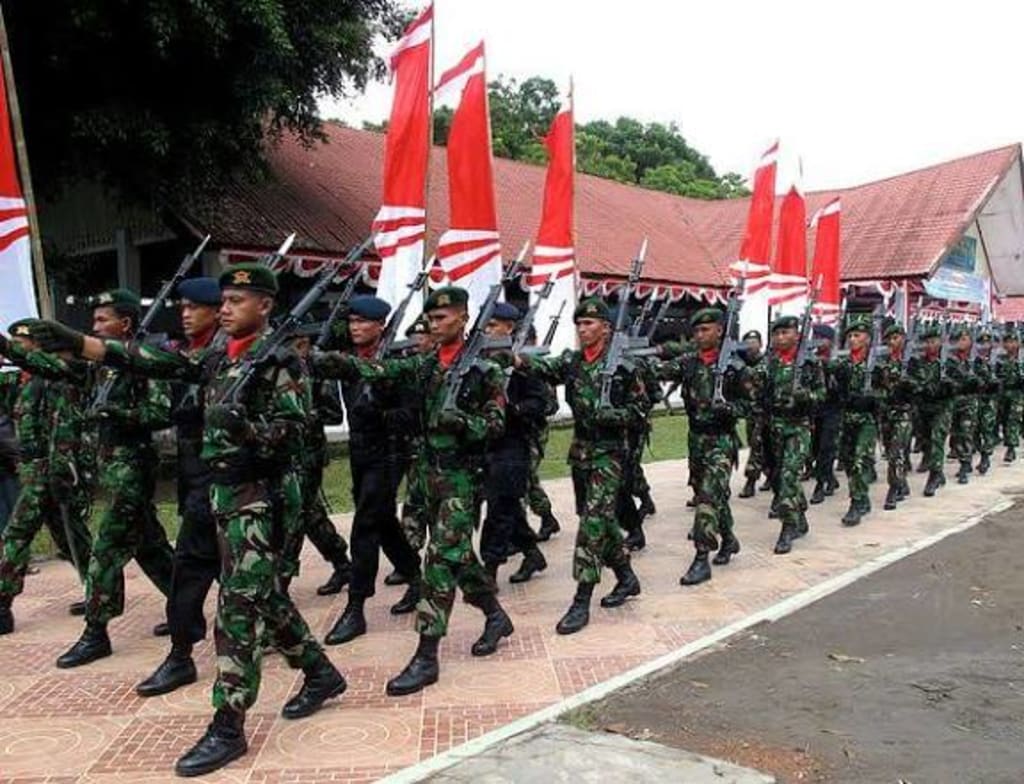
As competition intensifies across the Indo-Pacific, attention is increasingly turning to one country that has long preferred quiet diplomacy over loud power politics: Indonesia. With the world’s fourth-largest population, a rapidly growing economy, and a strategic position astride vital sea lanes, Indonesia is emerging as a potential pivotal power in a region shaped by rivalry between the United States and China.
Indonesia’s geographic advantage is impossible to ignore. Stretching across more than 17,000 islands, it sits between the Indian and Pacific Oceans and controls access to some of the busiest maritime chokepoints in the world, including the Malacca, Sunda, and Lombok straits. These waterways carry a large share of global trade and energy shipments, giving Jakarta quiet leverage over the movement of goods between Asia, the Middle East, and Europe. In an era when supply chains and shipping security have become geopolitical priorities, Indonesia’s location alone elevates its strategic importance.
Economically, Indonesia is gaining momentum. It is now Southeast Asia’s largest economy and has shown resilience despite global slowdowns. Driven by manufacturing, digital services, and resource exports such as nickel and copper, the country is positioning itself as a hub for electric vehicle supply chains and green technology. Government policies aimed at downstream processing of raw materials have begun to attract foreign investment and reduce dependence on exporting unprocessed commodities. Analysts increasingly view Indonesia as one of the few emerging markets with the scale and stability to influence regional economic trends.
Politically, Indonesia has cultivated an image as a neutral and pragmatic actor. It is a founding member of ASEAN and has long promoted regional unity and non-alignment. Rather than choosing sides between Washington and Beijing, Jakarta has sought to maintain balanced relations with both. This “free and active” foreign policy allows Indonesia to act as a bridge-builder in a fragmented region. It has hosted major diplomatic forums and has been vocal in calling for dialogue in disputes ranging from the South China Sea to conflicts in Myanmar.
Military modernization is another sign of Indonesia’s growing ambitions. While it does not seek to match the major powers in firepower, it is steadily upgrading its navy and air force to better patrol its vast maritime territory. Recent investments in submarines, fighter jets, and coastal defense systems signal a desire to protect sovereignty and deter encroachment. The focus is less on projecting power abroad and more on ensuring that Indonesia can defend its waters and contribute meaningfully to regional security cooperation.
Yet challenges remain. Indonesia still faces internal development gaps between urban centers and rural provinces. Infrastructure, education, and healthcare require sustained investment to support long-term growth. Corruption and bureaucratic inefficiency continue to test governance reforms. Moreover, managing relations with both China and the United States will demand diplomatic skill, especially as great-power rivalry deepens and pressure mounts for smaller states to align more clearly.
Climate change is another factor shaping Indonesia’s future role. As one of the world’s most climate-vulnerable nations, it must confront rising sea levels and extreme weather while transitioning toward cleaner energy. Success in this area could enhance its reputation as a responsible regional leader, while failure could strain economic and social stability.
So, is Indonesia the next rising power in the Indo-Pacific? The answer depends on how power is defined. It is unlikely to become a military superpower like the United States or China. However, as a demographic giant, economic engine, and diplomatic broker, Indonesia is well positioned to become a central stabilizing force in the region. Its influence will come not from dominance but from connectivity—linking markets, mediating disputes, and shaping norms through ASEAN and other multilateral platforms.
In a region often described as a chessboard for larger players, Indonesia is quietly becoming one of the most important pieces. If it can sustain growth, strengthen institutions, and preserve its balanced foreign policy, it may well emerge as the Indo-Pacific’s most influential middle power—one whose voice carries weight precisely because it avoids confrontation and champions cooperation
About the Creator
Fiaz Ahmed
I am Fiaz Ahmed. I am a passionate writer. I love covering trending topics and breaking news. With a sharp eye for what’s happening around the world, and crafts timely and engaging stories that keep readers informed and updated.
Keep reading
More stories from Fiaz Ahmed and writers in The Swamp and other communities.
UK mounts operation to support thousands of Britons in Middle East
The United Kingdom has launched a major contingency operation to support and protect thousands of British nationals living and working across the Middle East as regional tensions continue to rise. The move reflects growing concern in London that the security situation could deteriorate rapidly, placing civilians at risk and disrupting travel and communications links. Government officials confirmed that the operation is designed to provide emergency assistance, consular support, and potential evacuation options should conditions worsen. The initiative is being coordinated by the Foreign Office in partnership with the Ministry of Defence and regional allies. It includes deploying additional diplomatic staff, strengthening crisis-response teams, and placing military assets on standby to assist with humanitarian and logistical needs. Thousands of Britons currently reside in countries across the Gulf and wider region, many working in sectors such as energy, construction, aviation, education, and healthcare. Others are tourists or short-term visitors. Officials say the primary objective of the operation is to ensure that British citizens have access to accurate information, safe transport routes, and emergency help if required. The government has issued updated travel guidance urging British nationals to remain vigilant, register their presence with embassies, and follow local security instructions. Emergency hotlines have been expanded, and consular services are operating around the clock to handle inquiries from families concerned about loved ones abroad. Diplomatic missions have also been instructed to review shelter arrangements and evacuation plans in coordination with host governments. Military preparedness forms a key part of the operation. The Royal Air Force has reportedly positioned aircraft within reach of the region to support possible evacuation flights if civilian air travel becomes unsafe or restricted. Naval assets in nearby waters are also on heightened alert, ready to assist with transport or humanitarian relief if necessary. Officials stressed that these measures are precautionary and do not signal immediate plans for mass evacuations. Analysts note that the UK’s action mirrors similar steps taken by other Western governments concerned about the safety of their nationals. Recent weeks have seen airspace closures, shipping disruptions, and heightened military activity in parts of the Middle East, creating uncertainty for both residents and travelers. The UK’s decision to mount a coordinated operation highlights the seriousness with which it views the evolving security environment. For many British citizens in the region, the announcement has brought a mixture of reassurance and anxiety. Some welcomed the clear sign of government support, while others expressed concern that the situation may be more dangerous than previously understood. Business leaders operating in the region said they were closely monitoring developments and reviewing contingency plans for staff and operations. The Foreign Office emphasized that the operation is not solely about evacuation but also about maintaining essential services and communication. Embassies are working to ensure that Britons can access medical care, legal assistance, and emergency shelter if needed. The government has also urged employers of British nationals to review their own emergency procedures and cooperate with official guidance. Political leaders in London have called for calm and diplomacy, stressing that the UK remains committed to de-escalation and regional stability. At the same time, they have defended the operation as a responsible step to protect citizens abroad. “Our first duty is to the safety of British people,” a senior official said, adding that preparation is essential in times of uncertainty. Security experts warn that even limited regional clashes can have broad consequences for civilians, especially in countries that host large expatriate populations. Air travel disruptions, shortages of essential goods, and sudden security restrictions can quickly complicate daily life. By establishing a structured support operation, the UK hopes to avoid the confusion seen in past crises and ensure a faster, more coordinated response if conditions worsen. In conclusion, the UK’s move to mount an operation supporting thousands of Britons in the Middle East underscores the gravity of the current regional climate. While no immediate evacuation has been ordered, the government’s actions signal readiness to act if required. For British nationals in the region, the operation provides a measure of reassurance that assistance and protection plans are in place during an increasingly uncertain period.
By Fiaz Ahmed a day ago in The Swamp
The Saddest Thing - The Billionaires Who Rule America Aren't Even Enjoying Themselves
This single post says more about our ruling class than a thousand policy papers. The saddest thing about today's system is that the men robbing the rest of us - sabotaging our economic prospects, our pensions, our access to affordable healthcare - are not even happy.
By Scott Christenson🌴24 days ago in The Swamp
When the Shelter Closes
Across the street from my house, a man slept under a tree, his dog by his side. My first, naive thought: he must be traveling through. But he kept coming back, often sleeping there during the day. Then it hit me—that person might not have a home.
By Bride of Sound5 days ago in Humans


Comments
There are no comments for this story
Be the first to respond and start the conversation.