
Israel Strikes Lebanon as Conflict Broadens Throughout Middle East
Cross-border attacks intensify, regional alliances harden, and fears of a wider war grow
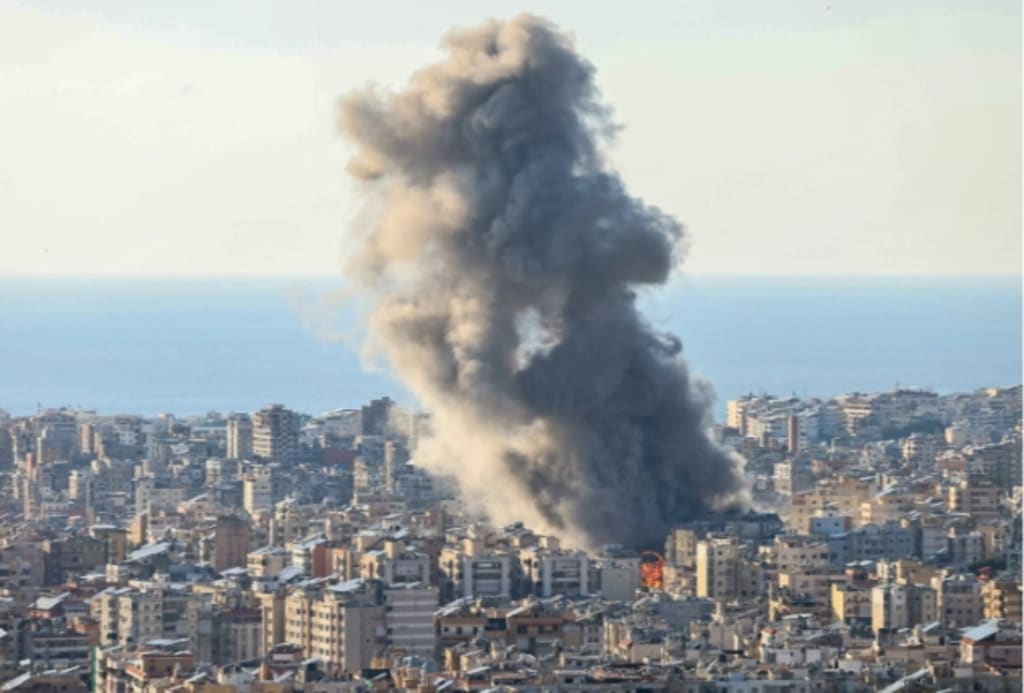
The Middle East edged closer to a broader regional war this week as Israel launched a series of strikes inside southern Lebanon, marking a significant escalation in an already volatile landscape. The cross-border action comes amid mounting tensions between Israel and Iran-aligned groups, raising fresh concerns that localized clashes could evolve into a multi-front confrontation stretching across the region.
Israeli officials said the strikes targeted infrastructure and militant positions linked to Hezbollah, the powerful Lebanese armed movement and political party backed by Iran. Hezbollah, in turn, claimed it had launched rockets and drones toward northern Israel in response to earlier Israeli operations elsewhere in the region.
While exchanges between Israel and Hezbollah are not new, the scale and timing of the latest strikes signal a widening arc of conflict — one that increasingly connects flashpoints in Lebanon, Gaza, Syria, Iraq, and beyond.
A Fragile Border Ignites Again
The Israel-Lebanon border has long been one of the region’s most combustible fault lines. Since the 2006 war between Israel and Hezbollah, both sides have maintained a tense deterrence, punctuated by periodic flare-ups.
This week’s Israeli airstrikes reportedly hit weapons depots, surveillance outposts, and suspected drone launch sites in southern Lebanon. The Israeli military stated the targets were connected to Hezbollah operations threatening Israeli civilians along the northern frontier.
Hezbollah responded with rocket barrages aimed at military positions in northern Israel, triggering air raid sirens and sending residents into shelters. Israel’s Iron Dome defense system intercepted several incoming projectiles, but officials acknowledged that the security situation remains fluid.
The immediate trigger for the escalation appears tied to the broader confrontation between Israel and Iran-aligned actors across the region. Israeli officials argue that Hezbollah is acting as part of a coordinated axis, while Hezbollah frames its actions as resistance against Israeli aggression.
A Multi-Front Crisis
The strikes in Lebanon do not stand alone. Israel has been engaged in ongoing military operations in Gaza, while also carrying out targeted strikes in Syria against Iranian-linked assets. Meanwhile, militia groups in Iraq and Syria have intermittently launched attacks on Israeli or U.S. positions, complicating the regional security picture.
The expanding geography of the conflict has heightened fears of a chain reaction. Each front has its own dynamics, but the actors involved often share alliances or overlapping strategic interests.
At the center of this network stands Iran, which supports Hezbollah politically and militarily. Israeli leaders have repeatedly warned that they view Hezbollah’s growing arsenal — particularly precision-guided missiles and drones — as an existential threat.
For Lebanon, already grappling with severe economic collapse and political paralysis, renewed hostilities risk pushing the country deeper into crisis. Civilian populations on both sides of the border face displacement, uncertainty, and the specter of prolonged conflict.
Strategic Calculations on Both Sides
Israel’s leadership appears intent on preventing Hezbollah from strengthening its military infrastructure near the border. Preemptive strikes, Israeli officials argue, are designed to degrade capabilities before they can be used at greater scale.
Hezbollah, for its part, must balance competing pressures. On one hand, it seeks to demonstrate solidarity with regional allies and deter Israeli action. On the other, it faces the reality that a full-scale war could devastate Lebanon’s fragile infrastructure and economy.
The movement’s rhetoric suggests it aims to calibrate its response — strong enough to project deterrence, but measured enough to avoid all-out war.
However, history shows that miscalculations can spiral quickly. The 2006 Israel-Hezbollah war began with a cross-border incident that escalated far beyond initial expectations.
Regional and Global Reactions
The international community has responded with mounting concern. The United Nations called for immediate de-escalation, urging both sides to respect existing ceasefire frameworks. European leaders echoed appeals for restraint, warning that further expansion could destabilize an already volatile region.
The United States reaffirmed Israel’s right to self-defense while simultaneously encouraging diplomatic efforts to contain the situation. Washington has also increased its regional military readiness in recent months, a move seen as both deterrent and precautionary.
Global markets reacted nervously. Oil prices ticked upward amid fears that broader conflict could disrupt energy flows, particularly if hostilities spread toward critical maritime routes. Investors remain wary that the Middle East — a vital hub for global energy supplies — could face sustained instability.
Humanitarian Concerns Mount
As with many conflicts in the region, civilians bear the brunt of the escalation. Families in southern Lebanon have fled border villages amid fears of further strikes. In northern Israel, residents have experienced repeated air raid warnings and disruptions to daily life.
Humanitarian organizations warn that Lebanon’s weakened infrastructure makes it especially vulnerable. The country’s financial collapse, electricity shortages, and fragile healthcare system could struggle to cope with sustained military activity.
United Nations peacekeeping forces stationed in southern Lebanon face increased operational challenges as exchanges intensify near their zones of responsibility.
The Risk of Regional Spillover
Perhaps the greatest fear among analysts is that the Israel-Lebanon escalation becomes a gateway to broader regional war.
Hezbollah is widely regarded as one of the most heavily armed non-state actors in the world, with an arsenal that far exceeds what it possessed in 2006. Israeli defense planners have openly acknowledged that a full conflict would involve heavy missile fire into Israeli cities and extensive Israeli air operations across Lebanon.
Moreover, other actors — from militias in Iraq to armed groups in Syria and Yemen — could be drawn in, turning a bilateral confrontation into a multi-theater struggle.
Diplomatic channels remain active behind the scenes. Regional intermediaries are reportedly working to contain the violence and prevent a point of no return. Yet the complexity of alliances and grievances makes rapid de-escalation challenging.
A Precarious Moment
The latest Israeli strikes in Lebanon mark more than a tactical exchange. They signal a moment when interconnected conflicts risk merging into a wider regional crisis.
For Israel, the priority remains neutralizing perceived threats along its borders. For Hezbollah and its allies, maintaining deterrence and projecting resistance are central objectives. For civilians caught between these forces, the stakes are immediate and deeply personal.
Whether this phase becomes another limited flare-up or the opening chapter of a broader war depends on decisions made in the coming days.
History offers cautionary lessons: in the Middle East, conflicts rarely stay confined for long.
About the Creator
The Saddest Thing - The Billionaires Who Rule America Aren't Even Enjoying Themselves
This single post says more about our ruling class than a thousand policy papers. The saddest thing about today's system is that the men robbing the rest of us - sabotaging our economic prospects, our pensions, our access to affordable healthcare - are not even happy.
By Scott Christenson🌴24 days ago in The Swamp
Minister Josh Simons Resigns After Labour Together Claims: A Political Shockwave in British Politics
British politics has once again been thrown into turbulence following the sudden resignation of Minister Josh Simons. The announcement came after controversy surrounding claims linked to Labour Together, a prominent think tank associated with the Labour Party. The development has ignited debate across political circles, raising questions about transparency, influence, and the relationship between political organizations and government officials. Simons’ departure marks another moment of intense scrutiny for modern politics in the United Kingdom. As details continue to emerge, the story highlights the fragile balance between political power, public trust, and accountability. This article explores the background of Josh Simons, the claims that led to his resignation, the response from political leaders, and what this event may mean for the future of the Labour Party and British politics more broadly. Who Is Josh Simons? Josh Simons has been considered one of the rising intellectual voices within Labour politics. Known for his policy expertise and strategic thinking, Simons built a reputation as a policy adviser before entering government. His career has been closely tied to progressive policy development, economic reform ideas, and modernizing the Labour Party’s political message. Before his ministerial role, Simons was involved in policy think tanks and advisory circles that helped shape Labour’s political platform. Many observers believed he represented a new generation of Labour leadership—one focused on practical policy solutions rather than traditional ideological battles. Because of this reputation, his resignation has surprised many political analysts. Understanding Labour Together At the center of the controversy is Labour Together, a think tank that has played an important role in shaping the modern direction of Labour Party policy. Labour Together has been known for providing research, political strategy, and policy proposals designed to help Labour remain competitive in national elections. The organization has worked with a range of Labour politicians and advisers, often serving as a hub for policy discussions. However, the relationship between think tanks and political office holders has long been controversial. Critics argue that such organizations can create blurred lines between independent policy work and political influence. Supporters, on the other hand, say think tanks are essential to developing effective policy ideas and ensuring governments have access to expert analysis. The claims involving Labour Together have therefore raised questions about where those boundaries should lie. The Claims That Sparked the Crisis Reports suggest that allegations connected to Labour Together created a conflict that placed Simons under significant political pressure. While the exact details remain under investigation, the controversy reportedly centers on concerns regarding transparency, political connections, and potential conflicts of interest. Opposition figures and political commentators began asking whether Simons’ relationship with Labour Together could raise ethical concerns for someone holding a government position. Although no criminal wrongdoing has been alleged, the situation quickly became politically sensitive. In modern politics, perception can often be as damaging as proven misconduct. As scrutiny intensified, calls grew for clarification and accountability. Political Pressure Mounts As media coverage expanded, pressure began to build from multiple directions. Opposition parties demanded explanations about the relationship between Labour officials and policy organizations. Questions were also raised in political discussions and public commentary about whether stronger ethical guidelines were needed. Political analysts noted that such controversies can escalate rapidly in the digital age. Social media discussions amplified the story, bringing national attention to an issue that might once have remained confined to policy circles. Within Westminster, discussions reportedly took place about how the situation might affect the credibility of the government. Ultimately, Simons chose to step down from his ministerial role. The Decision to Resign Resignations in politics often follow a familiar pattern: mounting scrutiny, intense media attention, and growing pressure from both supporters and critics. In this case, Simons’ resignation appears to have been aimed at preventing the controversy from distracting the government’s broader policy agenda. Political leaders sometimes step down not because wrongdoing has been proven, but because ongoing controversy risks undermining public confidence. By resigning, Simons may have hoped to allow investigations or discussions about the matter to proceed without his position becoming a constant political battleground. Reactions From the Labour Party The Labour Party’s leadership responded quickly to the resignation. Party officials emphasized the importance of maintaining public trust and transparency in government. Statements suggested that the resignation should allow attention to remain focused on the government’s policy priorities rather than internal controversy. Supporters of Simons have argued that his policy contributions should not be overshadowed by political disputes. Others within the party have acknowledged that public confidence requires strict ethical standards and clear boundaries between political roles and external organizations. The balance between loyalty to colleagues and accountability to voters remains a constant challenge for political parties. Opposition Criticism Opposition parties have used the controversy to question Labour’s leadership and political judgment. Critics argue that the episode raises broader questions about transparency and the influence of policy organizations within government decision-making. Opposition leaders have called for clearer rules governing relationships between think tanks, advisers, and political officials. In parliamentary debates and media interviews, critics have suggested that stronger oversight mechanisms may be needed to prevent similar controversies in the future. Such debates reflect an ongoing concern in many democracies: how to ensure political decision-making remains transparent and accountable. Public Reaction and Media Coverage Public reaction to the resignation has been mixed. Some commentators view the situation as another example of modern politics becoming increasingly sensitive to ethical concerns. Others see it as evidence that political figures are being held to higher standards of accountability. Media coverage has focused not only on Simons’ resignation but also on the broader issue of how think tanks interact with political power. In the age of 24-hour news cycles and social media, political controversies can escalate quickly, shaping public perceptions before all facts are fully known. The Simons case illustrates how rapidly political narratives can evolve. The Role of Think Tanks in Modern Politics The controversy has also reignited debate about the role of think tanks in democratic systems. Think tanks often serve as important sources of policy research and analysis. They help governments explore new ideas, evaluate complex problems, and design long-term strategies. However, critics warn that close connections between think tanks and political figures can create the appearance of insider influence. Many democracies have introduced rules requiring greater transparency around funding, affiliations, and advisory roles. The Simons controversy may lead to renewed calls for similar measures in the United Kingdom. Implications for the Labour Government For the Labour government, the resignation comes at a politically sensitive time. Governments depend heavily on public confidence and stable leadership teams. Even minor controversies can disrupt policy momentum and shift attention away from legislative priorities. Labour leaders will likely focus on reinforcing ethical guidelines and demonstrating that transparency remains a priority. Maintaining political stability while addressing public concerns will be an important test for the party. The Future of Josh Simons Despite his resignation, many observers believe Simons’ political career may not necessarily be over. Political history includes many examples of figures who stepped down during controversy but later returned to public life. Simons’ policy expertise and reputation among some Labour supporters could allow him to continue contributing to political debate, even outside formal government roles. Whether he eventually returns to frontline politics may depend on how the controversy is ultimately viewed by the public and political leaders. A Broader Lesson About Political Accountability The resignation highlights a broader theme in modern politics: the increasing demand for accountability. Voters today expect greater transparency from political leaders than ever before. Ethical standards, financial disclosures, and clear boundaries between public roles and private organizations are becoming central to political credibility. Even situations that involve no legal wrongdoing can create significant political consequences if public trust is questioned. This evolving expectation is reshaping how governments operate. Conclusion: A Political Moment With Lasting Impact The resignation of Minister Josh Simons following claims connected to Labour Together represents more than just a personal political setback. It reflects the ongoing challenges faced by modern governments in maintaining transparency, credibility, and public trust. While the full impact of the controversy remains uncertain, the episode serves as a reminder that political accountability extends beyond legal definitions of wrongdoing. In democratic societies, perception, ethics, and public confidence play equally powerful roles. For the Labour Party, the priority now will be restoring focus on policy and governance. For observers of British politics, the situation offers another example of how quickly political fortunes can shift in an era defined by intense scrutiny and constant public attention.
By Zahid Hussain2 days ago in The Swamp
Flower Bloom 369
FLOWER Bloom 2/25/26 Wednesday By Mariann Carroll Karen had been with Tony for 7 years. Tony started acting strangely after her surgery. He would mow the lawn in the rain and be on his cellphone. He started pushing Karen away. Tony came clean about seeing someone. Karen moved out two months later. Karen moved in with a friend. She felt betrayed.
By Mariann Carroll5 days ago in Fiction


Comments
There are no comments for this story
Be the first to respond and start the conversation.