
Israel to Attack Iran’s Underground Missile Sites in Second Phase of War
IDF Shifts Focus to Deeply Buried Ballistic Missile Facilities as Conflict Escalates
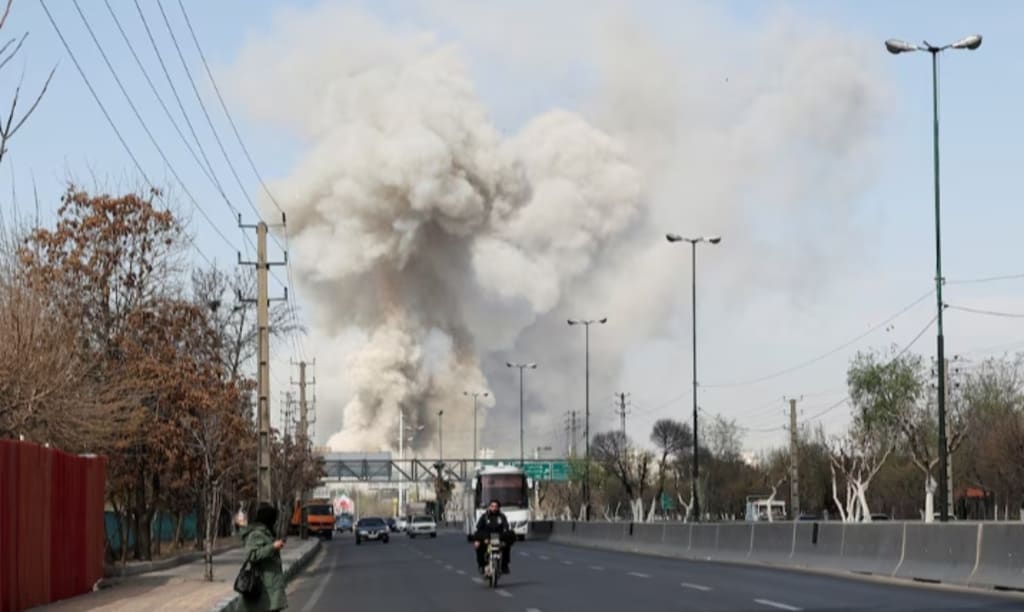
Israel’s military campaign against Iran is entering a new and more intense phase, with fighter jets reportedly set to attack ballistic missile sites buried deep underground across Iranian territory, according to sources familiar with the operations. This renewed push reflects a broader strategic effort to degrade Tehran’s ability to launch aerial attacks on Israeli cities and regional targets while deepening the conflict with one of its most formidable adversaries.
The surge in operations comes as the U.S.-Israeli air campaign enters its second week, following initial strikes on Iranian leadership and military targets that sparked retaliatory attacks across the Middle East. With above-ground missile launchers already targeted, Israeli commanders are now turning their attention to the deeper, more fortified infrastructure that houses much of Iran’s ballistic arsenal.
Transition to the Second Phase of Operations
According to sources, the conflict is now moving into what military planners describe as a second phase, marked by strikes on underground missile storage sites and bunkers — some of the most protected assets in Iran’s military network.
“These are deeper targets, often protected by mountains of earth and reinforced concrete,” a source told Reuters. Israel’s strategy appears designed to neutralize Iran’s long-range strike capability before the conflict can escalate further, focusing on ballistic and cruise missiles that could threaten Israeli cities or U.S. bases in the region.
In a statement, the Israeli military confirmed that fighter jets struck “an underground infrastructure site used by the Iranian regime to store ballistic missiles and aircraft-targeted ordnance” overnight. Details on location and operational outcomes remain classified.
Strategic Goals of Targeting Underground Sites
The focus on deeply buried missile facilities serves several strategic purposes:
Eliminating Iran’s long-range strike capability: Tehran’s inventory of ballistic missiles, estimated by Israeli sources at around 2,500 before the war, poses a credible threat unless degraded. Targeting underground storage sites reduces Iran’s ability to launch missiles against Israel and allied positions.
Exploiting air dominance: Control of Iranian airspace by Israeli and U.S. forces allows fighter jets and drones to strike deeper into Iranian territory with reduced risk of interception.
Weakening Iran’s military resilience: Destroying hardened missile bunkers undermines Tehran’s confidence in its long-standing strategy of sheltering key assets underground to survive airstrikes.
Recent assessments indicate that Iran’s reliance on underground bunkers — sometimes called “missile cities” — has created predictable targets, leaving key launch points exposed once above-ground defenses were neutralized.
Hurdles and Uncertainties
Despite the escalation, significant uncertainties remain regarding the effectiveness of these strikes and Iran’s potential responses. Tehran continues to conduct missile and drone attacks on Israel and allied interests even as above-ground assets are targeted.
Estimates of Iran’s remaining ballistic missile stockpile vary widely. While Israeli sources cite around 2,500 missiles before the conflict, some analysts suggest the number could exceed 6,000, reflecting decades of accumulation.
There is also debate over the resilience of Iran’s underground facilities. Deep bunkers can be vulnerable if entrances or ventilation systems are hit, but precision strikes on such hardened targets require advanced intelligence and specialized munitions.
The Broader Conflict Landscape
Targeting underground missile sites occurs amid intensifying regional conflict. Early airstrikes in late February targeted Iranian leadership and military positions, reportedly killing senior commanders and provoking Iranian retaliatory strikes, including missiles and drones aimed at Israel, U.S. bases, and regional proxies in Lebanon, Iraq, and Syria.
The U.S. military has supported Israeli operations with airpower and intelligence, emphasizing the campaign’s goal of reducing Iran’s ability to threaten regional peace. However, both nations remain cautious about triggering broader escalation.
The conflict’s impact has extended beyond the battlefield. Gulf nations have bolstered air defenses, and global markets are reacting to potential disruptions in shipping lanes, including the vital Strait of Hormuz, underscoring the war’s far-reaching implications.
Diplomatic and Regional Implications
Strikes on Iran’s most protected military assets carry diplomatic consequences. Neighboring states and global powers are closely monitoring Israel’s expanded campaign, weighing how deeper incursions into sovereign territory could affect regional stability.
Iranian leaders have pledged to continue their operations despite losses, emphasizing that the destruction of underground missile sites will not cripple Tehran’s overall military capabilities. However, losing control of its missile arsenal — a key pillar of defense doctrine — represents a significant strategic setback.
Looking Ahead
As Israel enters this next phase of operations, critical questions remain: How far will the Israeli air campaign penetrate Iran’s hardened underground facilities? How will Tehran respond to the attacks? Will international pressures prompt diplomatic engagement?
The next weeks may reveal whether striking underground missile sites will significantly degrade Iran’s capabilities or simply escalate a conflict that continues to challenge regional stability and global security.
Key Takeaways
Israel is entering a second phase of war against Iran, targeting underground missile bunkers and storage sites.
Fighter jets, supported by U.S. intelligence, have already struck some of these facilities.
The goal is to neutralize Iran’s long-range missile capabilities and reduce threats to Israeli cities and U.S. bases.
Estimates of Iran’s remaining missile stockpile vary, complicating strategic calculations.
Expanded strikes reflect a broader escalation with both regional and diplomatic implications.
Israel’s focus on underground missile sites marks a turning point in the war, with the potential to reshape Tehran’s military posture, affect regional stability, and influence the conflict’s trajectory in the coming weeks.
About the Creator
The Saddest Thing - The Billionaires Who Rule America Aren't Even Enjoying Themselves
This single post says more about our ruling class than a thousand policy papers. The saddest thing about today's system is that the men robbing the rest of us - sabotaging our economic prospects, our pensions, our access to affordable healthcare - are not even happy.
By Scott Christenson🌴28 days ago in The Swamp
Watershed moment as Russia's sporting exile ends
In a dramatic turn of events, Russia has formally ended its years-long isolation from major international sporting competitions, a development that marks a significant shift in global athletics and geopolitics. After being barred from many world championships and high-profile events following its invasion of Ukraine in 2022, Russian athletes and teams will now be permitted to compete again under the national flag, flagging a “watershed moment” for sports and diplomacy alike. The decision comes after months of negotiation between Russian sporting authorities, international federations, and major events organisers. At the heart of this shift is a coordinated move by bodies such as the International Olympic Committee (IOC) and individual sport federations to reassess blanket bans in favour of more nuanced eligibility criteria. Supporters argue that athletes should not be punished indefinitely for the actions of governments and that sport has a unique capacity to build bridges even amid geopolitical tensions. From Ban to Reinstatement Russia’s sporting exile began soon after its full-scale invasion of Ukraine in February 2022. In response to global outrage and widespread condemnation, numerous international sports federations imposed sanctions on Russian competitors and teams. These included bans from high-profile events such as the FIFA World Cup qualifiers, World Athletics Championships, and numerous cycling, tennis, and gymnastics competitions. In many instances, Russian athletes were required to compete as neutrals — without national anthems, flags, or official representation — provided they could demonstrate they opposed their country’s military actions and met strict eligibility criteria. These measures were intended to balance fairness to individual athletes with broader international pressure on Russia’s government. However, the extended absence of Russian teams and athletes had profound implications. Russia has long been a powerhouse in many sports, from gymnastics and track and field to figure skating, hockey, and beyond. Their absence reshaped competition fields, affected sponsorships and broadcasting revenues, and prompted intense debate within sporting communities worldwide. The Decision and Reactions The recent shift emerged after intense dialogue between sporting bodies and national federations. Federations cited several reasons for the change, including legal challenges to protracted bans, concerns about the effectiveness of long-term exclusion, and a belief that sport should ultimately transcend politics. At a press briefing announcing the change, an IOC official stated that allowing Russian athletes to compete again under their national flag was “a decision grounded in fairness, under clear and enforceable criteria designed to protect the integrity of sport.” The official also emphasised that individual federations would retain latitude to set specific rules for their competitions. Reactions to the reinstatement have been mixed. In Russia, government officials and athletes hailed the decision as overdue and vindicated what they called the “spirit of athletic excellence.” Media coverage in Moscow has portrayed the return as a triumph of sport over politics and a validation of years of development and training. International Response and Controversy Elsewhere, the response has been more cautious. Some Ukrainian sporting officials condemned the decision, arguing that reinstating Russian competitors before a peaceful resolution in Ukraine sends the wrong signal and undermines solidarity efforts. “Sports can be a force for good,” one Ukrainian federation official said, “but not at the cost of ignoring ongoing aggression.” Several Western athletes also voiced concern. A prominent European cyclist, who asked not to be named, said, “We all want inclusive competition, but this feels premature given the geopolitical context.” Others stressed the need for transparent criteria to ensure reinstated competitors uphold values of fairness and respect. Legal analysts note that long-term bans faced potential challenges under international law, particularly in contexts where individual athletes had no direct role in political decision-making. At the same time, they add, federations must strike a delicate balance between inclusivity and maintaining global solidarity in response to conflict. Implications for Future Competitions With the return of Russian athletes and teams, the competitive landscape in many sports is poised to change dramatically. Events such as the upcoming Olympic Games, world championships in athletics, swimming, and team sports now face renewed interest and global viewership, as audiences anticipate the performance of Russian competitors who have been sidelined for years. Sponsors, broadcasters, and event organisers have also reacted, with many welcoming the prospect of a more complete competitive field. Ticket demand for major events has reportedly risen in several markets since the reinstatement announcement. Yet the path ahead remains complex. Federations will need to implement guidelines that address issues of eligibility, ensure the safety and fairness of competition environments, and respond to ongoing geopolitical tensions with sensitivity. Looking Ahead The end of Russia’s sporting exile stands as a landmark moment for international sport — one that underscores the challenges of balancing politics, ethics, and competition in a globalised world. As Russian athletes prepare to reenter arenas and stadiums around the world, the global sporting community faces a pivotal test: can sport serve as a unifying force even amid unresolved conflict, or will political fault lines continue to shape its outcomes? The coming months and competitions will provide critical insight into how this “watershed moment” unfolds — for athletes, fans, and nations alike.
By Fiaz Ahmed 2 days ago in The Swamp



Comments
There are no comments for this story
Be the first to respond and start the conversation.