
Lufthansa Airbus A380 Becomes Most Tracked Flight in the World as First Departure From Abu Dhabi Following Airspace Closure
Lufthansa’s A380 becomes the world’s most tracked flight after taking off from Abu Dhabi, marking the first departure following regional airspace closures amid Middle East tensions.

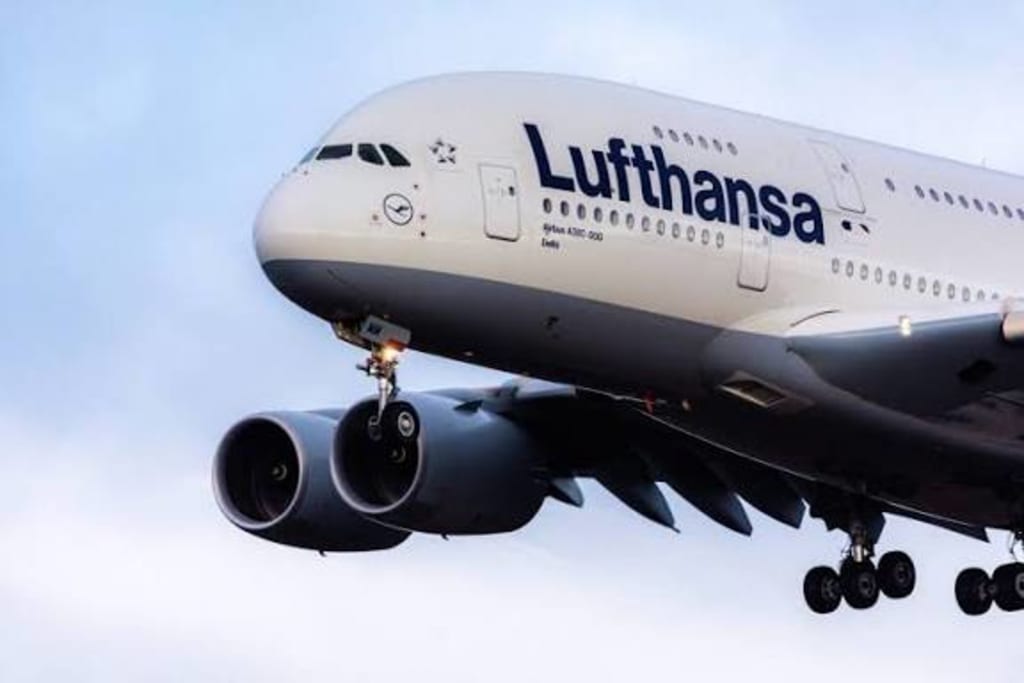
In the midst of ongoing turmoil in the Middle East that has dramatically disrupted global aviation, a Lufthansa Airbus A380 superjumbo has become the most tracked flight in the world after taking off from Abu Dhabi — marking the first departure from the emirate since widespread airspace closures paralyzed commercial aviation across the region.
The aircraft’s unusual distinction stems from extraordinary circumstances: with much of the Gulf’s airspace shut or heavily restricted amid military conflict and safety concerns, aviation tracking platforms reported unprecedented attention from aviation enthusiasts and passengers alike as the A380 climbed out of Abu Dhabi’s skies. Flight trackers logged tens of thousands of simultaneous views of the aircraft’s transponder data, making it the most tracked flight globally in real‑time.
Airspace Chaos and the First Takeoff
The departure unfolded against the backdrop of one of the most severe aviation disruptions seen in decades. Following escalating regional tensions and military action involving United States and Israel operations against Iran, aviation authorities across the Gulf — including Iran, Kuwait, Qatar, Bahrain, and large parts of the United Arab Emirates — issued emergency Notices to Airmen (NOTAMs) closing or severely restricting airspace due to safety concerns.
Major hubs such as Dubai International Airport and Abu Dhabi International Airport were among the hardest hit. Regional carriers including Etihad Airways, Emirates, and others suspended operations as a precautionary measure, leaving thousands of passengers stranded and grounding hundreds of flights.
Despite these closures, special permissions were reportedly granted for select repositioning and evacuation flights to move aircraft and crews safely back to their home bases. The Lufthansa A380 departure was one such flight, executed under strict aviation safety protocols and arguably as part of a limited reinstatement of essential flights from Abu Dhabi’s airfield.
Why It Became the Most Tracked Flight
Under ordinary circumstances, an A380 departure would be notable for aviation fans but far from the most tracked flight globally. However, the unique situation in the Middle East — with most commercial routes suspended and millions of passengers and aviation observers glued to flight‑tracking websites — propelled this specific aircraft to the top of global tracking charts.
Websites such as Flightradar24 and other flight‑monitoring platforms allow users worldwide to follow aircraft in real time via transponder data. The rarity of any large aircraft moving through the closed Gulf airspace, combined with heightened public and media interest in aviation developments during the crisis, drove record numbers of people to track the Lufthansa A380 as it climbed and vanished from the region’s constrained air
In many cases, the aircraft was listed by trackers as a unique or “N/A” flight — a placeholder indicating limited public data due to airspace restrictions — which fueled curiosity and increased attention from users. This feedback loop of tracking activity made the flight one of the most‑viewed on global flight‑monitoring platforms.
Broader Aviation Impact
The A380’s tracking milestone illustrates just how deeply the Middle East crisis has impacted global aviation. With key air routes across the region closed, long‑haul airlines have been forced to reroute flights around the Gulf or suspend them entirely, significantly lengthening travel times and straining airline operations. Western carriers, including Lufthansa and others, have temporarily suspended flights to and from the UAE and surrounding states until at least early March, according to official aviation advisories.
Even after limited departures resumed, the operation remained cautious and restricted, focusing on repositioning aircraft and assisting evacuation efforts for stranded passengers and crews. Reports indicate that some flights resumed to key cities like London and Munich, often with minimal crew onboard due to operational constraints.
Public and Industry Reactions
Travelers, aviation professionals, and flight‑tracking enthusiasts alike have reacted with curiosity and concern. For many on social media and tracking forums, the stark contrast between routine A380 operations in normal times and this extraordinary, almost symbolic departure underscores how geopolitical events can ripple through civilian domains like international travel.
Aviation analysts point out that such disruptions highlight the vulnerabilities of global flight networks to geopolitical instability. Even carriers with large fleets and extensive international reach — like Lufthansa — must adapt to sudden airspace closures, route disruptions, and heightened risk environments.
Looking Ahead
While the Middle East situation remains fluid, the tracked A380 departure serves as both a hopeful sign of controlled resumption and a reminder of ongoing uncertainty in the global skies. As airspace authorities and airlines continue to assess safety, departures from impacted hubs may slowly increase — but each flight through the region will likely remain under heightened scrutiny by both the industry and the flying public.
About the Creator
Fiaz Ahmed
I am Fiaz Ahmed. I am a passionate writer. I love covering trending topics and breaking news. With a sharp eye for what’s happening around the world, and crafts timely and engaging stories that keep readers informed and updated.
Keep reading
More stories from Fiaz Ahmed and writers in The Swamp and other communities.
Middle East crisis live: Israel launches new attacks on ‘heart of Tehran’; US fighter planes mistakenly shot down in Kuwait
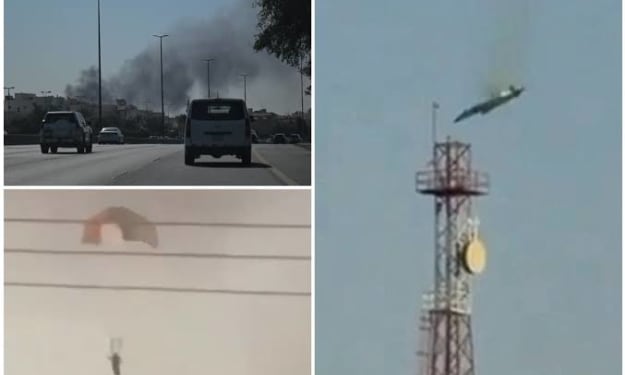
The Middle East is engulfed in a rapidly escalating conflict as joint Israel and United States military operations against Iran have expanded across the region, drawing in Gulf states and triggering chaotic engagements that include a rare friendly‑fire incident involving U.S. jets in Kuwait. The conflict, which began with large‑scale combined strikes on Iran’s military infrastructure and government targets, has entered a third day of intense violence. The Israeli Defense Forces (IDF) and U.S. forces have reportedly launched fresh attacks deep into Tehran, with explosions reported in multiple districts of the Iranian capital and Iran vowing to retaliate “regardless of the cost.” Israeli‑U.S. Strikes Deep in Tehran Israeli military sources said their air force carried out “broad wave” airstrikes targeting key strategic positions in the “heart of Tehran,” intensifying a campaign that began with a coordinated offensive involving hundreds of aircraft and missile launches. The joint operation aims at degrading Iran’s air defenses and military command structures after initial strikes reportedly killed high‑ranking officials. The strikes have been followed by repeated explosions across Tehran, underscoring the scale of the operation. While independent verification remains limited due to restricted access, multiple reports indicate that central districts of the capital have been rocked by heavy bombardment. Iran’s Regional Retaliation In response to the offensive, Iran has unleashed successive waves of missile and drone attacks aimed at Israeli territory, U.S. bases, and allied Gulf states. Explosions have been reported not only in Israel but also in other countries hosting American military assets, including Bahrain, Qatar, the United Arab Emirates, and Kuwait itself. The Iranian Islamic Revolutionary Guard Corps (IRGC) has described its actions as a legitimate defense against what it calls an aggressive campaign, asserting that all U.S. and Israeli targets across the region are legitimate military objectives and vowing to continue operations until its stated goals are met. Friendly‑Fire Incident in Kuwait Amid the swirl of attacks, a grave and unusual incident occurred in Kuwait when its air defense forces mistakenly shot down three U.S. fighter jets. According to United States Central Command, the aircraft—identified as F‑15E Strike Eagles—were downed when Kuwaiti defenses misidentified them as hostile while they were supporting coalition operations. All six aircrew ejected safely and were recovered in stable condition. Kuwaiti authorities have acknowledged the friendly‑fire mistake and are cooperating with U.S. military investigators to review procedures and prevent future errors. The incident, though non‑fatal, illustrates the confusion and heightened alertness sweeping across allied forces as the regional crisis unfolds. Regional Impacts and Civilian Consequences The conflict’s spillover has affected civilian populations and infrastructure beyond battlefields. Major cities across the Gulf region have reported explosions and air defense activations as Iranian missiles and drones targeted facilities and bases. Flights in and out of key hubs such as Dubai and Doha have been suspended due to airspace closures and safety concerns. Global markets have reacted sharply as well, with oil prices surging amid fears of broader disruption to energy exports through key transit routes like the Strait of Hormuz. Concerns over the safety of shipping lines and regional economic stability have sent shockwaves through international financial markets. Meanwhile, international leaders have urged restraint and called for diplomatic engagement to prevent further escalation. The United Nations, along with major powers worldwide, has expressed deep concern about the widening conflict and the risk of a broader regional war. Looking Ahead As fighting continues with no immediate sign of de‑escalation, military analysts warn that the dynamics of the conflict could evolve rapidly, with regional actors and global powers closely monitoring developments. The friendly‑fire episode in Kuwait highlights the risk of miscalculation amidst complex multinational operations, while repeated strikes in Tehran underscore the intensity of the U.S.–Israel campaign. For civilians across the Middle East, the escalation has brought renewed fear and disruption to daily life. Emergency services in multiple countries are on high alert, warning residents to seek shelter and stay informed amid intermittent missile alerts and explosions. The conflict’s trajectory remains uncertain, with world leaders pushing for urgent talks even as military actions continue unabated. As the crisis enters another critical phase, the international community watches anxiously, hopeful that diplomatic channels can avert a larger conflagration.
By Fiaz Ahmed about 14 hours ago in The Swamp
A Gathering of Evil Bosses
“I’m the queen of chin jutting while I smooth my hair, attacking, insulting, and deflecting to protect my appointer.” “Oh, please, Blondi, my hair is curled, highlighted, and longer than yours. I feature television commercials telling immigrants that we will give them a free plane ride home, and if they voluntarily turn themselves in, they will be allowed to legally apply for re-entry. It runs everywhere, and I look good in it! You can’t compete because of your blond hair. Mine is nicer, and my lips are prettier than yours.”
By Andrea Corwin 13 days ago in The Swamp
UN’s Türk Urges Dialogue After Deadly Clashes on Afghan-Pakistan Border
Deadly clashes along the volatile border between Afghanistan and Pakistan have once again exposed the fragility of regional stability, prompting urgent calls for restraint and diplomacy. Volker Türk, the United Nations High Commissioner for Human Rights, has urged both sides to engage in meaningful dialogue, warning that continued violence risks escalating tensions and worsening humanitarian conditions for civilians living in the conflict zone.
By Jameel Jamali4 days ago in The Swamp
I wanted to title this something different, but worried that my chosen title might cause problems entering the United States in the future so this is the new title. It's the greatest title. No one has ever written a title better than this. (All titles unrelated to content).
Let me be honest. I am finding this difficult. Now, I like a challenge, a stretch, a bit of an obstacle course. “Write about the decline of the British Empire in the form of a narrative poem in which your protagonist is an artichoke” I read, and flex my fingers. “Write a haiku to evoke the sensation of sibilance using only the first half of the alphabet.” “Well”, I think to myself, “this should be fun.” But “write about a system that isn’t working”? A system that isn’t working? Now? In 2026? ONE system? My favourite system that isn’t working? The sexiest system that isn’t working? The one giving me the most angst day to day? The one giving me the most existential dread? I am, as I say, finding this difficult. I will own that I have contemplated writing a thousand words on why the steady “all on” setting on my fairy lights is the EIGHTH of seven options which must be sequentially activated to get there, because that is a system that some fool came up with and it definitely doesn’t work, and now who is paying the price, eh? But how can I write about my fairy lights when…. When…. When….
By Hannah Moore4 days ago in Humans


Comments
There are no comments for this story
Be the first to respond and start the conversation.