
Norwegian F-35s Engage Russian Knights Su-35s During Strategic Bomber Escort Mission
Norwegian F-35s scramble to intercept and shadow Russian Tu-95 strategic bombers escorted by Su-35 fighters — inBarents SeaTO Arctic patrol over the Barents Sea.

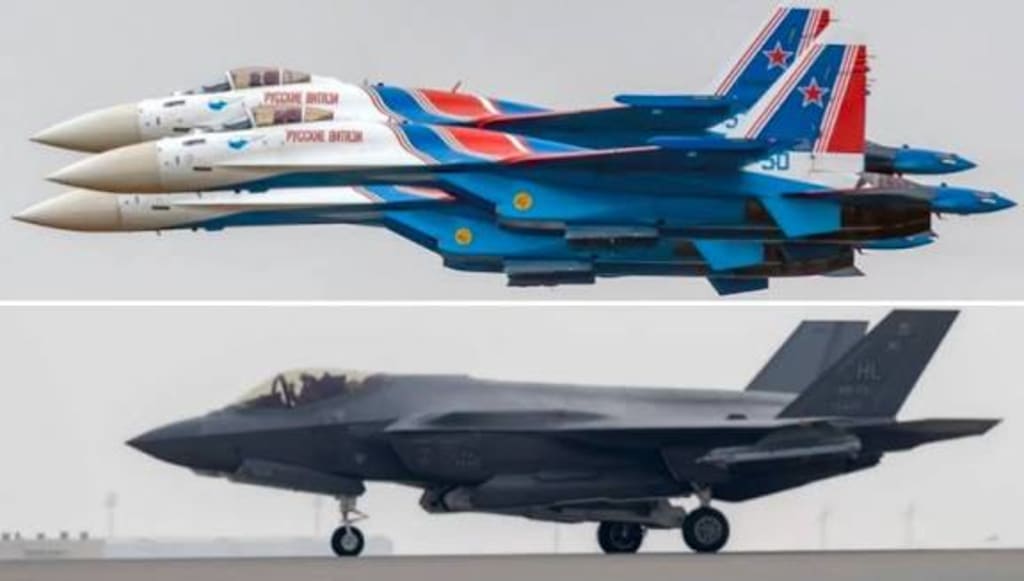
In a notable air operation over the Barents Sea, two F‑35 Lightning II jets from Royal Norwegian Air Force intercepted and shadowed a formation of Russian strategic bombers escorted by Su-35 fighters — including aircraft associated with Russia’s famed “Russian Knights” aerobatic team — during a routine NATO air policing mission. The encounter, which occurred in international airspace, underlines ongoing vigilance by NATO members in the High North amid heightened military activity.
The mission unfolded on February 27, 2026, when Norwegian F-35s assigned to NATO’s Arctic watch were scrambled from Evenes Air Station to investigate two Tupolev Tu-95 Bear H strategic bombers accompanied by two Sukhoi Su-35 Flanker-M fighters. These Russian aircraft were flying over international airspace in the Barents Sea, north of Norway’s border, as part of a long-range aviation sortie.
Upon detecting the foreign formation, the Norwegian pilots closed in to visually identify and monitor the Russian aircraft. The intercept was carried out in a professional and measured manner, with no violation of Norwegian sovereign airspace reported. “Today, two Norwegian F-35s at NATO mission identified and shadowed two Russian Tu-95 Bear H bombers and two Su-35 Flanker M fighters in international airspace over the Barents Sea — a routine activity, but an important part of monitoring and safeguarding our region,” the Norwegian Armed Forces said in an official statement posted on social platforms.
What drew particular attention from analysts and aviation enthusiasts was the presence of one Su-35 aircraft bearing the distinctive colors of the Russian Knights, an aerobatic demonstration team known for performing at air shows and national ceremonies. Instead of flying in performance configuration, the aircraft was equipped in a combat-ready setup with air-to-air missiles, indicating its operational deployment alongside the escort mission.
Military observers note that the use of aircraft traditionally associated with aerobatic displays in an armed escort role may reflect broader operational pressures within the Russian Aerospace Forces. Experts suggest that high operational tempos and continuing demands on frontline squadrons could lead to the integration of all available aircraft — even those from demonstration units — into routine combat or patrol assignments.
While intercepts such as this are not unusual — NATO air forces regularly scramble fighters to identify and monitor Russian long-range aviation — the Barents Sea has become a focal area due to its strategic location and proximity to the alliance’s northern flank. Norway plays a significant role in NATO’s Quick Reaction Alert (QRA) system, maintaining F-35 fighters on alert to rapidly respond to unidentified or foreign military flights near alliance territories.
The Tu-95 Bear H bombers involved in the mission are long-range aircraft with historical significance dating back to the Cold War. Capable of carrying cruise missiles and operating at great distances from their bases, the Bear series continues to feature in Russian long-range aviation patrols. Their flights near NATO airspace routinely trigger allied responses to ensure situational awareness and deterrence.
Russia’s use of Su-35 fighters for escort duties underscores the multirole nature of the Flanker-M design, which combines air-to-air and secondary air-to-ground capabilities. In this mission, the role of the Su-35s was to protect the strategic bombers from potential aerial threats as they traversed international airspace. NATO interceptors, including Norway’s F-35s, monitored the formation closely, ensuring that all aircraft adhered to international aviation law and did not stray into restricted zones.
Despite the potentially sensitive context, Norwegian authorities emphasized the routine nature of the operation. Such intercepts help maintain open skies while ensuring that aerial activity near alliance borders is properly observed and recorded. They also reinforce NATO’s commitment to collective defense and rapid response readiness in northern Europe.
The encounter highlights both the evolving operational landscape of Northern Europe and the critical role played by advanced fighter aircraft in modern air policing missions. As tensions persist between NATO and Russia, especially over strategic regions like the Arctic, routine interceptions may continue to be a key aspect of maintaining security and stability in international airspace.
In sum, the Norwegian F-35s’ engagement with Russian bombers and Su-35 escorts demonstrates the ongoing vigilance required to manage military air operations in sensitive regions. While no aggressive action occurred, the event underscores the importance of robust air defense protocols and coordinated monitoring by allied forces as part of broader security efforts in northern Europe.
About the Creator
Fiaz Ahmed
I am Fiaz Ahmed. I am a passionate writer. I love covering trending topics and breaking news. With a sharp eye for what’s happening around the world, and crafts timely and engaging stories that keep readers informed and updated.
Keep reading
More stories from Fiaz Ahmed and writers in The Swamp and other communities.
UAE Court Orders Global Search Engine to Remove Offensive Video
In a landmark ruling that could reshape digital accountability and online privacy in the United Arab Emirates, a UAE court has ordered a major international search engine to remove an offensive video from its search results — establishing an important precedent for how global tech companies must comply with local judicial decisions. The case highlights the growing importance of digital dignity and the enforcement of online content regulation in the Emirates. Background of the Case The legal battle began when a video containing offensive material targeting a woman living in the UAE was posted on a global online platform. Despite local authorities prosecuting the individual responsible under existing cybercrime and digital content laws, the video remained accessible online, continuing to cause reputational harm. When the woman requested the removal of the content from public view, the international search engine failed to respond, prompting her to take legal action. In hearings at both the court of first instance and on appeal, judges considered whether the global technology company — which operates locally through a registered UAE entity — could be held responsible for content discoverable via its service. The company argued that it did not directly control the platform hosting the video and therefore should not be obliged to take action. Court Ruling and Legal Implications UAE judges ultimately ruled in favor of the plaintiff, concluding that local subsidiaries or legal entities of global tech firms are obligated to comply with judicial rulings, even if the company’s servers or management are located overseas. The court ordered the offensive content to be removed from search results accessible in the UAE. The ruling was upheld on appeal, after which the search engine complied and removed the video. Legal experts say the decision reflects a broader effort by UAE authorities to hold technology platforms accountable for the spread and persistence of harmful content online. The ruling reinforces that digital platforms with legal presence in the UAE cannot sidestep local court orders simply by pointing to operational structures abroad. One prominent digital law researcher described the decision as part of an expanding focus on the “right to digital forgetting” — a concept that allows individuals to petition for the removal of outdated, irrelevant, or privacy‑violating content that continues to harm their reputation online. Such legal frameworks seek to balance freedom of expression with protections for personal dignity and privacy in the digital age. Context: UAE Digital Laws and Enforcement The ruling comes amid heightened regulatory scrutiny of online content in the UAE. Authorities have recently warned residents and social media users against sharing unverified information, rumors, or misleading material, stressing that such conduct can be legally punishable if it threatens public security or social stability. The Federal Decree‑Law on Countering Rumors and Cybercrimes criminalizes the dissemination of harmful digital content and imposes penalties ranging from fines to imprisonment. The judiciary has also pursued defamation and privacy cases in other contexts. For example, influencers and social media users have faced fines, sanctions, and orders to delete defamatory content under UAE law, reflecting the broad application of online content regulations. Digital rights advocates note that UAE authorities place strong emphasis on content that threatens national stability or infringes on individual dignity. While freedom of expression remains protected within certain bounds, laws governing online behavior can be strict compared with many Western jurisdictions. Critics argue that this may have a chilling effect on online discourse, though supporters maintain such measures are necessary to maintain social harmony and protect individuals from harm. Impact on Global Tech Platforms The ruling signals to international technology companies that local legal presence in the UAE comes with legal responsibilities. Firms operating in the country through subsidiaries, offices, or registered entities must be prepared to respond to judicial orders — even those that involve content hosted beyond national borders. Compliance with such orders could increasingly become a condition of doing business in the region’s rapidly growing digital market. Experts say the decision may prompt other countries with strict online content laws to issue similar orders targeting global platforms. If more courts adopt comparable interpretations of digital accountability, search engines and social platforms might face a complex patchwork of legal obligations requiring greater resources for localized compliance. Conclusion The UAE court’s decision to compel a global search engine to remove an offensive video represents a defining moment in digital jurisprudence within the Emirates. It underscores the evolving landscape of online regulation, personal dignity protections, and corporate responsibility in the age of ubiquitous digital platforms. As governments around the world grapple with how best to balance free speech and harmful content, the UAE’s landmark ruling may influence broader debates on content moderation, privacy rights, and the obligations of international technology companies operating in diverse legal environments.
By Fiaz Ahmed about 10 hours ago in The Swamp
The Saddest Thing - The Billionaires Who Rule America Aren't Even Enjoying Themselves
This single post says more about our ruling class than a thousand policy papers. The saddest thing about today's system is that the men robbing the rest of us - sabotaging our economic prospects, our pensions, our access to affordable healthcare - are not even happy.
By Scott Christenson🌴24 days ago in The Swamp




Comments
There are no comments for this story
Be the first to respond and start the conversation.