
Push from Saudis, Israel Helped Move Trump to Attack Iran
Saudi and Israeli lobbying played a pivotal role in convincing Trump to launch a major military assault on Iran’s leadership and nuclear programme, marking a decisive turning point in U.S. foreign policy.

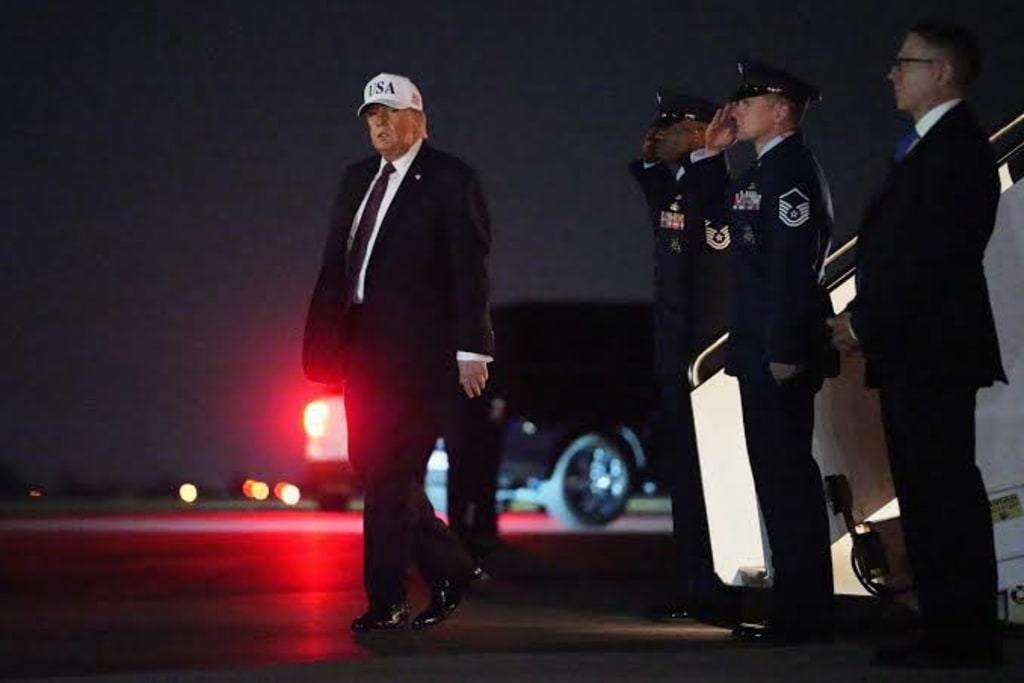
A weeks-long campaign by two of America’s closest Middle Eastern allies — Saudi Arabia and Israel — played a significant role in persuading former President Donald Trump to launch a major military assault on Iran in late February 2026, according to classified U.S. and allied sources. Internal White House assessments and reporting by The Washington Post indicate that diplomatic pressure from Riyadh and Jerusalem helped tilt Trump’s decision toward direct military action at a moment when the White House was still weighing diplomatic options.
The coordinated offensive, carried out jointly by American and Israeli forces and dubbed “Operation Epic Fury,” targeted Iranian leadership figures and strategic military infrastructure, including areas linked to the Islamic Revolutionary Guard Corps (IRGC), ballistic missile sites, and facilities associated with Tehran’s nuclear programme. Iranian state media later confirmed that Supreme Leader Ayatollah Ali Khamenei was killed in the strikes.
The Washington Post
Behind the Push: Riyadh and Jerusalem’s Influence
According to officials familiar with the matter, the Saudi Crown Prince Mohammed bin Salman made repeated private appeals to Trump over weeks leading up to the attack. Although publicly Riyadh maintained support for a negotiated settlement to de-escalate tensions, in private calls the crown prince urged Trump to act assertively against Iran’s nuclear and missile ambitions. In those calls, he cautioned that Iran could emerge stronger and more threatening if the United States did not use its considerable military capaltities
Israeli Prime Minister Benjamin Netanyahu was equally vocal. Netanyahu has for years framed Iran as an existential threat to his country — especially over its nuclear activities and long-range missile development. His government had publicly and privately pressed Washington to strike, arguing that only decisive military action could sufficiently degrade Iran’s strategic capabilities.
Trump’s inner circle, including advisers and personal envoys, also played a role. Jared Kushner — Trump’s son-in-law and a senior advisor — maintained close communication with both Saudi and Israeli counterparts during the run-up to the strike. These interactions, according to sources, helped shape the narrative presented to Trump: that a timely military offensive would avert an even greater threat later.
A Break from Diplomatic Negotiations
The pressure from Riyadh and Jerusalem came at a delicate moment. U.S. officials had been engaged in indirect nuclear negotiations with Tehran in Geneva, mediated by regional partners such as Oman. Iranian Foreign Minister Abbas Araghchi later described those talks as “progressing,” and he expressed confusion and frustration at why U.S. forces struck during active diplomacy.
Critics inside the U.S. government and Congress argued that the decision to attack Iran represented a dramatic departure from previous U.S. policy, which had traditionally prioritized containment, sanctions, or diplomatic avenues. Some lawmakers expressed concern that the pressure applied by Middle Eastern allies had outweighed careful strategic assessment within U.S. national security institutions.
Regional Dynamics and Strategic Calculus
Saudi and Israeli motivations are rooted in long-standing regional rivalries with Iran. Riyadh, despite periodic rapprochement with Tehran, views Iran’s expanding influence — particularly through proxy networks in Iraq, Syria, Lebanon, and Yemen — as destabilizing and a threat to Gulf security. Israel sees Iran’s missile programmes and purported nuclear ambitions as direct existential challenges.
The Saudi push may have included warnings about the consequences of inaction. Riyadh signalled that if Washington failed to act, Tehran could consolidate power in ways that would force Saudi Arabia’s hand in future conflicts. Israeli leaders reinforced this by portraying the window for effective military action as narrowing rapidly. These strategic frames reportedly helped convince Trump that military force, rather than prolonged diplomacy, was the more prudent choice.
Consequences of the Decision
Trump ultimately ordered the air and missile campaign that resulted in Khamenei’s death and significant damage to Iranian infrastructure. Tehran swiftly retaliated with missile and drone attacks targeting U.S. allied bases and Israeli territory across the region, raising the spectre of broader conflict.
International reactions have been sharply divided. Some Gulf states condemned Iranian retaliation and pledged support for collective defence, while European powers stressed the dangers of military escalation and the need to return to diplomatic channels. Meanwhile, the United Nations Security Council held emergency discussions on the crisis.
Broader Geopolitical Implications
The episode highlights how allied pressure can influence U.S. foreign policy — particularly when regional partners frame threats in ways that resonate with American strategic priorities. It also underscores the complex interplay between diplomacy and military action in managing nuclear proliferation and regional security.
For Trump, the decision represents both a culmination of long-running pressure from key allies and a risky gamble: that overwhelming force could reset Iran’s behaviour and deter future threats. For the region, it has ushered in a period of profound uncertainty, with the potential for long-term geopolitical realignment as governments reassess their security strategies in the aftermath of direct U.S.–Israeli strikes on Iranian soil.
About the Creator
Fiaz Ahmed
I am Fiaz Ahmed. I am a passionate writer. I love covering trending topics and breaking news. With a sharp eye for what’s happening around the world, and crafts timely and engaging stories that keep readers informed and updated.
Keep reading
More stories from Fiaz Ahmed and writers in The Swamp and other communities.
UAE Announces Remote Learning for Schools, Universities from March 2 to 4
The United Arab Emirates has ordered all schools, universities, and higher education institutions to switch to remote learning from Monday, March 2, until Wednesday, March 4, 2026, as part of precautionary measures amid rising regional tensions. The decision, confirmed by the Ministry of Education and the Ministry of Higher Education and Scientific Research, affects students, teachers, administrative staff, and infrastructure across both public and private sectors, marking a temporary departure from in-person instruction Scope and Implementation Under the directive, all academic activities — including classes, discussions, and administrative functions — will be conducted through approved online platforms already in use across the UAE’s education system. Authorities have emphasised that schools and universities must ensure uninterrupted delivery of curriculum content and maintain regular schedules via digital means. Support services for students and staff, including technical assistance and attendance monitoring, are also required. The move applies nationwide to both public and private institutions, including universities, colleges, schools, and higher education facilities. Meanwhile, local regulators such as the Knowledge and Human Development Authority also urged parents and educators to follow updates from official government sources for accurate information and avoid rumours or misinformation on social media. Reasons Behind the Decision Officials described the switch to distance learning as a precautionary step aimed at protecting the safety and wellbeing of students, faculty, and administrative teams. The decision follows heightened regional security concerns, including escalating tensions after recent military strikes in the Middle East involving Iran, the United States, and Israel. Some reports suggest that nearby Gulf countries have implemented similar remote learning measures to mitigate risk amid uncertainty and persistent alerts. Authorities emphasised that the situation will be continuously reassessed during the week, and the remote learning period could be extended if needed based on evolving circumstances. In-person classes are currently expected to resume on Thursday, March 5, 2026, unless official updates say otherwise. Logistics and Preparedness The UAE has built robust online learning systems since the Covid-19 pandemic, when large-scale e-learning infrastructure was first deployed across schools and universities to accommodate remote classes. This experience has made the transition smoother and more manageable, with platforms ready to support live or recorded sessions, interactive assignments, and continuous communication between educators, students, and parents. School administrations are also adjusting exam plans and academic schedules as required. Some institutions have confirmed that examinations affected by the online learning period will be rescheduled or adapted for remote delivery, with details communicated directly to families. Transport services, extracurricular activities, and other on-campus programs are suspended during the remote learning duration. Government Messaging and Public Reassurance In official statements, ministries reiterated their commitment to education continuity and the safety of the school community. They asked stakeholders to rely only on announcements from verified channels such as government websites and official social media accounts. Educators have been instructed to ensure that students have the necessary access credentials and tools to participate in online learning effectively. Parents and students have been responding on social platforms with questions about how exams, particularly board-level assessments, will be handled, reflecting shared concern about academic progress amid the temporary shift. Universities and schools are expected to provide detailed schedules and guidelines to address academic continuity and evaluation. Context and Regional Trends The UAE’s precautionary remote learning move reflects how education sectors in the Gulf are adjusting to evolving security dynamics. Similar measures have been seen in neighbouring countries like Qatar and Bahrain, which have also announced temporary shifts to online learning amid regional security alerts. These decisions underline the priority given to student safety and academic resilience in uncertain times. Despite the temporary nature of the measures, education authorities emphasise that learning will continue seamlessly through digital platforms, ensuring that students remain engaged and academic disruption is minimised. As the situation develops, the government has pledged to update the public promptly on any changes to the schedule or conditions for returning to classroom instruction.
By Fiaz Ahmed 2 days ago in The Swamp
The Saddest Thing - The Billionaires Who Rule America Aren't Even Enjoying Themselves
This single post says more about our ruling class than a thousand policy papers. The saddest thing about today's system is that the men robbing the rest of us - sabotaging our economic prospects, our pensions, our access to affordable healthcare - are not even happy.
By Scott Christenson🌴25 days ago in The Swamp


Comments
There are no comments for this story
Be the first to respond and start the conversation.