
Russian Strike on Kyiv Region Kills 4 People and Wounds 15 as Peace Talks Stall
Escalating attacks undermine diplomacy and intensify humanitarian concerns in Ukraine

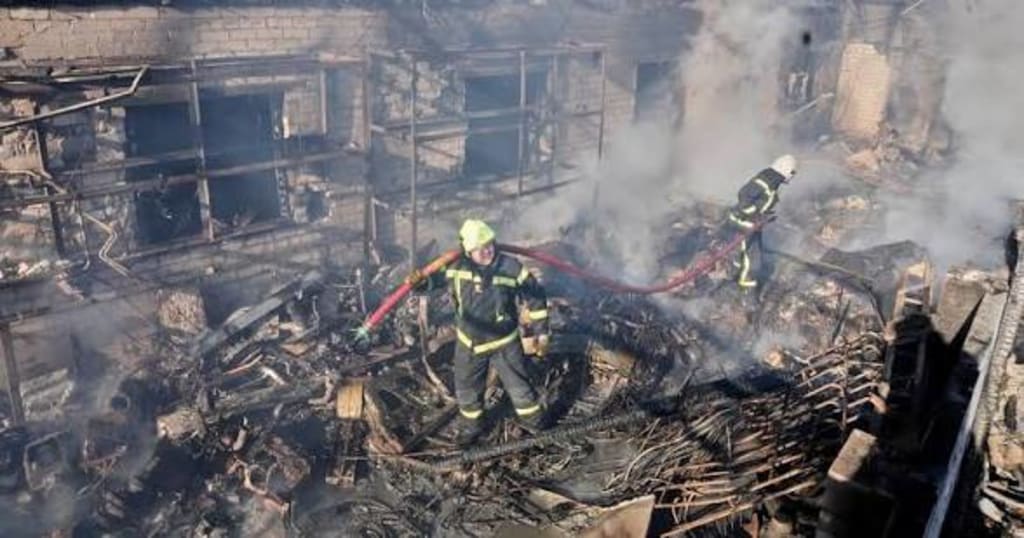
A Russian military strike in the Kyiv region has left at least four civilians dead and 15 others injured, further heightening fears over escalating violence even as stalled peace negotiations underscore the difficulty of ending the conflict. Ukrainian authorities confirmed the casualties, while local emergency services rushed to provide medical care and assess the damage to residential areas.
The strike, part of a series of attacks over the past several weeks, targeted both infrastructure and population centers. Explosions destroyed multiple buildings, leaving several residents trapped under debris. Emergency responders and volunteers worked through the night to evacuate survivors and provide urgent assistance to those injured.
Civilian Impact and Humanitarian Concerns
The human toll of the attack underscores the ongoing vulnerability of civilians in conflict zones. Families living in suburban and rural areas near Kyiv have faced repeated bombardment, which not only causes immediate casualties but also disrupts daily life, schooling, and access to essential services.
Medical personnel report that hospitals in the region are operating under significant strain, treating injuries ranging from shrapnel wounds to burns. Local authorities warned that repeated attacks increase both physical and psychological trauma for residents, especially children.
International humanitarian organizations have expressed alarm over the rising number of civilian casualties in Ukraine, emphasizing the need for adherence to international law and the protection of noncombatants.
Escalation Amid Stalled Peace Talks
The strike comes at a time when formal peace discussions remain stalled. Negotiations between Ukrainian officials and Russian representatives, mediated by international actors, have made little progress in recent months. Analysts warn that ongoing attacks, including strikes on urban centers like Kyiv, may further complicate any diplomatic efforts.
Officials in Kyiv have stressed that military pressure continues to be a key tactic for Russia, even as international actors push for negotiations. The continuation of strikes raises concerns about both the stability of the truce mechanisms and the broader prospects for a ceasefire.
Strategic and Political Implications
Beyond the immediate humanitarian impact, attacks on the Kyiv region carry significant political and strategic implications. The Ukrainian government has accused Russia of deliberately targeting populated areas to exert pressure, while Moscow maintains that military operations are aimed at neutralizing Ukrainian military capabilities.
The international community remains closely monitoring these developments. Countries supporting Ukraine have condemned attacks on civilian areas, highlighting violations of international humanitarian law, and continue to provide military, financial, and logistical support to Kyiv. Conversely, the continuation of strikes complicates diplomatic engagement by signaling persistent Russian resolve.
Regional Security and Infrastructure Damage
Infrastructure in the Kyiv region has also suffered extensive damage. Utilities, transportation networks, and residential buildings were affected, creating immediate challenges for recovery and reconstruction. Local authorities are prioritizing the repair of essential services, but the repeated bombardments slow restoration efforts and leave communities exposed to further risk.
Energy and water supply systems were reported to be intermittently disrupted, forcing residents to rely on emergency measures. Schools and healthcare facilities have had to adjust operations to accommodate safety concerns, and the local economy continues to be affected by interruptions in daily life.
International Reactions
The international response to the strike has been swift. The United Nations called for restraint and urged all parties to comply with international law protecting civilians. Western nations, including members of the European Union and United States, issued statements condemning the attacks and reaffirmed support for Ukraine’s sovereignty.
Aid organizations are coordinating with local authorities to deliver emergency supplies, medical care, and psychosocial support to affected families. However, the ongoing security situation complicates the logistics of delivering relief in some areas.
Civilian Resilience and Community Response
Despite the danger, local communities have shown remarkable resilience. Volunteers and neighborhood organizations mobilize quickly to provide shelter, food, and first aid to those affected by strikes. These efforts, combined with government and international assistance, help mitigate the immediate humanitarian consequences.
Nevertheless, the repeated attacks erode a sense of security and heighten anxiety among residents, particularly children and the elderly, creating long-term psychological challenges.
Outlook and Continuing Tensions
The strike in the Kyiv region illustrates the persistent volatility in Ukraine, where civilians remain caught between ongoing military operations and stalled diplomatic efforts. Analysts warn that without renewed negotiations and adherence to humanitarian protections, civilian casualties are likely to increase, further complicating prospects for peace.
For now, Ukrainian authorities continue to reinforce emergency response systems and seek international support, while the people of Kyiv brace for further uncertainty. The situation remains a stark reminder of the human cost of conflict and the urgent need for renewed diplomatic engagement to prevent further loss of life.
About the Creator
Fiaz Ahmed Brohi
I am a passionate writer with a love for exploring and creating content on trending topics. Always curious, always sharing stories that engage and inspire.
Keep reading
More stories from Fiaz Ahmed Brohi and writers in The Swamp and other communities.
Republic of China Defence Ministry Highlights Key Lessons From U.S.-Iranian War For Future Taiwan Strait Conflict
The Republic of China Ministry of National Defense has released a detailed analysis of the recent U.S.-Iran conflict, emphasizing lessons that could inform Taiwan’s preparedness for a potential confrontation in the Taiwan Strait. Officials underscored the importance of modernizing defense capabilities, improving intelligence and early warning systems, and integrating joint operations across air, sea, and cyber domains. The report comes amid rising tensions between Taipei and People’s Republic of China, which has increased military activity near Taiwan’s air defense identification zone (ADIZ) over the past year. By studying the U.S.-Iran conflict, Taiwan’s defense planners aim to identify strategic vulnerabilities and operational best practices that could be adapted for the island’s unique security environment. Strategic Lessons From the U.S.-Iran Conflict The U.S.-Iranian confrontation highlighted several key trends that Taiwan’s Ministry of National Defense considers highly relevant. Analysts noted the increasing role of precision missile strikes, unmanned aerial systems (UAS), electronic warfare, and rapid mobilization of combined forces. Military officials emphasized that asymmetric tactics, such as the use of drones and missile saturation attacks, could significantly disrupt conventional defenses if not anticipated. The ministry stressed that Taiwan’s planning must account for scenarios involving both kinetic strikes and cyber operations targeting critical infrastructure. In addition, logistics and command-and-control resilience emerged as critical factors in the U.S.-Iran conflict. The ability to maintain supply lines, coordinate multi-domain operations, and protect communication networks was cited as decisive in determining operational effectiveness. Air and Naval Readiness Taiwan’s air and naval forces are receiving renewed attention in light of these lessons. The report highlighted the importance of dispersed air bases, hardened shelters for aircraft, and rapid-response surface vessels capable of countering missile and drone attacks. Naval exercises have been redesigned to simulate high-intensity missile engagements, with a focus on defending key sea lanes and deterring amphibious incursions. Officials indicated that lessons learned from U.S.-Iranian operations, including the value of layered air defense and coordinated joint operations, are being incorporated into training scenarios. Cyber and Electronic Warfare The Taiwan Ministry of National Defense also emphasized the growing importance of cyber and electronic warfare in modern conflicts. The U.S.-Iran confrontation demonstrated how targeted cyber attacks can disrupt command networks, disable critical infrastructure, and impede operational coordination. Taiwanese defense planners are now investing in advanced cyber defense systems, secure communication channels, and electronic countermeasures designed to detect and neutralize hostile attempts to interfere with military operations. These capabilities are considered essential to deterring and responding effectively to potential threats in the Taiwan Strait. Lessons for Deterrence Strategy One of the key takeaways highlighted in the report is the interplay between deterrence and diplomacy. U.S. actions in the Iranian theater underscored the value of signaling military capability to adversaries while maintaining channels for negotiation and de-escalation. For Taiwan, this translates into maintaining a credible defense posture while seeking diplomatic support from allies. Officials emphasized that demonstrating the ability to impose significant costs on any potential aggressor is central to maintaining stability in the region. Training and Joint Exercises The Ministry of National Defense has announced that upcoming exercises will integrate lessons from the U.S.-Iran conflict, including high-tempo simulations of missile defense, amphibious assault prevention, and multi-domain coordination. Training programs are expanding to include realistic scenarios involving drone swarms, precision missile attacks, and coordinated cyber operations. Defense planners believe that rigorous preparation and adaptability are essential to counter any threats in the Taiwan Strait. Implications for Regional Security The release of the report signals Taiwan’s intent to remain vigilant amid an increasingly complex security environment. Regional experts suggest that by studying contemporary conflicts, Taipei aims to deter potential aggression and reassure allies of its capability to respond effectively. The ministry’s analysis also provides insights for regional partners, including the United States and Japan, highlighting areas where coordinated defense planning and intelligence sharing could enhance collective security. Conclusion By examining the U.S.-Iran conflict, the Republic of China Ministry of National Defense has identified critical lessons for modern warfare in the Taiwan Strait. Emphasis on joint operations, cyber resilience, advanced missile defense, and adaptive training reflects a proactive approach to national security. Officials stressed that preparedness and continuous learning from global conflicts are essential to safeguarding Taiwan’s sovereignty. As regional tensions persist, the ministry’s strategic insights are likely to shape military planning, deterrence posture, and alliance-building efforts in the years ahead.
By Fiaz Ahmed Brohiabout 15 hours ago in The Swamp
The Forsyth House Fire
Since 1851, Forsyth House has stood on the corner of Union Street and Gordon Street in the heart of Glasgow. Its iconic, or was... because on Sunday 8th of March, 2026, a fire broke out in a small, seemingly un-named shop in the building and tore all that history down. As I write, the rubble is still unsettled and the street is still blocked off. Central Station is quiet on the upper level, and around 30 small businesses have quite literally gone up in smoke.
By S. A. Crawford2 days ago in The Swamp
US Investigators Begin Search of Epstein’s Former Ranch in New Mexico
Federal investigators have begun a new search of Jeffrey Epstein’s former ranch in New Mexico, marking another step in the long-running effort to uncover evidence connected to the disgraced financier’s global sex-trafficking network. The property, often referred to as the Zorro Ranch, has been the subject of intense speculation for years. Survivors, journalists, and law enforcement officials have repeatedly suggested the remote estate may contain critical clues about the operations and associates involved in Epstein’s crimes.
By Jameel Jamali5 days ago in The Swamp
My First Time Skiing and I Got Lost, Alone, in the French Alps
Looking back, I can trace some of my life’s biggest adventures to a simple action from my sister. She’d introduced me to Tommy (a very long time ago), a colleague of hers, who had overshared his penchant for Italian-looking women, and I ticked that box.
By Chantal Christie Weiss2 days ago in Humans




Comments
There are no comments for this story
Be the first to respond and start the conversation.