
Standing in Solidarity with My American Colleagues—Ban Guns.
How would we feel if it were British teachers being asked to carry guns?

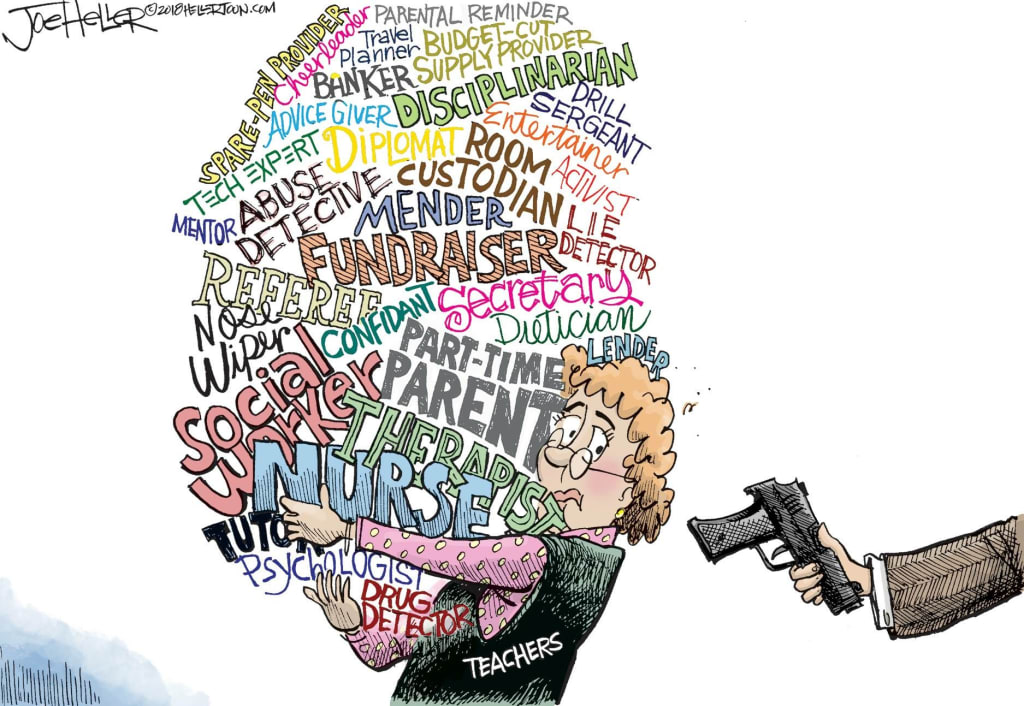
So, this week, my profession has been under scrutiny again—not in the UK, but in America, where their illustrious leader decided that it would be a great idea to get the teachers in their schools to carry guns.
I know, a controversial thing to talk about, but a necessary one. I am a foster mum of three, and have been a teacher for 14 years this June, and I would stand in front of a bullet for my kids and my students, but I would not carry a gun even if you paid me to.
I can hear the responses now: "If your students mean so much to you, why wouldn’t you protect them?" I am. I am protecting them from being forced to do something they wholeheartedly disagree with. I am protecting their right to freedom by not endangering them to be encouraged to make bad choices. I am showing them that they can stand up for themselves without resorting to violence and hiding behind weapons.
I am so pleased I’m not a teacher in America right now with this debate going on around me and hope to goodness it never becomes a suggestion for the UK—at that point, I’m off! I don’t want my kids or students to grow up in a world where it ever becomes acceptable to carry a weapon.
One of the most powerful moments in movies is in the film Freedom Writers, where one of the boys ends up accidentally shooting his best friend because he didn’t know the gun was loaded. All he could do was sit there and wait for the police. At no point has it been taken into consideration how these teachers would feel if they ever had to use a gun against another human being or, heaven forbid, one of their students.
Because that’s the reality. Just like most forms of abuse or attack, it’s likely that the person you end up pointing the gun at is going to have a connection with you or your institution in some way. That changes everything in my book—I immediately see my kids or students stood in that position. I don’t want to point a gun at them, I want to ask them what’s wrong and offer them the support and strength they need to put their weapon down and face up to the consequences they have brought upon themselves.
I’m not naive enough to think that just by talking, I could fix everything, but there are other ways of dealing with a situation that don’t make me just as bad as the other person wielding a gun. We need to be supporting America in putting better security measures in place in schools without making it feel like school is a prison. We need to share our counseling skills and preventative education measures to better equip staff to deal with these kind of issues. We need to acknowledge the wealth of experience in American schools and how many lives those teachers change everyday. Most of all, we need to show solidarity with our American colleagues who are saying to Mr. Trump, "Enough is—ban guns."
About the Creator
Keep reading
More stories from writers in The Swamp and other communities.
The Saddest Thing - The Billionaires Who Rule America Aren't Even Enjoying Themselves
This single post says more about our ruling class than a thousand policy papers. The saddest thing about today's system is that the men robbing the rest of us - sabotaging our economic prospects, our pensions, our access to affordable healthcare - are not even happy.
By Scott Christenson🌴25 days ago in The Swamp
Sirens Expected Across Central Israel Amid New Iranian Missile Attack
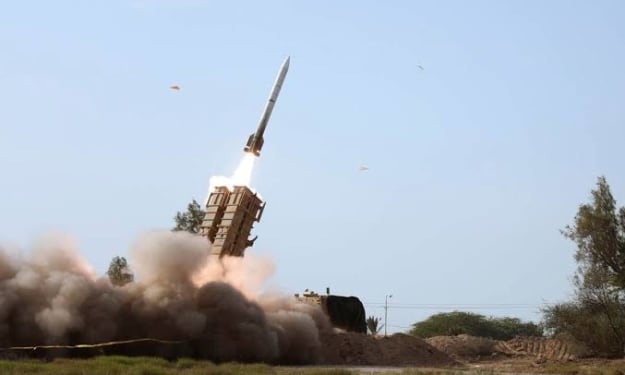
Central Israel braced for potential air-raid sirens and heightened alert after Tehran launched a fresh missile attack targeting Israeli territory, in what Israeli officials called a “significant escalation” in a conflict that has drawn the two adversaries into direct confrontation. The incident underscores the increasing risk of a wider regional war and has prompted intensified military readiness, emergency preparations, and diplomatic alarm from capitals around the world. The reported missile barrage late Tuesday was confirmed by both Israeli and Iranian sources, with the Iranian government claiming the strikes were retaliation for recent attacks on Iranian territory and “acts of aggression” attributed to Israel. According to state media in Iran, multiple ballistic missiles and long-range cruise systems were fired toward targets inside central Israel, including near urban population centres. Israeli defence officials, while remaining cautious about public disclosures, acknowledged that air-defence systems had detected incoming threats and that civil defence sirens could be expected across central districts, including in and around Tel Aviv and Jerusalem. The Israeli military stressed that interception efforts were underway and urged civilians to follow protective instructions from authorities. Details of the Attack Iranian state television released video footage purportedly showing ballistic missiles being launched from bases in central Iran, accompanied by statements from Iranian military officials claiming the operation was precise and intended to strike military infrastructure. Tehran asserted that its forces had successfully launched multiple projectiles that crossed neighbouring airspace and entered Israeli defensive zones. Israeli air-defence batteries, including the Iron Dome and longer-range anti-missile systems, were reported to have engaged the incoming missiles to protect population centres and critical infrastructure. Early reports suggested that several intercepts had occurred, though assessments of resulting damage were still being compiled as of early Wednesday. Casualty and Damage Assessments At the time of the report, Israeli authorities had not confirmed civilian casualties but described some structural impacts in outlying areas near military installations. Hospitals in central districts were placed on emergency standby, and authorities mobilised additional medical and civil-defence personnel to prepare for potential civilian injuries. Local news outlets broadcast footage of residents taking shelter in protected areas, while official civil-defence channels advised families to remain indoors, stay near reinforced areas, and avoid unnecessary travel until the alert was lifted. Escalatory Context The missile exchange comes amid months of intensifying hostilities between Iran and Israel. The two countries, which have long engaged indirectly through proxies and covert operations, have escalated to overt strikes in recent weeks. Israel has targeted Iranian missile and nuclear facilities, claiming that Tehran’s efforts to expand its nuclear programme and long-range strike capabilities pose an existential threat. Iran, in turn, has justified its actions as defensive, framing them as retaliation for apparent aggression by Israeli forces. The attacks mark a significant shift from earlier phases of tension, which were primarily conducted through proxy forces in Syria, Lebanon (via **Hezbollah), and Palestinian territories. Analysts say direct missile exchanges between Tehran and Jerusalem increase the risk of miscalculation and could draw in other regional actors. Military and Civil Responses In Israel, the military — known as the Israel Defense Forces — placed key units on heightened alert and prepared fighter squadrons, air defence batteries, and reserve forces. Defence Minister Yoav Gallant emphasised that Israel would defend its citizens and sovereignty “with full force and resolve,” vowing that any attacks on Israeli civilians or territory would be met with decisive response. Prime Minister Benjamin Netanyahu addressed the nation, urging calm and unity. “Our enemies seek to sow fear, but we will protect our people and our land,” he said in a televised statement. “We call on all residents to remain vigilant and heed instructions from civil-defence authorities.” Global Diplomatic Reactions International reaction to the escalation was swift. Western capitals, including the United States Department of State, called for restraint, urging both sides to step back from further military confrontation. The United Nations Security Council convened an emergency session to address the crisis, with diplomats warning that unchecked escalation could destabilise the Middle East and disrupt global economic and security interests. European leaders expressed concern about the safety of civilians and called for an immediate de-escalation. Several countries emphasised support for Israel’s right to self-defence while also criticising the use of long-range missile strikes against population centres. Economic and Regional Impacts Markets reacted to the news of the missile strikes, with energy prices rising amid fears of wider disruption in the region, which contains some of the world’s most critical oil-export infrastructure. Shipping corridors, including access to the Strait of Hormuz, were closely monitored amid concerns about disruptions. Regional neighbours, including Jordan, Egypt, and Gulf Cooperation Council members, heightened their own security postures and appealed for de-escalation. Looking Ahead With sirens and alerts expected across central Israel, the immediate focus remains on civilian protection and intercepting any further missile threats. The broader geopolitical implications — from defence postures to diplomatic negotiations — continue to evolve rapidly. As both Tehran and Jerusalem stand firm, analysts warn that without diplomatic intervention, the exchange of strikes risks drawing the region into a broader conflict that could have far-reaching consequences for security and economic stability across the Middle East and beyond.
By Fiaz Ahmed 2 days ago in The Swamp
Cassie and Johnny
I’m the kind of dame you notice. I’m no femme fatale, but you can’t ignore me, at least not until I warn you about what’s coming, then everybody ignores me. Hell, they usually blame me afterwards and give Johnny all the credit for saving the day, but my Johnny couldn’t save a seat at the movies without my help. Sure, he’s brawny, but brainy? Not so much. Like that time I asked him to spot me five bucks, and he said he didn’t see it anywhere on me, and believe you me, he looked but good.
By Harper Lewis5 days ago in Critique



Comments
There are no comments for this story
Be the first to respond and start the conversation.